
Why Strength Matters After 50: Evidence-Based Guide to Healthy Aging
Learn why strength matters after 50 for mobility, independence, healthy aging, and sustainable fat loss. Discover evidence-based strategies to build strength safely and maintain muscle as you age.
Click a star to rate
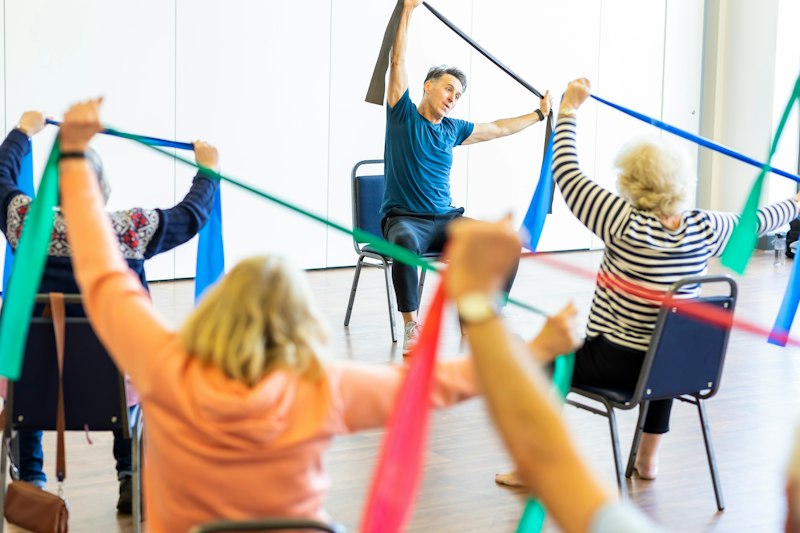
Many adults over 50 focus on losing weight, walking more, or improving cardiovascular health. While those goals are important, one of the most overlooked factors in healthy aging is strength.
Strength is about much more than lifting weights in a gym. It affects how easily you move, how confidently you perform daily activities, and how well you maintain independence over time.
Research consistently shows that strength training can help preserve muscle mass, improve physical function, and support healthy aging. The encouraging news is that meaningful improvements are possible even for people who begin later in life.
What Does Strength Mean After 50?
When most people hear the word strength, they picture athletes lifting heavy weights.
In reality, functional strength refers to your ability to perform everyday activities safely and effectively.
Examples include:
- •Carrying groceries
- •Climbing stairs
- •Lifting luggage
- •Standing up from a chair
- •Gardening
- •Playing with grandchildren
- •Maintaining balance while walking
These activities rely on muscle strength, coordination, and physical function.
Why Strength Naturally Declines With Age
As people age, they gradually lose muscle mass and strength.
This age-related decline is often called sarcopenia.
Several factors contribute:
- •Reduced physical activity
- •Lower muscle protein synthesis
- •Hormonal changes
- •Inadequate protein intake
- •Chronic health conditions
While some muscle loss is a normal part of aging, the rate and impact can be influenced by lifestyle habits.
Strength training is one of the most effective tools available for preserving muscle and physical capability.
Why Strength Matters After 50
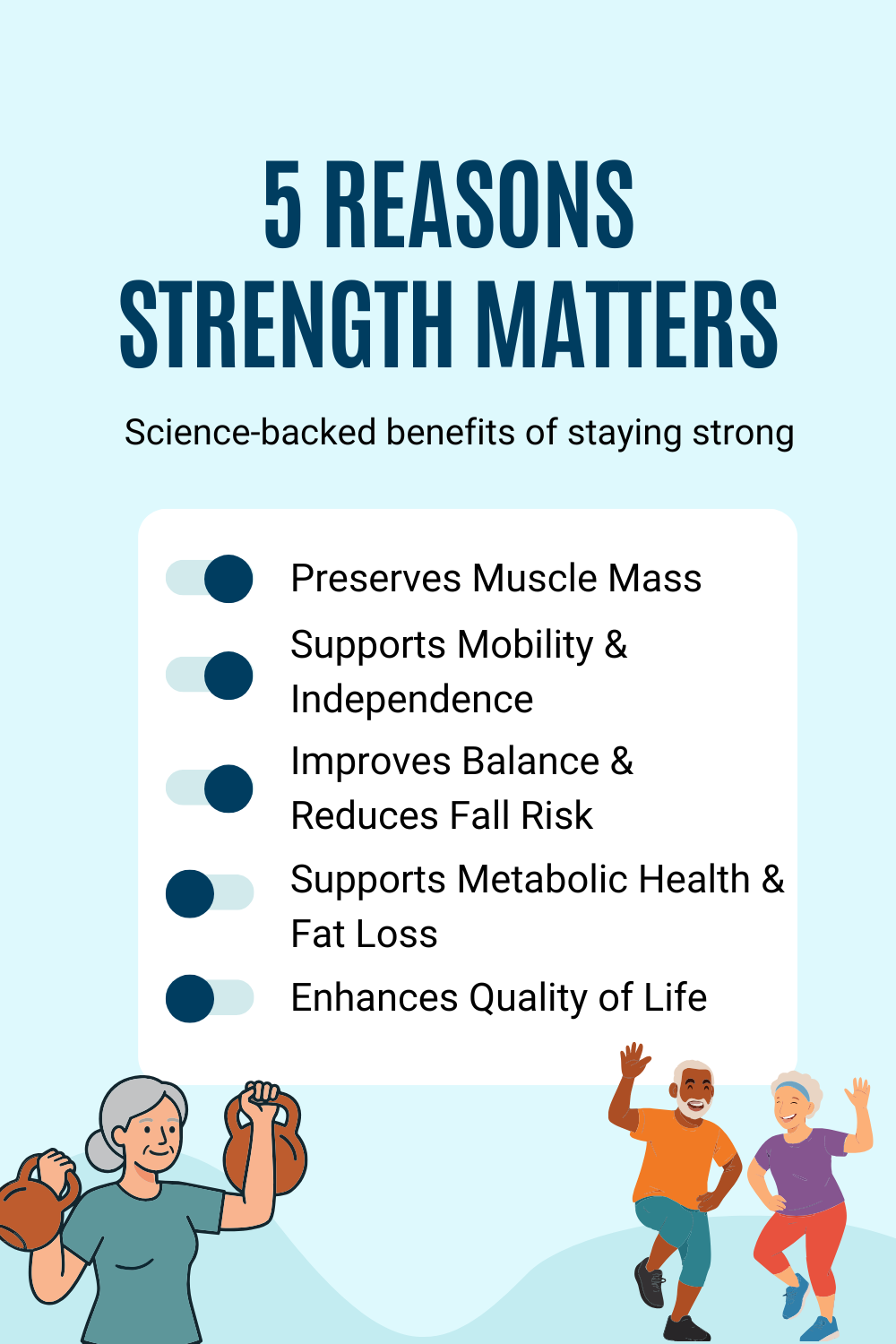
Strength influences far more than physical appearance.
Improved Mobility
Strong muscles help support movement and make everyday activities easier.
Tasks such as climbing stairs, carrying shopping bags, and getting out of chairs require adequate strength.
Maintaining muscle function helps preserve mobility and physical independence.
Better Physical Function
Physical function refers to your ability to perform daily tasks efficiently.
Research consistently shows that strength training can improve physical performance in older adults.
Benefits may include:
- •Easier movement
- •Greater stability
- •Improved confidence
- •Better quality of life
Support for Healthy Aging
Healthy aging is not simply about living longer.
It is about maintaining the ability to remain active and engaged throughout life.
Strength supports:
- •Independence
- •Mobility
- •Daily function
- •Recreational activities
- •Overall well-being
Maintaining Muscle Mass
Muscle naturally declines with age if it is not regularly challenged.
Resistance training helps provide the stimulus needed to preserve and build muscle tissue.
Maintaining muscle mass becomes especially important during weight-loss efforts because losing muscle along with body fat can reduce physical function.
Improved Metabolic Health
Muscle tissue plays an important role in glucose regulation and metabolic health.
Research suggests that resistance training may help improve insulin sensitivity and support overall metabolic function.
These benefits extend beyond fitness and contribute to long-term health.
Balance and Stability
Strong muscles contribute to movement control and stability.
Balance becomes increasingly important with age, making strength training a valuable component of a healthy lifestyle.
Strength Training vs Cardio
Many adults rely primarily on walking or other forms of cardio exercise.
Cardiovascular exercise provides important benefits, including:
- •Heart health
- •Endurance
- •Calorie expenditure
- •Improved cardiovascular fitness
However, cardio and strength training serve different purposes.
Strength training specifically challenges muscles to adapt and become stronger.
The most effective fitness routines often include both:
Cardio Benefits
- •Supports heart health
- •Increases activity levels
- •Improves endurance
Strength Training Benefits
- •Preserves muscle mass
- •Improves strength
- •Supports mobility
- •Enhances physical function
Rather than choosing one or the other, combining both forms of exercise can provide comprehensive health benefits.
Common Myths About Strength Training After 50
Myth 1: I'm Too Old To Get Stronger
Reality:
Research consistently demonstrates that adults can improve strength well into their 50s, 60s, 70s, and beyond.
The body remains adaptable throughout life.
Myth 2: Strength Training Is Dangerous
Reality:
When performed correctly and progressed gradually, strength training is considered safe for most healthy adults.
Beginners should focus on proper technique and appropriate exercise selection.
Myth 3: Walking Is Enough
Reality:
Walking is excellent for cardiovascular health but does not fully replace resistance training for maintaining muscle strength.
Both forms of exercise provide unique benefits.
Myth 4: You Need Heavy Weights
Reality:
Many people build strength using bodyweight exercises, resistance bands, machines, or light dumbbells.
Progressive challenge matters more than using extremely heavy weights.
Best Strength Exercises After 50
Beginners often benefit from focusing on fundamental movement patterns.
Squats
Benefits:
- •Strengthens legs
- •Supports mobility
- •Improves daily function
Examples:
- •Chair squats
- •Bodyweight squats
- •Goblet squats
Rows
Benefits:
- •Strengthens upper back
- •Improves posture
- •Supports pulling movements
Examples:
- •Resistance band rows
- •Dumbbell rows
- •Cable rows
Push Exercises
Benefits:
- •Strengthens chest and shoulders
- •Supports daily pushing movements
Examples:
- •Wall push-ups
- •Incline push-ups
- •Dumbbell presses
Hip Hinges
Benefits:
- •Strengthens glutes and hamstrings
- •Supports lifting mechanics
Examples:
- •Romanian deadlifts
- •Hip hinges with resistance bands
Carries
Benefits:
- •Improves grip strength
- •Enhances stability
- •Supports real-world movement
Examples:
- •Farmer carries
- •Suitcase carries
How Often Should Adults Over 50 Strength Train?
Many experts recommend strength training at least two times per week.
A practical beginner approach:
Day 1
Full-body strength workout
Day 2
Walking or light activity
Day 3
Full-body strength workout
Day 4-7
Walking, mobility work, and recovery
Consistency matters more than perfection.
Even two weekly sessions can provide meaningful benefits when performed regularly.
Nutrition Tips To Support Strength
Exercise is only one part of the equation.
Prioritize Protein
Protein supports muscle maintenance and recovery.
Good sources include:
- •Fish
- •Poultry
- •Eggs
- •Greek yogurt
- •Beans
- •Lentils
- •Tofu
Stay Hydrated
Proper hydration supports exercise performance and recovery.
Eat Plenty of Nutrient-Dense Foods
Focus on:
- •Fruits
- •Vegetables
- •Whole grains
- •Legumes
- •Healthy fats
These foods provide vitamins, minerals, and fiber that support overall health.
Beginner Action Plan
If you are new to strength training, start with these steps:
- Commit to two strength workouts per week.
- Focus on major movement patterns.
- Use bodyweight exercises or resistance bands if needed.
- Progress gradually.
- Prioritize consistency.
- Continue walking regularly.
- Support training with adequate protein intake.
Small actions performed consistently often create the biggest long-term results.
FAQ
Why is strength important after 50?
Strength supports mobility, independence, balance, physical function, and healthy aging. It helps make everyday activities easier and more comfortable.
Can adults over 50 still build muscle?
Yes. Research consistently shows that adults can improve strength and build muscle later in life when following appropriate resistance-training programs.
How many days per week should I strength train?
Most adults can benefit from two to three weekly strength-training sessions that target major muscle groups.
Is walking enough exercise after 50?
Walking provides excellent cardiovascular benefits but does not fully replace strength training for preserving muscle and strength.
What is the best type of strength training for beginners?
Bodyweight exercises, resistance bands, machines, and light dumbbells can all be effective starting options.
Conclusion
Strength is one of the most valuable investments adults can make in their long-term health.
It supports mobility, independence, physical function, metabolic health, and quality of life.
The goal is not becoming a competitive athlete or lifting the heaviest weights possible.
The goal is building and maintaining the strength needed to enjoy everyday life for years to come.
Whether you are 50, 60, 70, or beyond, it is never too late to begin.
Start small, stay consistent, and focus on progress.
The benefits can extend far beyond the gym.
Comments (0)
Share your thoughts and experiences
No comments yet. Be the first to share your thoughts!