
What Is Heart Rate Variability (HRV)? Evidence-Based Beginner Guide
Learn what Heart Rate Variability (HRV) is, why it matters, what affects it, and how healthy habits may support recovery, sleep, stress management, and overall wellness with evidence-based guidance.
Click a star to rate
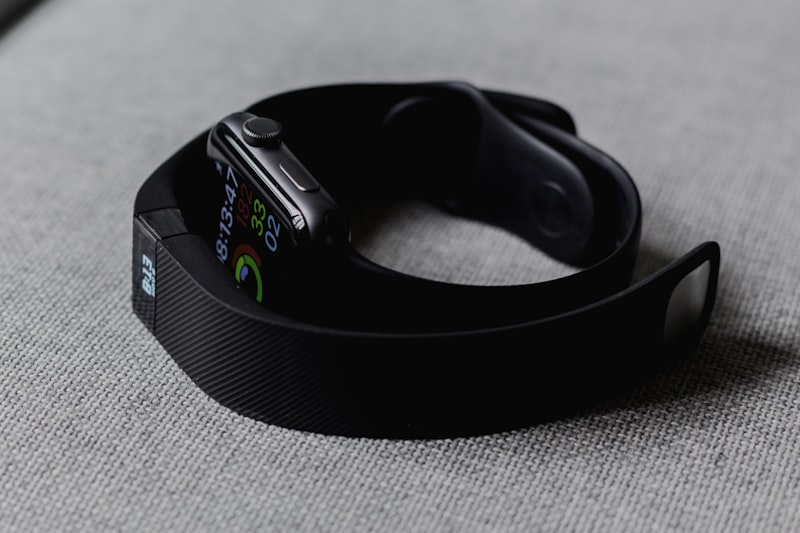
Heart Rate Variability, often shortened to HRV, has become one of the most popular health metrics on smartwatches and fitness trackers.
Many people see an HRV score every morning without understanding what it actually means.
The good news is that HRV is much easier to understand than it sounds.
This guide explains HRV in simple language using current scientific evidence. You'll learn what HRV measures, why it changes from day to day, common myths, and practical lifestyle habits that may support healthy recovery.
What Is Heart Rate Variability?
Heart Rate Variability (HRV) is the small variation in time between consecutive heartbeats.
Although your heart may beat 60 times in one minute, those beats are not perfectly evenly spaced.
For example, one beat might occur after 0.92 seconds, while the next happens after 1.01 seconds.
These tiny differences are completely normal.
HRV reflects how your autonomic nervous system responds to your body's changing needs.
Generally speaking, your body is constantly adjusting to:
- •Physical activity
- •Emotional stress
- •Sleep
- •Recovery
- •Illness
- •Hydration
- •Daily lifestyle habits
Because of this, HRV naturally changes throughout the day and from one day to the next.
HRV vs Heart Rate
Many beginners confuse these two measurements.
Heart Rate
Heart rate measures how many times your heart beats every minute.
Example:
- •60 beats per minute
- •72 beats per minute
- •85 beats per minute
Heart Rate Variability
HRV measures the variation in time between those heartbeats.
Even if two people both have a resting heart rate of 60 beats per minute, their HRV can be very different.
Heart rate and HRV provide different information about how your body is functioning.
Why Does HRV Matter?
Researchers study HRV because it provides insight into how the autonomic nervous system responds to stress and recovery.
HRV is not a diagnosis.
Instead, it can be one useful piece of information when viewed alongside other healthy lifestyle indicators.
Potential areas where HRV may provide useful insight include:
- •Recovery after exercise
- •Sleep quality
- •Physical stress
- •Emotional stress
- •Illness recovery
- •Overall training readiness
Most experts recommend focusing on long-term trends rather than a single reading.
What Affects HRV?
HRV is influenced by many factors.
Some are within your control while others are not.
Sleep
Poor sleep or inconsistent sleep schedules may temporarily lower HRV.
Getting enough quality sleep is one of the most important habits for overall recovery.
Stress
Mental and emotional stress activate the body's fight-or-flight response.
Periods of prolonged stress may influence HRV.
Exercise
Regular physical activity supports cardiovascular health.
However, a difficult workout can temporarily reduce HRV while your body recovers.
This temporary decrease is often a normal part of the recovery process.
Hydration
Dehydration can affect many normal body functions, including cardiovascular responses.
Maintaining adequate hydration supports overall wellness.
Illness
Many people notice lower HRV during illness or while recovering from infection.
This is one reason long-term trends are often more useful than individual daily readings.
Alcohol
Alcohol may temporarily reduce HRV while also affecting sleep quality and recovery.
Age
Average HRV generally decreases with age.
This is a normal part of aging and another reason why comparing your numbers with others is rarely useful.
Is Higher HRV Always Better?
No.
This is one of the biggest myths surrounding HRV.
There is no single "perfect" HRV score that applies to everyone.
Healthy HRV varies depending on:
- •Age
- •Genetics
- •Fitness level
- •Health status
- •Lifestyle
- •Medications
Rather than chasing a higher number, focus on your own baseline and long-term trend.
Common HRV Myths
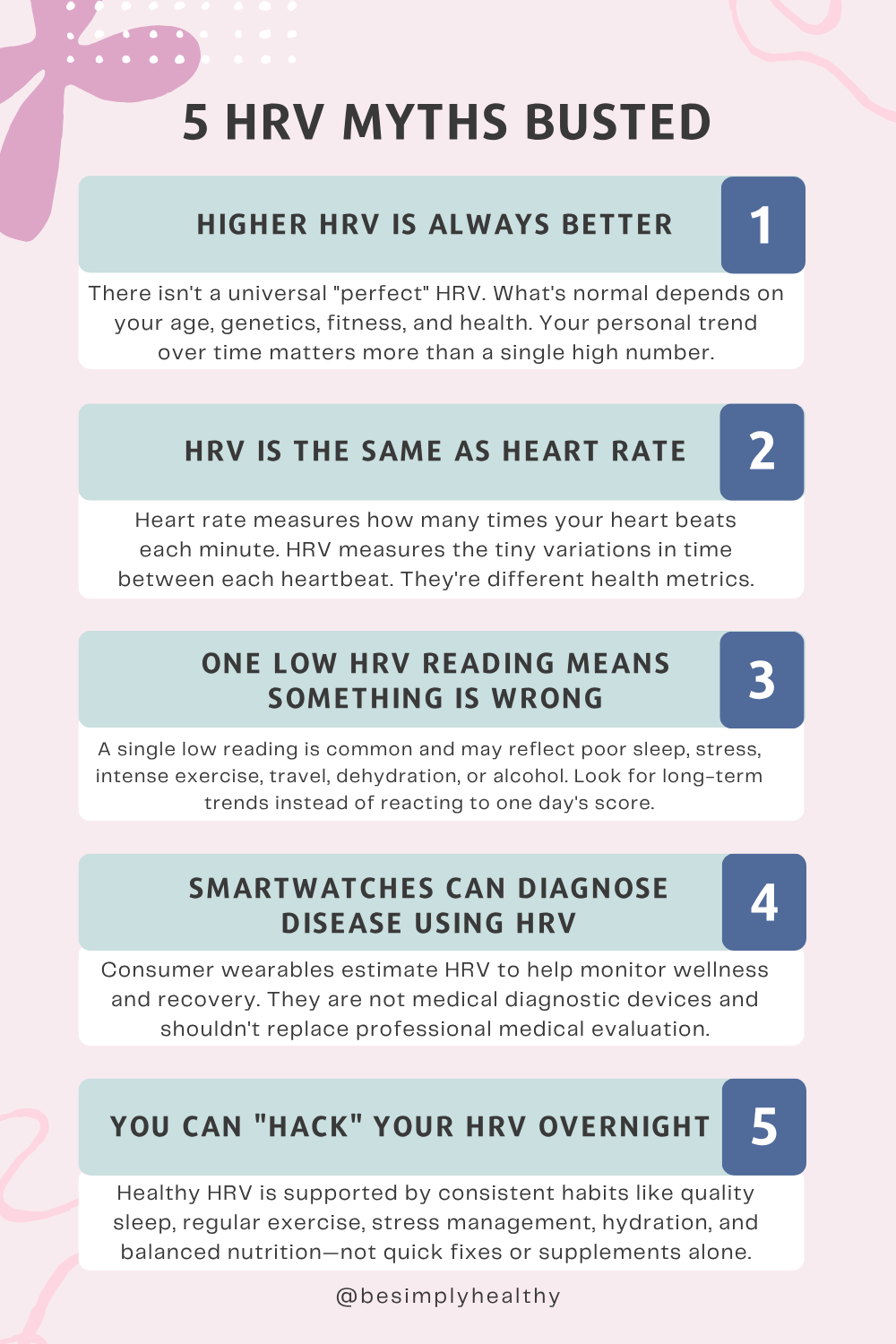
Myth 1: HRV Is the Same as Heart Rate
Reality:
They measure different things.
Heart rate counts beats per minute.
HRV measures variation between beats.
Myth 2: One Low Reading Means Something Is Wrong
Reality:
Daily fluctuations are completely normal.
Poor sleep, hard workouts, stress, travel, dehydration, and illness can all temporarily influence HRV.
Myth 3: Everyone Should Have the Same HRV
Reality:
Each person's HRV is unique.
Comparisons with friends or online averages are rarely meaningful.
Myth 4: Smartwatches Diagnose Disease
Reality:
Consumer wearables estimate HRV.
They are valuable wellness tools but should not replace professional medical evaluation. ## How Can You Support Healthy HRV?
There is no guaranteed way to increase HRV, but many evidence-based lifestyle habits support overall recovery and cardiovascular health.
Prioritize Sleep
Aim for a consistent sleep schedule.
Good sleep is one of the strongest lifestyle factors associated with healthy recovery.
Helpful habits include:
- •Going to bed at the same time each night
- •Limiting bright screens before bed
- •Keeping your bedroom cool, dark, and quiet
- •Allowing enough time for adequate sleep
Exercise Regularly
Regular physical activity benefits cardiovascular health.
A balanced routine might include:
- •Walking
- •Cycling
- •Swimming
- •Resistance training
- •Flexibility exercises
Remember that very intense exercise may temporarily lower HRV while your body recovers.
Manage Stress
Stress is a normal part of life, but chronic stress can influence recovery.
Healthy stress-management strategies include:
- •Deep breathing
- •Meditation
- •Yoga
- •Spending time outdoors
- •Talking with supportive friends or family
- •Taking regular breaks during busy days
Stay Hydrated
Water supports many normal body functions.
Drinking enough fluids throughout the day may help support recovery, especially after exercise or in hot weather.
Eat a Balanced Diet
A dietary pattern rich in whole foods supports overall cardiovascular health.
Examples include:
- •Vegetables
- •Fruits
- •Whole grains
- •Beans
- •Lentils
- •Nuts
- •Seeds
- •Lean protein
- •Healthy fats
Rather than focusing on one "HRV food," aim for an overall nutritious eating pattern.
Limit Alcohol
Alcohol can affect sleep quality and recovery.
Reducing excessive alcohol intake may support healthier recovery patterns.
Should You Track HRV Every Day?
Daily tracking can be useful for identifying long-term trends.
However, avoid becoming overly concerned about small day-to-day changes.
Instead, ask questions like:
- •Has my HRV been consistently lower for several days?
- •Did I recently sleep poorly?
- •Have I been under unusual stress?
- •Am I recovering from illness?
- •Did I complete a very difficult workout?
Looking at the bigger picture is generally more helpful than focusing on a single morning reading.
Can HRV Help With Weight Loss?
HRV does not directly cause weight loss.
However, it may indirectly support healthy habits.
For example:
- •Better recovery may help you exercise more consistently.
- •Good sleep may support appetite regulation.
- •Managing stress may make healthy eating easier for some people.
- •Monitoring recovery may help reduce overtraining.
Sustainable weight management still depends on overall lifestyle habits, including balanced nutrition, regular physical activity, adequate sleep, and long-term consistency.
When Should You Talk to a Healthcare Professional?
Consumer wearables are useful wellness tools, but they cannot diagnose disease.
Seek medical evaluation if you experience symptoms such as:
- •Chest pain
- •Fainting
- •Severe dizziness
- •Shortness of breath
- •Persistent heart palpitations
Likewise, if you have concerns about your cardiovascular health or consistently abnormal wearable readings accompanied by symptoms, consult a qualified healthcare professional.
FAQ
What is a normal HRV?
There is no single normal HRV value.
Healthy HRV varies widely depending on age, genetics, fitness level, and overall health.
Your own long-term baseline is generally more useful than comparing your number with someone else's.
Is higher HRV always healthier?
Not necessarily.
Higher HRV is often associated with good recovery, but context matters.
A single number should never be interpreted without considering sleep, stress, illness, exercise, and other lifestyle factors.
Can poor sleep lower HRV?
Yes.
Poor sleep is one of the most common reasons people notice temporary decreases in HRV.
Do smartwatches measure HRV accurately?
Most modern smartwatches estimate HRV using optical sensors.
These estimates can be useful for following trends but are not considered medical diagnostic measurements.
How often should I check my HRV?
Many people check HRV daily because trends over weeks and months provide more meaningful information than isolated readings.
Conclusion
Heart Rate Variability is one of the most useful wellness metrics available on modern wearable devices when interpreted correctly.
Rather than chasing the highest possible HRV score, focus on building healthy habits that support recovery, including quality sleep, regular physical activity, balanced nutrition, hydration, and stress management.
Remember that HRV naturally varies from day to day, and your own long-term trend is far more meaningful than comparisons with other people.
If you're interested in improving your recovery, sleep, and overall wellness, explore our other evidence-based articles covering healthy habits, exercise, nutrition, stress management, and sustainable weight management strategies.
Comments (0)
Share your thoughts and experiences
No comments yet. Be the first to share your thoughts!