
Strength Training vs Cardio for Fat Loss: Evidence-Based Beginner Guide
Discover the science behind strength training vs cardio for fat loss. Learn the benefits of each, common myths, beginner workout recommendations, and how to combine both for sustainable results.
Click a star to rate

Few fitness topics create more confusion than strength training versus cardio.
Many beginners assume they must choose one type of exercise to lose fat effectively. Some believe cardio is the best option because it burns calories during exercise. Others believe strength training is superior because it helps build muscle.
The reality is that both forms of exercise offer important benefits, and most people achieve the best long-term results when they understand how each fits into an overall fat-loss strategy.
Strength Training vs Cardio: Quick Answer
If your goal is fat loss, the best approach for most beginners is not choosing one over the other.
Cardio can help increase calorie expenditure and improve cardiovascular fitness.
Strength training helps preserve or build muscle while losing fat and improves body composition.
Combining both while maintaining a sustainable calorie deficit often produces the best overall results.
What Is Strength Training?
Strength training, also called resistance training, involves working muscles against resistance.
Examples include:
- •Free weights
- •Machines
- •Resistance bands
- •Bodyweight exercises
💡 Recommended Product: Adjustable Dumbbells for Home Workouts If you're planning to start strength training at home, this is one of the products I recommend.
View on Amazon →Common exercises:
- •Squats
- •Lunges
- •Push-ups
- •Rows
- •Deadlifts
- •Shoulder presses
The primary goal is improving muscular strength, endurance, and muscle maintenance.
What Is Cardio?
Cardio, also called aerobic exercise, increases heart rate and breathing for sustained periods.
Examples include:
- •Walking
- •Running
- •Cycling
- •Swimming
- •Rowing
- •Hiking
Cardio primarily improves cardiovascular fitness and can increase calorie expenditure during exercise.
How Fat Loss Actually Works
Fat loss occurs when the body uses more energy than it consumes over time.
This is commonly known as a calorie deficit.
Exercise can help support a calorie deficit, but nutrition remains a major factor.
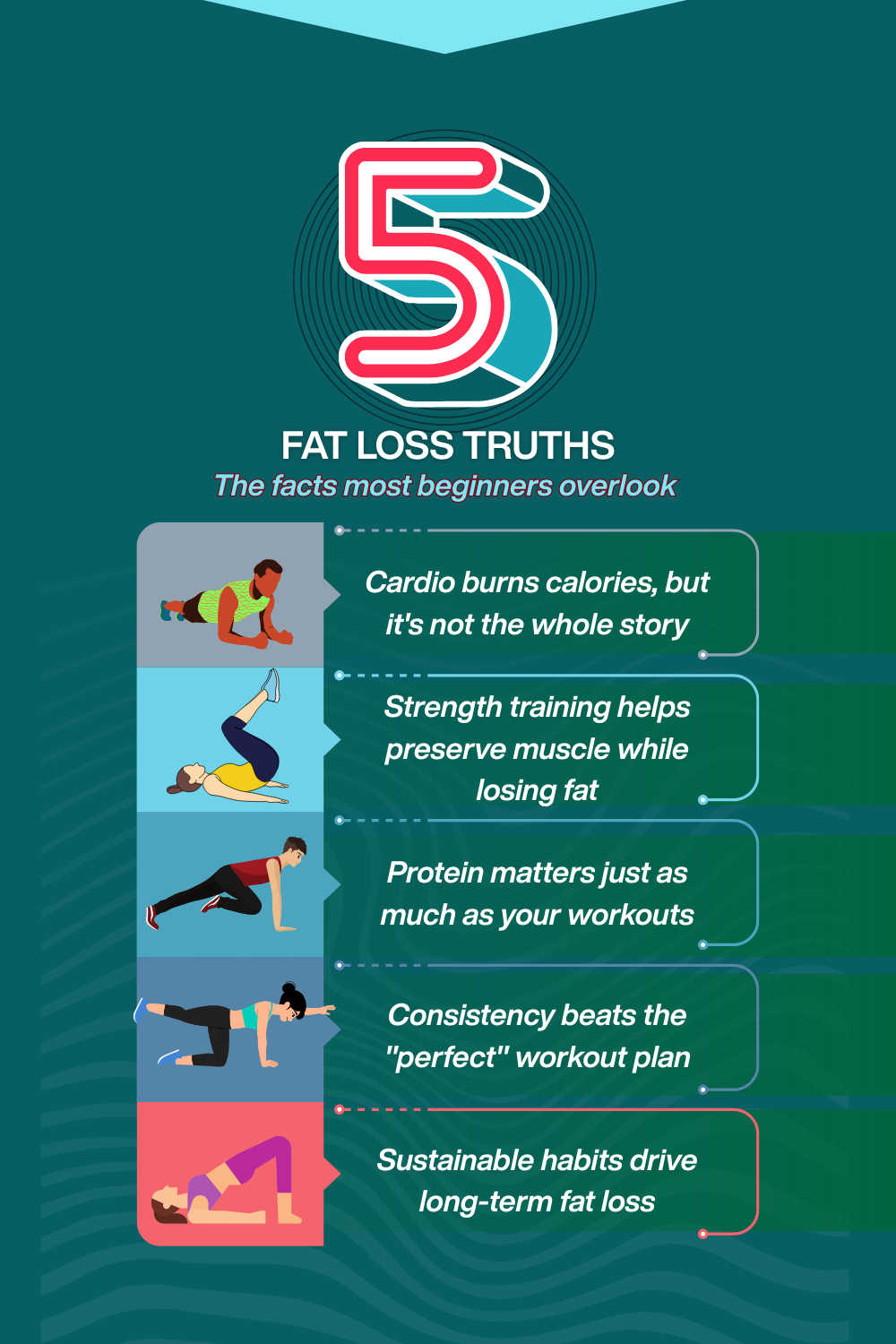
Regardless of whether someone performs cardio or strength training, long-term fat loss depends on consistent energy balance, sustainable habits, and adherence.
Benefits of Cardio for Fat Loss
Higher Immediate Calorie Burn
Cardio often burns more calories during the workout itself compared to resistance training of similar duration.
This can make it easier for some people to create a calorie deficit.
Improved Cardiovascular Health
Regular aerobic exercise supports:
- •Heart health
- •Blood pressure management
- •Endurance
- •Overall fitness
Accessible for Beginners
Walking is one of the simplest forms of exercise available.
Many beginners can start immediately without specialized equipment.
Supports Daily Energy Expenditure
Activities such as walking, cycling, and jogging contribute to overall physical activity levels throughout the week.
Benefits of Strength Training for Fat Loss
Preserves Lean Muscle Mass
During weight loss, the body may lose both fat and muscle.
Strength training helps reduce muscle loss while dieting.
Maintaining muscle is important for strength, function, and body composition.
Improves Body Composition
Two people can lose the same amount of weight but look very different afterward.
The person who maintains more muscle often appears leaner because body composition improves.
Increases Functional Strength
Strength training helps improve daily activities such as:
- •Carrying groceries
- •Climbing stairs
- •Lifting objects
- •Maintaining independence with age
Supports Long-Term Health
Research consistently shows that resistance training can support:
- •Bone health
- •Muscle health
- •Physical function
- •Healthy aging
Which Burns More Calories?
Cardio generally burns more calories during the exercise session.
For example:
- •Running typically burns more calories per hour than lifting weights.
- •Brisk walking can burn a meaningful number of calories while being accessible to most adults.
However, calorie burn is only one factor to consider.
The exercise program that supports long-term consistency is usually more important than small differences in calorie expenditure.
Why Body Composition Matters More Than the Scale
Many people focus entirely on body weight.
However, the scale cannot distinguish between:
- •Fat
- •Muscle
- •Water
- •Glycogen
Strength training may help preserve muscle while reducing body fat.
As a result, body composition can improve even when weight changes slowly.
Other progress markers include:
- •Waist measurements
- •Clothing fit
- •Strength improvements
- •Fitness levels
- •Energy levels
Common Myths About Strength Training and Cardio
Myth 1: Cardio Is the Only Way to Lose Fat
Reality:
Fat loss depends primarily on maintaining a calorie deficit.
Cardio can help, but it is not the only effective form of exercise.
Myth 2: Lifting Weights Makes Beginners Bulky
Reality:
Building significant muscle mass takes time, consistent training, and adequate nutrition.
Most beginners are more likely to improve strength and body composition than become overly muscular.
Myth 3: You Must Choose One
Reality:
Strength training and cardio complement each other.
Each provides unique benefits that support health and fitness.
Myth 4: More Exercise Is Always Better
Reality:
Recovery matters.
Excessive exercise without adequate recovery may reduce consistency and increase injury risk.
Best Weekly Workout Plan for Beginners
A balanced approach might include:
Monday
Full-body strength training
Tuesday
Brisk walking or moderate cardio
Wednesday
Full-body strength training
Thursday
Walking or cycling
Friday
Full-body strength training
Saturday
Recreational activity, hiking, or cardio
Sunday
Recovery and mobility work
This structure provides both resistance training and cardiovascular exercise while allowing recovery time.
Should You Do Cardio Before or After Weights?
There is no universal answer.
For many beginners:
- •Prioritize strength training first if building strength and preserving muscle is a priority.
- •Prioritize cardio first if endurance performance is the primary goal.
For general fat loss, either approach can work when total exercise volume and consistency remain high.
Nutrition Still Matters Most
Exercise is important, but nutrition plays a major role in fat loss.
Helpful habits include:
- •Eating adequate protein
- •Consuming fruits and vegetables
- •Choosing minimally processed foods more often
- •Managing portion sizes
- •Staying hydrated
No workout program can consistently overcome poor dietary habits.
Common Beginner Mistakes
Doing Too Much Too Soon
Rapid increases in exercise volume often reduce consistency.
Ignoring Strength Training
Many beginners focus exclusively on cardio and miss the benefits of muscle preservation.
Ignoring Cardio
Some people lift weights but overlook cardiovascular fitness.
Chasing Perfection
The most effective routine is one you can maintain consistently.
FAQ
Is strength training better than cardio for fat loss?
Neither is universally superior. Strength training helps preserve muscle, while cardio can increase calorie expenditure. Most beginners benefit from combining both.
Can I lose weight with strength training only?
Yes. Weight loss primarily depends on achieving a calorie deficit. Strength training can be an effective part of a weight-loss plan.
How much cardio should beginners do?
Many health organizations recommend at least 150 minutes of moderate-intensity aerobic activity weekly, though individual needs vary.
Can strength training help reduce belly fat?
Strength training can support overall fat loss when combined with appropriate nutrition, but spot reduction is not possible.
Should I do both cardio and strength training?
For most adults, combining both provides broader health, fitness, and body-composition benefits than relying on only one type of exercise.
Conclusion
The debate between strength training and cardio often creates unnecessary confusion.
Cardio supports calorie expenditure, endurance, and heart health.
Strength training supports muscle retention, strength, physical function, and body composition.
For most beginners focused on fat loss, the strongest strategy is combining both forms of exercise while maintaining sustainable nutrition habits.
Rather than searching for the perfect workout, focus on building a routine you can follow consistently over the long term.
Read the complete guide on our website for more science-backed fat-loss strategies, beginner workout plans, and evidence-based nutrition resources.
Comments (0)
Share your thoughts and experiences
No comments yet. Be the first to share your thoughts!