
Sleep Debt: What It Does to Your Body (Evidence-Based Guide)
Learn what sleep debt is, how it affects your brain, metabolism, hormones, appetite, weight management, and overall health, plus practical science-backed strategies to recover.
Click a star to rate

Sleep often becomes the first thing people sacrifice when life gets busy. Staying up late to finish work, binge-watch a show, or scroll through social media may seem harmless, especially if it only happens occasionally.
But when short nights become a regular habit, your body begins accumulating something known as sleep debt.
Unlike a financial debt, sleep debt cannot always be repaid overnight. Missing sleep repeatedly can affect much more than your energy levels. It may influence appetite, mood, concentration, exercise performance, recovery, metabolism, immune function, and long-term health.
The encouraging news is that improving sleep habits doesn't require perfection. Small, consistent changes often have a greater impact than occasional marathon sleep sessions.
This evidence-based guide explains what sleep debt is, what current research says about its effects on the body, common myths, and practical ways to improve your sleep routine.
Quick Answer
Sleep debt is the difference between the amount of sleep your body needs and the amount you actually get over time.
For example, if your body functions best with eight hours of sleep but you only sleep six hours each night for five consecutive nights, you accumulate approximately ten hours of sleep debt.
Research suggests chronic sleep restriction may contribute to:
- •Daytime fatigue
- •Poor concentration
- •Increased appetite
- •Stronger food cravings
- •Reduced insulin sensitivity
- •Lower exercise performance
- •Slower recovery
- •Mood changes
- •Reduced productivity
While extra sleep may reduce some short-term sleepiness, recovering from long-term sleep debt usually requires rebuilding healthy sleep habits over time.
Key Takeaways
- •Most healthy adults need approximately 7–9 hours of sleep each night.
- •Sleep debt develops gradually when sleep needs are consistently unmet.
- •Poor sleep affects much more than energy.
- •Healthy sleep supports metabolism, appetite regulation, immune function, learning, and recovery.
- •Consistency is generally more beneficial than sleeping in only on weekends.
- •Small daily improvements can produce meaningful long-term benefits.
What Is Sleep Debt?
Sleep debt refers to accumulated sleep loss over multiple days or weeks.
Imagine your body has a nightly sleep requirement. Whenever you sleep less than that requirement, the difference contributes to your sleep debt.
For example:
Monday: Needed: 8 hours Actual: 6 hours
Sleep debt: 2 hours
Tuesday: Needed: 8 hours Actual: 6 hours
Total sleep debt: 4 hours
As the days continue, this accumulated deficit may begin affecting physical and mental performance.
Although everyone occasionally has a poor night's sleep, consistently sleeping too little places greater stress on the body's recovery systems.
Sleep Debt vs. Sleep Deprivation
People often use these terms interchangeably, but they describe slightly different situations.
Sleep Deprivation
Sleep deprivation usually refers to getting insufficient sleep over a short period, such as staying awake all night or sleeping only a few hours.
Sleep Debt
Sleep debt describes the accumulated shortage created by repeated nights of inadequate sleep.
Think of sleep deprivation as a single missed payment, while sleep debt represents the growing balance after many missed payments.
Why Sleep Matters
Sleep is an active biological process—not simply a period of rest.
While you sleep, your body supports numerous important functions, including:
- •Memory consolidation
- •Tissue repair
- •Hormone regulation
- •Immune system activity
- •Muscle recovery
- •Brain waste clearance
- •Emotional processing
- •Energy regulation
Rather than "switching off," your brain remains highly active throughout different stages of sleep.
The Stages of Sleep
Healthy sleep cycles through multiple stages each night.
Light Sleep
Light sleep helps your body transition from wakefulness into deeper restorative sleep.
Deep Sleep
Deep sleep is particularly important for physical recovery.
During this stage, your body repairs tissues, supports immune function, and releases growth hormone involved in recovery.
REM Sleep
Rapid Eye Movement (REM) sleep plays a major role in:
- •Learning
- •Memory
- •Emotional regulation
- •Brain development
- •Creative thinking
Missing sleep regularly may reduce the amount of restorative sleep your body receives across these stages.
Signs You May Be Carrying Sleep Debt
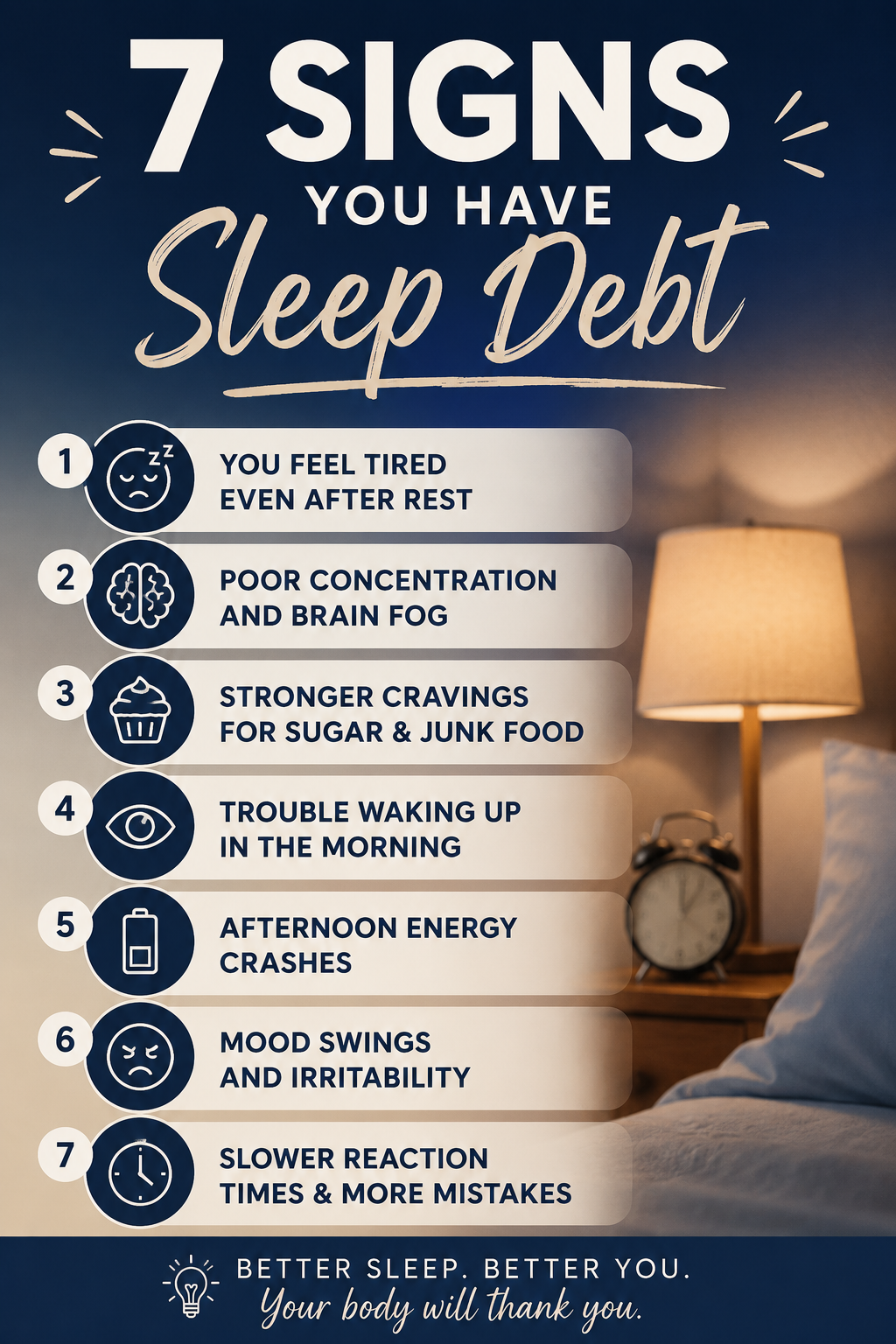
Not everyone recognizes the symptoms immediately.
Common signs include:
- •Feeling tired despite drinking coffee
- •Difficulty waking in the morning
- •Falling asleep quickly whenever you sit quietly
- •Afternoon energy crashes
- •Poor concentration
- •Increased mistakes
- •Forgetfulness
- •Irritability
- •Reduced motivation to exercise
- •Stronger cravings for sugary or high-calorie foods
- •Reduced productivity
- •Slower reaction times
Experiencing these symptoms occasionally is common. However, if they occur frequently, your sleep habits may deserve closer attention.
How Sleep Debt Affects Your Brain
The brain is one of the first organs to experience the effects of insufficient sleep.
Research consistently shows that inadequate sleep can impair:
- •Attention
- •Working memory
- •Learning
- •Decision-making
- •Problem-solving
- •Reaction time
Even healthy adults may experience slower thinking after several nights of restricted sleep.
This helps explain why many people report feeling mentally "foggy" after periods of poor sleep.
Sleep Debt and Mood
Sleep also influences emotional regulation.
After inadequate sleep, people often report:
- •Increased irritability
- •Lower patience
- •Reduced motivation
- •Greater emotional reactivity
- •Increased perceived stress
Sleep alone does not determine mental health, but it represents one important factor supporting emotional well-being.
Sleep Debt and Appetite
One of the most researched areas of sleep science involves appetite regulation.
Studies suggest insufficient sleep may influence hormones involved in hunger and fullness.
These include:
- •Ghrelin, which stimulates appetite.
- •Leptin, which helps signal fullness.
Poor sleep may increase hunger while making satisfying meals feel less filling for some individuals.
This combination can make maintaining healthy eating habits more challenging.
Why Cravings Increase
Many people notice stronger cravings after a poor night's sleep.
Research suggests several factors may contribute:
- •Increased appetite
- •Reduced impulse control
- •Greater activation of reward centers in the brain
- •More opportunities to snack due to longer waking hours
These effects do not guarantee overeating, but they may increase the likelihood of choosing highly processed, calorie-dense foods.
Sleep Debt and Metabolism
Your metabolism is influenced by many factors, including age, body composition, physical activity, nutrition, genetics, and sleep.
Sleep is not a magic solution for weight management, but it plays an important supporting role.
Research suggests chronic sleep restriction may affect several processes involved in metabolic health.
These include:
- •Appetite regulation
- •Blood sugar control
- •Insulin sensitivity
- •Food choices
- •Daily physical activity
- •Recovery from exercise
Rather than dramatically slowing metabolism overnight, inadequate sleep often creates conditions that make maintaining healthy habits more difficult.
Sleep Debt and Weight Loss
Many people focus exclusively on calories and exercise while overlooking sleep.
Although weight management ultimately depends on long-term energy balance, sleep influences many behaviors that contribute to that balance.
For example, insufficient sleep may:
- •Increase hunger
- •Increase cravings
- •Reduce motivation to exercise
- •Increase fatigue
- •Encourage more sedentary behavior
- •Make meal planning more difficult
- •Increase late-night snacking opportunities
This does not mean poor sleep automatically causes weight gain.
Instead, sleep is one piece of a much larger lifestyle puzzle.
For many people, improving sleep makes healthy eating and regular movement easier to maintain consistently.
Sleep Debt and Insulin Sensitivity
Current evidence suggests that even several nights of restricted sleep may temporarily reduce insulin sensitivity in healthy adults.
Insulin helps move glucose from the bloodstream into cells where it can be used for energy.
Reduced insulin sensitivity means the body may require more insulin to produce the same effect.
Researchers continue studying how chronic sleep restriction influences long-term metabolic health.
While evidence continues to evolve, maintaining healthy sleep remains an important part of overall wellness.
Hormones Influenced by Sleep
Sleep helps regulate numerous hormones throughout the body.
Examples include:
Cortisol
Cortisol helps regulate stress responses and follows a natural daily rhythm.
Consistently poor sleep may disrupt this rhythm in some individuals.
Melatonin
Melatonin helps regulate the body's internal clock.
Exposure to bright light late at night may delay melatonin release, making it harder to fall asleep.
Growth Hormone
Deep sleep supports growth hormone release, which plays an important role in tissue repair and recovery.
Leptin and Ghrelin
These hormones help regulate hunger and fullness.
Poor sleep may disrupt their normal balance, potentially making appetite regulation more difficult.
Sleep Debt and Exercise Performance
Exercise and sleep support each other.
Quality sleep helps prepare the body for physical activity, while regular physical activity may improve sleep quality for many people.
Sleep restriction has been associated with:
- •Lower energy
- •Reduced endurance
- •Slower reaction time
- •Reduced coordination
- •Increased perceived effort during workouts
- •Longer recovery between training sessions
Athletes often prioritize sleep because recovery is a key part of performance.
The same principle applies to recreational exercisers.
Better recovery can help support consistency over time.
Muscle Recovery
During sleep, the body performs important repair processes.
These include:
- •Muscle protein repair
- •Tissue recovery
- •Immune activity
- •Nervous system recovery
Poor sleep may leave workouts feeling more difficult the following day, making it harder to stay active consistently.
Immune Function
Sleep and immune health are closely connected.
During sleep, the immune system produces and regulates signaling molecules that help coordinate immune responses.
Consistently inadequate sleep may reduce the body's ability to respond efficiently to infections.
While sleep alone cannot prevent illness, healthy sleep supports normal immune function as part of an overall healthy lifestyle.
Heart Health
Large observational studies have found associations between chronically short sleep duration and increased risk of several cardiovascular conditions.
Researchers believe multiple factors may contribute, including:
- •Blood pressure regulation
- •Inflammation
- •Stress hormone activity
- •Metabolic health
Because many lifestyle factors interact, sleep should be viewed as one component of comprehensive heart health alongside physical activity, nutrition, tobacco avoidance, and routine medical care.
Does Weekend Catch-Up Sleep Work?
This is one of the most common questions about sleep debt.
The answer is nuanced.
Sleeping longer on weekends may reduce some short-term sleepiness after several nights of insufficient sleep.
However, current evidence suggests it may not completely reverse every physiological effect of chronic sleep restriction.
In addition, dramatically changing sleep schedules between weekdays and weekends may disrupt circadian rhythms for some individuals.
Whenever possible, maintaining a relatively consistent sleep schedule throughout the week is generally recommended.
Can You Repay Sleep Debt?
Recovery depends on several factors, including:
- •How much sleep was missed
- •How long sleep restriction continued
- •Individual health
- •Sleep quality
Short periods of mild sleep loss are generally easier to recover from than months or years of chronic sleep restriction.
The goal should not be to "erase" sleep debt overnight.
Instead, focus on consistently giving your body enough opportunity for quality sleep.
Common Sleep Debt Myths
Myth 1: I Can Function Fine on Five Hours
Reality:
Some people adapt to feeling tired, but objective testing often shows declines in attention, memory, and reaction time despite feeling "used to it."
Myth 2: Weekend Sleep Completely Fixes Everything
Reality:
Extra weekend sleep may reduce fatigue but does not necessarily reverse every effect of ongoing sleep restriction.
Myth 3: Coffee Replaces Sleep
Reality:
Caffeine may temporarily improve alertness but cannot replace the restorative biological functions of sleep.
Myth 4: Everyone Needs Exactly Eight Hours
Reality:
Sleep needs vary slightly between individuals, although most healthy adults benefit from approximately seven to nine hours each night.
Myth 5: Sleeping Longer Is Always Better
Reality:
More sleep is not automatically healthier.
Both chronically insufficient and excessively long sleep durations have been associated with health concerns in observational research.
The focus should be on obtaining sufficient, high-quality sleep that leaves you feeling rested. ## A Practical 7-Step Plan to Recover From Sleep Debt
If you've accumulated sleep debt, don't try to fix it all at once. Consistency is usually more effective than dramatic changes.
Step 1: Set a Consistent Bedtime
Choose a bedtime that allows enough time for approximately 7–9 hours of sleep.
Try to keep both your bedtime and wake time within about an hour of your usual schedule, even on weekends.
Consistency helps reinforce your body's natural circadian rhythm.
Step 2: Prioritize Morning Light
Exposure to natural light shortly after waking helps regulate your internal body clock.
Aim for 10–30 minutes of outdoor light when possible.
This simple habit can make it easier to fall asleep later that evening.
Step 3: Create a Sleep-Friendly Bedroom
Your sleeping environment matters.
Consider these habits:
- •Keep the room cool.
- •Reduce outside noise.
- •Make the room as dark as possible.
- •Use comfortable pillows and bedding.
- •Reserve your bed primarily for sleep.
A comfortable environment supports better sleep quality.
Step 4: Limit Late-Day Caffeine
Caffeine can remain in the body for several hours.
If you notice difficulty falling asleep, consider limiting coffee, tea, energy drinks, or other caffeinated beverages later in the afternoon or evening.
Step 5: Reduce Evening Screen Exposure
Phones, tablets, televisions, and laptops emit bright light that may delay melatonin release in some people.
If possible:
- •Lower screen brightness.
- •Use night mode if available.
- •Avoid stimulating content before bedtime.
- •Replace scrolling with relaxing activities.
Examples include:
- •Reading a book
- •Gentle stretching
- •Meditation
- •Journaling
- •Listening to calming music
Step 6: Stay Physically Active
Regular movement supports many aspects of health, including sleep.
You don't need intense workouts.
Walking, cycling, swimming, resistance training, or other enjoyable activities can all contribute to healthier sleep patterns.
Step 7: Be Patient
Improving sleep is often a gradual process.
Missing one night does not erase progress.
Focus on building sustainable habits rather than chasing perfect sleep every night.
Healthy Evening Routine Example
A simple evening routine might look like this:
7:30 PM
- •Finish dinner.
8:00 PM
- •Prepare for tomorrow.
- •Reduce bright lights.
8:30 PM
- •Put away work.
- •Limit email and social media.
9:00 PM
- •Read a book or practice relaxation.
9:30 PM
- •Bedroom cool, dark, and quiet.
10:00 PM
- •Lights out.
The exact times are less important than maintaining consistency.
Healthy Morning Routine Example
How you begin the day also influences your next night's sleep.
A practical morning routine may include:
- •Wake up at the same time each day.
- •Open the curtains immediately.
- •Get outside for natural sunlight.
- •Drink water.
- •Eat a balanced breakfast if desired.
- •Move your body.
These habits help strengthen your circadian rhythm.
Sleep Hygiene Checklist
Use this checklist as a quick reference.
✓ Go to bed at a consistent time.
✓ Wake up at a consistent time.
✓ Aim for approximately 7–9 hours of sleep.
✓ Get morning sunlight.
✓ Stay physically active.
✓ Limit caffeine later in the day.
✓ Reduce evening screen time.
✓ Keep your bedroom cool, dark, and quiet.
✓ Avoid large meals immediately before bedtime.
✓ Build a relaxing bedtime routine.
Evidence Summary
Current scientific evidence consistently supports the following conclusions:
| Topic | Current Evidence | | ------ | ---------------- | | Adults generally benefit from 7–9 hours of sleep. | Strong | | Chronic sleep restriction impairs alertness and cognitive performance. | Strong | | Poor sleep influences appetite regulation. | Strong | | Sleep supports immune function. | Strong | | Sleep supports exercise recovery. | Moderate to Strong | | Weekend catch-up sleep fully reverses chronic sleep debt. | Limited evidence | | Everyone requires exactly eight hours. | False—individual needs vary slightly. |
Overall, the highest-quality evidence suggests that healthy sleep is one of the core pillars of long-term health alongside balanced nutrition and regular physical activity.
Frequently Asked Questions
Can one bad night create sleep debt?
Yes.
Even one night of insufficient sleep can contribute to sleep debt, although occasional sleep loss is usually easier to recover from than chronic sleep restriction.
How long does it take to recover from sleep debt?
Recovery varies depending on how much sleep was lost and for how long.
Several nights of good-quality sleep may improve short-term sleepiness, while recovering from long-term sleep restriction may take considerably longer.
Does sleeping longer every weekend solve the problem?
Not completely.
Weekend catch-up sleep may reduce fatigue, but maintaining a consistent sleep schedule throughout the week appears to provide greater long-term benefits.
Can naps help?
Short naps may temporarily improve alertness for some people.
However, long or late-afternoon naps may interfere with nighttime sleep in certain individuals.
Should I use melatonin?
Melatonin supplements may be appropriate in some situations, such as certain circadian rhythm disorders or jet lag.
However, they are not necessary for everyone and should not replace healthy sleep habits.
If you're considering supplements, consult a qualified healthcare professional to determine whether they're appropriate for your situation. ## When Should You Talk to a Healthcare Professional?
Occasional poor sleep is common, especially during stressful periods or major life changes.
However, if sleep problems continue despite practicing good sleep habits, it may be time to seek medical advice.
Consider speaking with a qualified healthcare professional if you:
- •Regularly struggle to fall asleep or stay asleep.
- •Feel excessively sleepy during the day despite getting enough time in bed.
- •Snore loudly or someone notices pauses in your breathing while you sleep.
- •Frequently wake up gasping or choking.
- •Experience persistent fatigue that interferes with work, school, or daily life.
- •Have symptoms that suggest another underlying sleep disorder.
Sleep disorders such as insomnia or obstructive sleep apnea require proper evaluation and treatment.
Key Takeaways
If you remember only a few points from this guide, make them these:
- •Sleep debt develops gradually when you consistently sleep less than your body needs.
- •Sleep affects far more than energy levels. It supports brain function, recovery, metabolism, appetite regulation, immune health, and emotional well-being.
- •Catch-up sleep may help reduce short-term sleepiness, but consistent sleep habits appear to provide greater long-term benefits.
- •Small improvements practiced consistently are usually more effective than occasional dramatic changes.
- •Prioritizing sleep is an investment in your overall health—not a luxury.
Final Thoughts
Healthy eating and regular exercise often receive the most attention in discussions about wellness, but sleep deserves an equal place at the table.
Current scientific evidence consistently shows that sleep plays a fundamental role in nearly every major system of the body. While one late night is unlikely to cause lasting harm, regularly sacrificing sleep can gradually affect how you think, feel, recover, and make everyday decisions.
The encouraging part is that meaningful improvements don't require perfection.
Going to bed a little earlier, waking up at a more consistent time, getting morning sunlight, creating a relaxing bedtime routine, and limiting late-night screen exposure are all practical habits that can support better sleep over time.
Rather than viewing sleep as time lost, think of it as one of the most valuable investments you can make in your long-term health.
Continue Learning
If you found this guide helpful, explore our other evidence-based resources:
- •Healthy Bedtime Habits That Actually Work
- •How Sleep Affects Weight Loss
- •Morning Habits That Support Better Energy
- •The Science of Circadian Rhythms
- •Foods That May Support Better Sleep
- •Beginner's Guide to Healthy Lifestyle Habits
Building knowledge one step at a time can make healthy choices easier and more sustainable.
References
This article was developed using information synthesized from current evidence and guidance from authoritative organizations, including:
- •American Academy of Sleep Medicine (AASM)
- •Centers for Disease Control and Prevention (CDC)
- •National Institutes of Health (NIH)
- •National Heart, Lung, and Blood Institute (NHLBI)
- •National Sleep Foundation
- •World Health Organization (WHO)
Evidence considered includes systematic reviews, meta-analyses, randomized controlled trials where applicable, clinical practice guidelines, and consensus recommendations available as of July 2026.
Medical research continues to evolve. Recommendations may change as new high-quality evidence becomes available.
---
Medical Disclaimer
This article is intended for educational purposes only and should not be considered medical advice. It is not a substitute for personalized evaluation, diagnosis, or treatment from a qualified healthcare professional. If you have persistent sleep problems, excessive daytime sleepiness, or symptoms of a sleep disorder, consult an appropriate healthcare provider.
---
Stay Updated With Evidence-Based Health Tips
Want more practical, science-backed health content without the misinformation?
Subscribe to our newsletter for:
- •Evidence-based nutrition articles
- •Sleep and recovery guides
- •Beginner-friendly fitness resources
- •Weight management strategies
- •Healthy habit checklists
- •Printable wellness resources
You'll also get updates whenever we publish new long-form guides designed to help you build sustainable, healthy habits.
Comments (0)
Share your thoughts and experiences
No comments yet. Be the first to share your thoughts!