
Protein Shake vs Whole Foods for Fat Loss: Evidence-Based Guide
Protein shake vs whole foods: discover which option is better for fat loss, satiety, muscle retention, convenience, and long-term health. Evidence-based nutrition guide for beginners.
Click a star to rate
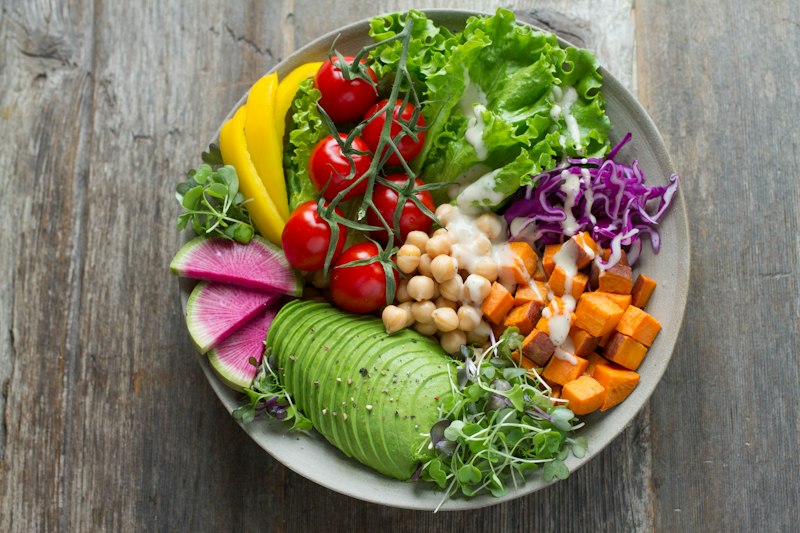
Protein is one of the most important nutrients for people trying to lose fat while maintaining muscle and supporting overall health.
Yet one question continues to create confusion:
Should you get your protein from protein shakes or whole foods?
Some people believe protein shakes are essential for weight loss. Others argue that real food is always superior.
The evidence-based answer is more practical than either extreme.
Protein shakes can be useful tools, especially when convenience is important. Whole-food protein sources provide additional nutrients that support overall health and often help people stay fuller for longer.
For most healthy adults focused on fat loss, the best strategy is not choosing one or the other. It is understanding when each option provides the greatest benefit.
Quick Answer
If your goal is fat loss:
- •Prioritize whole-food protein sources whenever possible.
- •Use protein shakes when convenience helps you meet your protein goals.
- •Focus on total daily protein intake rather than the source alone.
- •Build habits that are sustainable long term.
Whole foods generally provide more nutrition and greater satiety.
Protein shakes provide convenience and consistency.
Both can fit into a healthy fat-loss plan.
What Is a Protein Shake?
A protein shake is a beverage that contains concentrated protein, often mixed with water or milk.
Common protein powders include:
- •Whey protein
- •Casein protein
- •Soy protein
- •Pea protein
- •Rice protein
- •Multi-source plant protein blends
💡 Recommended Product: Check out my new favorite protein powder. It has no soy and only one gram of sugar. Great for a post-workout boost!
View on Amazon →Protein powders are considered dietary supplements.
They are designed to supplement dietary protein intake rather than replace nutritious meals.
Most protein shakes provide approximately:
- •20 to 30 grams of protein per serving
- •Relatively few calories
- •Minimal preparation time
This convenience is one reason they have become popular among people pursuing weight-loss and fitness goals.
What Counts as Whole-Food Protein?
Whole-food protein sources are foods that naturally contain protein along with other nutrients.
Examples include:
- •Chicken breast
- •Turkey
- •Fish
- •Eggs
- •Greek yogurt
- •Cottage cheese
- •Lean beef
- •Tofu
- •Tempeh
- •Edamame
- •Lentils
- •Beans
- •Chickpeas
Unlike protein powders, these foods contain a wide range of vitamins, minerals, healthy fats, and other beneficial compounds.
Many also contain fiber, which can support fullness and digestive health.
Why Protein Matters for Fat Loss
Before comparing protein shakes and whole foods, it is important to understand why protein itself matters.
Research from systematic reviews and meta-analyses consistently suggests that higher-protein diets can support body composition and weight-management efforts when compared with lower-protein approaches.
Protein may help by:
Supporting Fullness
Protein is generally considered the most satiating macronutrient.
Meals containing adequate protein often help people feel satisfied for longer periods.
This can make it easier to maintain a calorie deficit.
Preserving Muscle During Weight Loss
When people lose weight, they often lose both fat and lean body mass.
Adequate protein intake combined with resistance training can help preserve muscle tissue during calorie restriction.
Maintaining muscle is important because muscle supports strength, physical function, and metabolic health.
Supporting Recovery
Protein provides amino acids needed for tissue repair and recovery after exercise.
This is particularly important for individuals who engage in resistance training while losing fat.
Improving Diet Quality
Many protein-rich foods provide valuable nutrients that contribute to overall health.
As a result, prioritizing protein often improves meal quality and dietary structure.
Protein Shake vs Whole Foods: Nutrition Comparison
One of the biggest differences between protein shakes and whole foods is overall nutrient density.
Protein Shakes
Benefits:
- •High protein content
- •Convenient
- •Portable
- •Fast preparation
- •Easy portion control
Limitations:
- •Often contain fewer vitamins and minerals than whole foods
- •Usually contain little or no fiber
- •Less filling than many solid-food meals
- •May encourage overreliance on supplements
Whole Foods
Benefits:
- •Rich in nutrients
- •Often provide fiber
- •Promote fullness
- •Support overall health
- •Encourage balanced eating habits
Limitations:
- •Require preparation
- •Less convenient
- •May be harder to consume when traveling or working long hours
When comparing nutrition quality alone, whole foods generally have the advantage.
A chicken breast or serving of Greek yogurt provides protein along with naturally occurring nutrients that support health beyond protein intake itself.
Which Keeps You Fuller?
One of the most important questions for fat loss is:
Which option helps control hunger better?
In many situations, whole foods have an advantage.
Several factors contribute to fullness:
- •Chewing
- •Food volume
- •Digestion speed
- •Fiber content
- •Meal structure
Whole-food protein sources often require more chewing and digestion than liquids.
Many whole-food meals also include vegetables, fruits, legumes, or whole grains that contribute fiber and volume.
For example:
A grilled chicken breast with vegetables will often create more fullness than a protein shake containing similar protein content.
This does not mean protein shakes are ineffective.
It simply means whole foods may be more useful when appetite control is the primary goal.
Protein Shake vs Whole Foods for Convenience
Convenience is where protein shakes often excel.
Many adults struggle to meet protein goals because of:
- •Busy work schedules
- •Travel
- •Limited meal preparation time
- •Long commutes
- •Irregular eating schedules
A protein shake can provide a practical solution.
Benefits include:
- •Ready in minutes
- •Portable
- •Shelf stable in many cases
- •Easy to consume after workouts
- •Useful during busy days
For people who frequently miss meals or struggle to consume enough protein, convenience can improve consistency.
Consistency is one of the strongest predictors of long-term nutrition success.
Can Protein Shakes Replace Meals?
This is one of the most common questions beginners ask.
The short answer:
Usually not.
Protein shakes can occasionally replace a meal when necessary.
However, relying on them as your primary source of nutrition is generally not recommended.
Whole meals provide:
- •More nutrients
- •More food volume
- •More satisfaction
- •Greater dietary variety
Protein shakes work best as supplements rather than meal replacements.
In many situations, adding a protein shake to a balanced eating plan is more beneficial than replacing multiple meals with liquid nutrition.
Protein Shake vs Whole Foods for Muscle Retention
Protein quality matters when preserving muscle during fat loss.
Many protein powders, particularly whey protein, contain all essential amino acids and are considered high-quality protein sources.
Similarly, many whole-food proteins provide complete amino acid profiles.
Examples include:
- •Eggs
- •Fish
- •Dairy products
- •Poultry
- •Lean meats
Plant-based protein sources can also support muscle maintenance when consumed appropriately throughout the day.
Current evidence suggests that total daily protein intake is generally more important than whether protein comes from a shake or a whole-food source.
Protein Shake vs Whole Foods for Weight Loss Results
Many people assume protein shakes lead to faster weight loss.
Current evidence does not support that conclusion.
Weight loss occurs when energy intake is lower than energy expenditure over time.
Protein shakes do not create a special fat-burning effect.
However, they may indirectly support weight loss by:
- •Helping increase protein intake
- •Supporting fullness
- •Preserving muscle mass
- •Improving dietary adherence
The key factor is whether the protein shake helps someone maintain healthy eating habits consistently.
For some people, it does.
For others, whole-food meals are more effective.
Comparing Common Protein Sources
Whey Protein Shake
Pros:
- •Complete protein
- •Rich in essential amino acids
- •Convenient
- •Fast digestion
Cons:
- •Minimal fiber
- •Less filling than many meals
- •Does not replace the nutritional diversity of whole foods
Greek Yogurt
Pros:
- •High protein
- •Contains calcium
- •Convenient
- •Often highly satiating
Cons:
- •Requires refrigeration
- •Not suitable for everyone
Eggs
Pros:
- •High-quality protein
- •Nutrient dense
- •Versatile
- •Affordable
Cons:
- •Require preparation
Chicken Breast
Pros:
- •High protein
- •Lean
- •Filling
- •Versatile
Cons:
- •Requires cooking
Lentils and Beans
Pros:
- •Protein plus fiber
- •Affordable
- •Filling
- •Support digestive health
Cons:
- •Longer preparation time for some recipes
Myth vs Fact
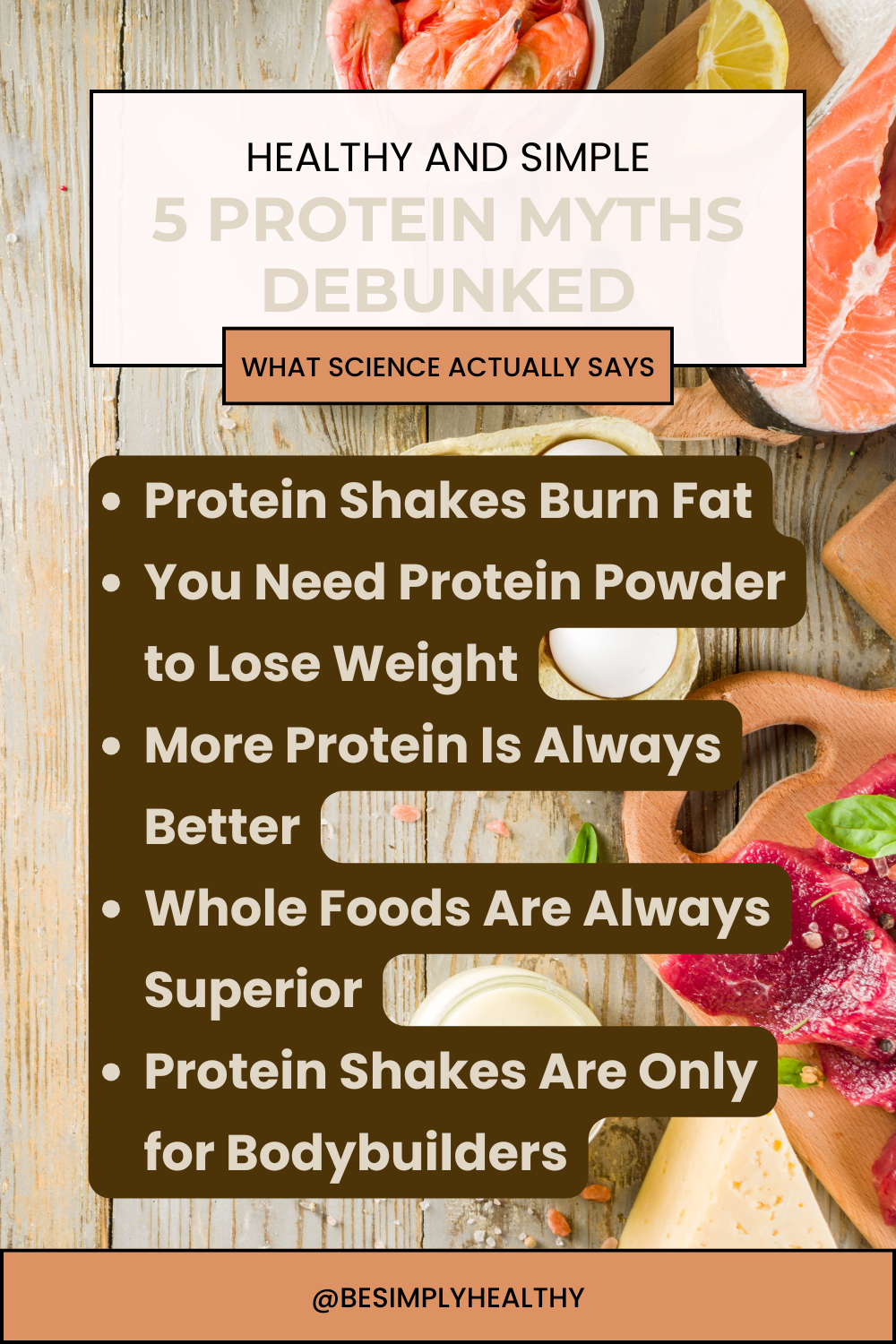
Myth 1: Protein Shakes Burn Fat
Reality:
Protein shakes do not directly burn body fat.
They may support fat-loss efforts when they help individuals meet protein goals and maintain a calorie deficit.
Myth 2: You Need Protein Powder to Lose Weight
Reality:
Many people successfully lose weight without ever using protein powder.
Whole-food protein sources can fully support healthy weight-loss efforts.
Myth 3: More Protein Is Always Better
Reality:
Protein is important, but more is not always better.
Nutrition quality, calorie balance, physical activity, sleep, and consistency all matter.
Myth 4: Whole Foods Are Always Superior
Reality:
Whole foods generally provide more nutrients.
However, protein shakes can be extremely useful when convenience improves adherence.
A strategy that works consistently is often better than a theoretically perfect plan that is difficult to follow.
Myth 5: Protein Shakes Are Only for Bodybuilders
Reality:
Protein supplements can be useful for many adults who struggle to meet protein needs through food alone.
They are not limited to athletes or bodybuilders.
Practical Fat-Loss Scenarios
Scenario 1: Busy Professional
Challenge:
Limited time for meal preparation.
Recommendation:
Prioritize whole-food meals when possible and keep a protein shake available for emergencies.
Scenario 2: New Gym Member
Challenge:
Unsure whether supplements are necessary.
Recommendation:
Focus first on protein-rich meals.
Consider a protein shake only if daily protein targets are difficult to reach.
Scenario 3: Frequent Traveler
Challenge:
Limited access to healthy meals.
Recommendation:
Protein powder may provide a practical backup option that supports consistency.
Scenario 4: Appetite Management
Challenge:
Constant hunger during dieting.
Recommendation:
Prioritize whole-food protein sources paired with vegetables, fruit, legumes, and whole grains.
These combinations are often more filling than liquids alone.
How Much Protein Do You Need?
Protein needs vary based on factors such as:
- •Age
- •Body size
- •Activity level
- •Health status
- •Goals
Many active adults pursuing fat loss benefit from protein intakes higher than the minimum recommended dietary allowance.
General evidence-based ranges often discussed in sports nutrition research fall between:
- •Approximately 1.2 to 2.2 grams of protein per kilogram of body weight daily
Individual needs vary.
People with medical conditions should seek guidance from qualified healthcare professionals.
Best Whole-Food Protein Sources for Fat Loss
Lean Poultry
Examples:
- •Chicken breast
- •Turkey breast
Benefits:
- •High protein
- •Relatively low calorie content
Fish
Examples:
- •Salmon
- •Tuna
- •Cod
- •Sardines
Benefits:
- •High-quality protein
- •Important nutrients
- •Omega-3 fats in many species
Eggs
Benefits:
- •Convenient
- •Affordable
- •Nutrient dense
Greek Yogurt
Benefits:
- •High protein
- •Easy snack option
- •Contains calcium
Cottage Cheese
Benefits:
- •Protein rich
- •Convenient
- •Versatile
Tofu and Tempeh
Benefits:
- •Plant-based
- •Protein rich
- •Useful meat alternatives
Legumes
Examples:
- •Lentils
- •Chickpeas
- •Beans
Benefits:
- •Protein plus fiber
- •Support fullness
When Protein Shakes Make Sense
Protein shakes can be particularly useful when:
- •You are short on time
- •You struggle to reach protein targets
- •You need a portable option
- •You want a convenient post-workout protein source
- •Healthy meals are unavailable
In these situations, a protein shake may improve consistency and dietary adherence.
When Whole Foods Are the Better Choice
Whole foods are often preferable when:
- •Appetite control is a priority
- •You have time to prepare meals
- •You want maximum nutrient density
- •You are building long-term eating habits
- •You want greater meal satisfaction
For most people, whole foods should form the foundation of a healthy eating pattern.
Sample Day Using Both Approaches
Breakfast
Greek yogurt with berries and chia seeds
Lunch
Grilled chicken salad with vegetables
Snack
Protein shake after a workout or during a busy afternoon
Dinner
Salmon, vegetables, and brown rice
This approach combines the convenience of supplements with the nutritional advantages of whole foods.
Common Mistakes
Relying Entirely on Shakes
Protein supplements should not replace most meals.
Ignoring Overall Calories
Protein matters, but calorie balance still influences weight change.
Neglecting Fiber
Many protein shakes contain little or no fiber.
Include fruits, vegetables, legumes, and whole grains regularly.
Buying Based Only on Marketing
Look beyond claims and focus on nutrition facts, ingredient quality, and practicality.
Chasing Perfection
Consistency is often more important than choosing the perfect protein source.
FAQ
Are protein shakes healthy?
Many protein powders can be part of a healthy diet when used appropriately. Product quality varies, so reviewing ingredient labels is important.
Can I lose weight using protein shakes?
Protein shakes may support weight-loss efforts, but they do not directly cause fat loss. Overall dietary patterns matter most.
Which is better for fullness: protein shakes or food?
Whole-food protein sources generally provide greater satiety than liquid protein alone.
Do protein shakes build muscle faster?
Protein shakes can help meet protein needs, but muscle growth primarily depends on adequate protein intake, resistance training, recovery, and consistency.
Can I replace breakfast with a protein shake?
Occasionally, yes. However, a balanced meal often provides greater nutrition and satiety.
Is whey protein better than food?
Whey protein is convenient and high quality, but it does not replace the nutritional diversity offered by whole foods.
Conclusion
The debate between protein shakes and whole foods often creates a false choice.
Both can play valuable roles in a healthy fat-loss plan.
Whole foods generally provide superior nutrition, greater fullness, and stronger support for long-term healthy eating habits.
Protein shakes provide convenience, portability, and a practical way to increase protein intake when life gets busy.
For most beginners, the evidence-based strategy is simple:
- •Build meals around whole-food protein sources.
- •Use protein shakes when convenience helps.
- •Focus on total protein intake.
- •Maintain a sustainable calorie deficit.
- •Prioritize consistency over perfection.
The best protein source is ultimately the one that helps you meet your nutrition goals while supporting long-term healthy habits.
Discover more evidence-based nutrition guides, practical meal strategies, and sustainable fat-loss resources on our website.
Comments (0)
Share your thoughts and experiences
No comments yet. Be the first to share your thoughts!