
Intermittent Fasting Guide: Types, Benefits, and Risks - Science-Backed Analysis (April 2026)
Comprehensive guide to intermittent fasting covering 5 major fasting protocols. Learn the pros, cons, and scientific evidence for 16:8, 5:2, eat-stop-eat, alternate-day, and warrior diet approaches. Updated 2026 research on metabolic effects, weight loss, and health impacts.
Click a star to rate
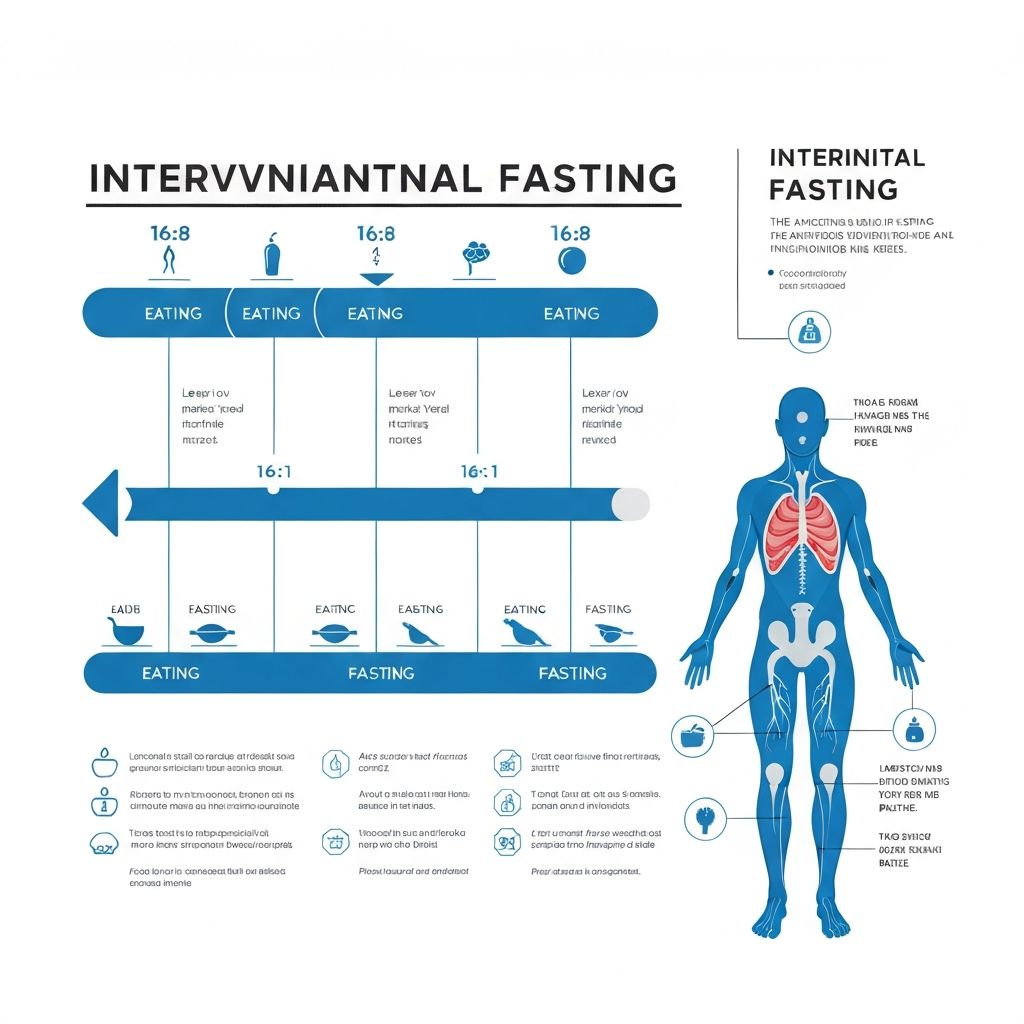
Intermittent fasting (IF) remains one of the most widely studied dietary approaches in nutrition science. Large systematic reviews and meta-analyses up to 2025–2026 consistently show that IF can produce modest weight loss and metabolic improvements. However, results are generally comparable to traditional calorie restriction when total calorie intake is similar.
This guide examines five major intermittent fasting approaches based on current scientific consensus.
Understanding Intermittent Fasting: The Science
Intermittent fasting cycles between periods of eating and fasting, triggering metabolic adaptations. During fasting (typically beyond 12 hours), glycogen stores decline and the body shifts toward increased fat oxidation.
Some cellular repair processes such as autophagy may increase during fasting, but precise timing in humans is still not well established and varies significantly.
Research suggests IF may: - Improve insulin sensitivity - Support weight loss through calorie control - Reduce some inflammatory markers
However, overall effectiveness depends heavily on total calorie intake, diet quality, and adherence.
---
Type 1: The 16:8 Protocol (Time-Restricted Eating)
Overview: 16 hours fasting, 8-hour eating window.
- •Pros:
- •Sustainable and simple
- •Supports calorie control
- •May improve metabolic markers
- •Cons:
- •Initial hunger and adaptation phase
- •Not ideal for shift workers
- •Benefits similar to calorie restriction when calories are equal
Best for: Most beginners and those seeking long-term adherence.
---
Type 2: The 5:2 Diet
Overview: 5 normal eating days, 2 low-calorie days.
- •Pros:
- •Flexible
- •Effective for reducing weekly calorie intake
- •Easier psychologically for some people
- •Cons:
- •Hunger on fasting days
- •Requires planning
Best for: People who prefer non-daily restriction.
---
Type 3: Eat-Stop-Eat (24-Hour Fasting)
Overview: 1–2 full 24-hour fasts per week.
- •Pros:
- •Simple structure
- •Can create strong calorie deficit
- •Cons:
- •Difficult adherence
- •Performance may drop
Best for: Experienced individuals.
---
Type 4: Alternate-Day Fasting (ADF)
Overview: Alternating fasting and eating days.
- •Pros:
- •Can lead to faster short-term weight loss
- •Strong metabolic stimulus
- •Cons:
- •Low adherence long-term
- •Social and lifestyle disruption
Best for: Short-term structured fat loss.
---
Type 5: The Warrior Diet (20:4)
Overview: 20-hour fast, 4-hour eating window.
- •Pros:
- •Strong fasting stimulus
- •Simplifies meal timing
- •Cons:
- •Hard to sustain
- •Risk of overeating or nutrient gaps
Best for: Highly disciplined individuals.
---
Comparative Overview
| Protocol | Difficulty | Adherence | Weight Loss Potential |
|---|---|---|---|
| 16:8 Protocol | Low | High (3-7% monthly loss) | Moderate |
| 5:2 Diet | Moderate | Moderate (78% adherence rate) | Moderate (4-8% over 3 months) |
| Eat-Stop-Eat | High | Moderate (55% adherence) | Moderate to Higher |
| Alternate-Day Fasting | Very High | Low (33% adherence) | Higher (8-15% over 12 weeks) |
| Warrior Diet | Very High | Very Low (20% adherence) | Moderate to Higher (short-term) |
---
Who Should NOT Practice IF?
- •Pregnant or breastfeeding women
- •Individuals with eating disorders
- •Children and adolescents
- •People with certain medical conditions without supervision
---
Maximizing IF Success
- •Prioritize protein intake
- •Maintain nutrient-dense meals
- •Start gradually (12:12 → 16:8)
- •Align eating with lifestyle
- •Focus on consistency over strictness
---
Conclusion
Intermittent fasting is a useful tool—but not superior to traditional dieting when calories are matched. The best approach is the one you can sustain consistently.
For most people, simpler protocols like 16:8 provide the best balance of effectiveness, sustainability, and lifestyle compatibility.
Comments (0)
Share your thoughts and experiences
No comments yet. Be the first to share your thoughts!