
How Step Count Influences Overall Health: Evidence-Based Guide
Discover how daily step count influences heart health, weight management, longevity, metabolic health, and overall wellness. Learn what current research says about walking and how many steps you may actually need.
Click a star to rate

Walking is one of the simplest forms of physical activity, yet it has a powerful influence on overall health.
Many people focus on intense workouts while overlooking the value of daily movement. Research consistently shows that higher daily step counts are associated with better cardiovascular health, improved metabolic health, greater mobility, and lower risk of premature death.
One reason walking is so effective is that it is accessible. Most adults can increase their daily movement without specialized equipment, gym memberships, or advanced fitness knowledge.
For beginners focused on fat loss and long-term health, increasing daily step count may be one of the most sustainable habits available.
Quick Answer
Daily step count influences overall health by increasing physical activity, reducing sedentary behavior, supporting cardiovascular fitness, improving metabolic health, and helping with weight management.
Research suggests that significant health benefits often begin below the traditional 10,000-step target. For many adults, gradually increasing daily movement can provide meaningful improvements in overall wellness.
What Is Step Count?
Step count refers to the total number of steps a person takes throughout the day.
Modern smartphones, fitness trackers, and smartwatches make it easy to monitor daily movement.
Step count includes:
- •Walking during exercise
- •Walking at work
- •Household activities
- •Shopping trips
- •Recreational movement
- •Daily errands
Because it captures total movement throughout the day, step count provides a practical measure of overall activity.
Why Step Count Matters
Modern lifestyles often involve long periods of sitting.
Extended sedentary behavior is associated with increased health risks.
Increasing daily step count helps offset some of the effects of prolonged inactivity by encouraging regular movement throughout the day.
Benefits may include:
- •Increased calorie expenditure
- •Improved cardiovascular fitness
- •Better blood sugar regulation
- •Improved mobility
- •Enhanced mental well-being
- •Reduced sedentary time
The Truth About 10,000 Steps
One of the most common fitness myths is that everyone must reach 10,000 steps every day.
The 10,000-step goal became popular through marketing rather than a specific medical recommendation.
However, that does not mean the target is useless.
For many adults, 10,000 steps is a reasonable activity goal. The important point is that substantial health benefits often occur below that number.
Current research suggests that moving from very low activity levels to moderate activity levels may produce some of the greatest improvements in health.
How Walking Supports Heart Health
Cardiovascular disease remains one of the leading causes of death worldwide.
Regular walking can support heart health in several ways.
Improved Cardiovascular Fitness
Walking challenges the heart, lungs, and circulatory system.
Over time, regular walking can improve endurance and physical capacity.
Blood Pressure Support
Consistent physical activity is associated with healthier blood pressure levels.
Walking may be a practical way for many adults to increase daily activity and support cardiovascular health.
Cholesterol Benefits
Regular physical activity can contribute to healthier cholesterol profiles when combined with an overall healthy lifestyle.
Step Count and Longevity
One of the most researched areas of walking is its relationship with longevity.
Large observational studies have consistently found that people who accumulate more daily steps tend to have a lower risk of premature death compared with individuals who are highly sedentary.
While studies cannot prove that step count alone causes longer life, the overall body of evidence strongly supports regular movement as part of a healthy lifestyle.
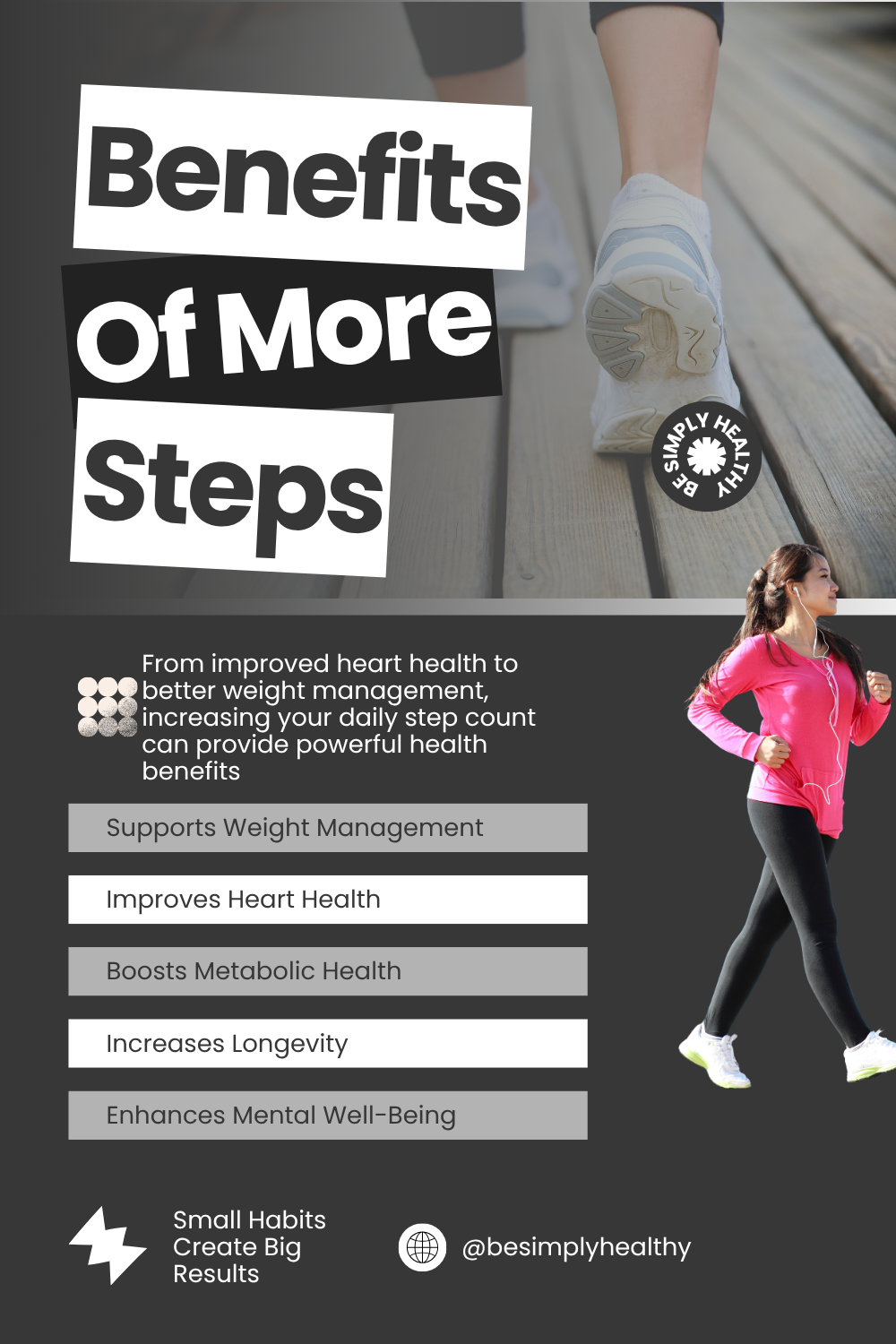
Key takeaway:
More movement is generally associated with better long-term health outcomes.
Can Walking Help With Weight Loss?
Walking is not a magic solution for fat loss.
However, it can play an important role in a sustainable weight-management plan.
Increased Calorie Expenditure
Every step requires energy.
Increasing daily step count raises total daily energy expenditure.
Over time, this can contribute to a calorie deficit when combined with appropriate nutrition habits.
Improved Consistency
Many people find walking easier to maintain than high-intensity exercise programs.
Consistency often matters more than short bursts of motivation.
Reduced Sedentary Time
Walking breaks up long periods of sitting and encourages a more active lifestyle.
This can support overall energy balance and health.
Step Count and Metabolic Health
Metabolic health includes factors such as:
- •Blood sugar regulation
- •Insulin sensitivity
- •Blood pressure
- •Body composition
- •Cholesterol levels
Regular movement may positively influence many of these factors.
Blood Sugar Management
Walking after meals may help support healthy blood sugar responses.
Insulin Sensitivity
Physical activity can improve how effectively the body uses insulin.
Energy Regulation
More movement throughout the day contributes to overall energy expenditure and metabolic function.
Mental Health Benefits of Walking
The benefits of walking extend beyond physical health.
Many people report improved mood and reduced stress after regular walks.
Potential benefits include:
- •Reduced stress
- •Improved mood
- •Better mental clarity
- •Increased energy levels
- •Enhanced overall well-being
Outdoor walking may provide additional benefits through exposure to natural environments.
How Many Steps Do You Really Need?
There is no single step target that is perfect for everyone.
Factors that influence ideal step goals include:
- •Age
- •Fitness level
- •Health status
- •Lifestyle
- •Personal goals
General guidance:
Beginners
Focus on establishing a baseline.
Track your average daily steps for one week.
Intermediate Goal
Increase your average by approximately 1,000 to 2,000 steps per day.
Long-Term Goal
Continue increasing movement until you reach a sustainable activity level that fits your lifestyle.
Consistency is more important than chasing a specific number.
Common Walking Myths
Myth 1: Less Than 10,000 Steps Is Pointless
Reality:
Research suggests meaningful benefits often occur well below 10,000 steps.
Myth 2: Walking Is Too Easy To Improve Health
Reality:
Walking is supported by a large body of evidence showing benefits for cardiovascular health, weight management, and overall wellness.
Myth 3: Only Intense Exercise Counts
Reality:
Total daily movement matters.
Walking contributes significantly to overall physical activity.
Practical Ways to Increase Daily Step Count
Take Walking Breaks
Stand up and walk for a few minutes every hour.
Walk After Meals
Short walks after meals can help increase activity and reduce sedentary time.
Park Further Away
Create opportunities for additional movement during daily errands.
Use Walking Meetings
Whenever possible, take phone calls while walking.
Track Progress
Use a smartphone or fitness tracker to monitor activity.
Sample Beginner Walking Plan
Week 1
Track current average daily steps.
Week 2
Add 1,000 steps daily.
Week 3
Add another 1,000 steps daily.
Week 4
Maintain consistency and focus on habit formation.
This gradual approach may be easier to sustain than dramatic increases.
FAQ
Does walking help with weight loss?
Walking can support weight loss by increasing calorie expenditure and encouraging a more active lifestyle. Sustainable results still depend on overall energy balance.
Is 10,000 steps necessary?
No. Meaningful health benefits often occur below 10,000 daily steps.
Can walking improve heart health?
Yes. Regular walking is associated with improved cardiovascular fitness and better overall heart health.
How many steps should beginners aim for?
Start by measuring your current average and gradually increase activity over time.
Is walking enough exercise?
Walking can be a valuable part of a healthy lifestyle. Some adults may also benefit from strength training and other forms of exercise depending on their goals.
Conclusion
Step count is a practical way to measure daily movement and overall activity.
Research consistently shows that increasing daily steps can support cardiovascular health, metabolic function, weight management, mobility, and long-term wellness.
The goal is not perfection.
The goal is to move more than you do today.
Rather than focusing exclusively on a specific number, build sustainable habits that increase movement throughout the day.
For many adults, a consistent walking routine may be one of the simplest and most effective investments in long-term health.
Comments (0)
Share your thoughts and experiences
No comments yet. Be the first to share your thoughts!