
How Chronic Stress Affects Physical Health: Evidence-Based Guide
Learn how chronic stress affects physical health, sleep, appetite, metabolism, recovery, heart health, and long-term wellness. Evidence-based guide for healthier living and sustainable weight management.
Click a star to rate

Chronic stress is often viewed as a mental or emotional problem, but its effects extend far beyond mood and mindset.
Stress is a normal biological response that helps humans respond to challenges and threats. In short bursts, this response can be beneficial. It helps increase alertness, focus, and energy when needed.
The problem occurs when stress becomes persistent.
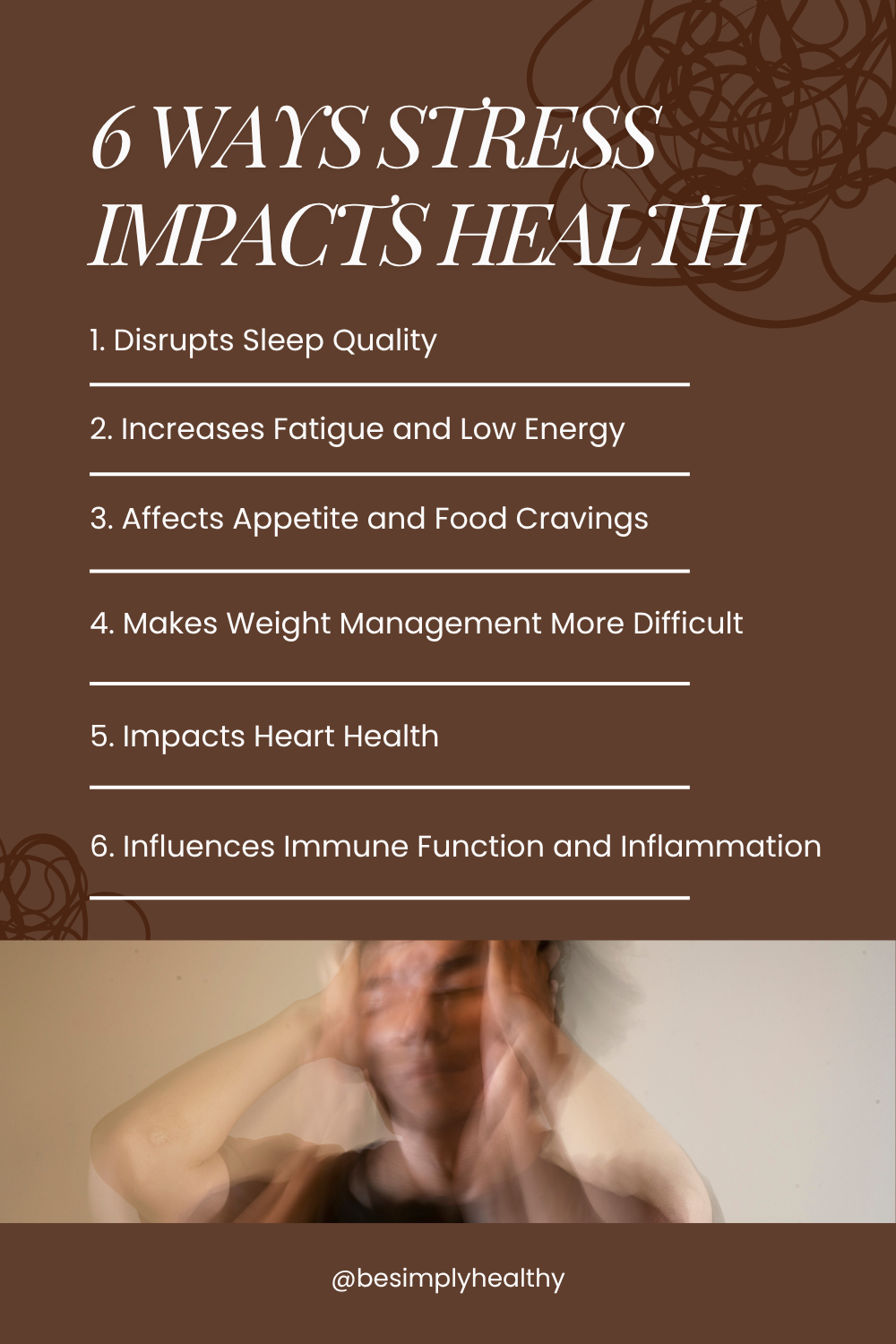
When the body remains in a prolonged state of stress for weeks, months, or years, multiple body systems can be affected. Research from major health organizations and scientific reviews suggests chronic stress may influence sleep, appetite regulation, cardiovascular health, immune function, recovery, physical activity habits, and overall well-being.
For adults trying to improve their health or lose weight, understanding the physical effects of stress is important because stress can indirectly influence many of the daily habits that support long-term health.
Rather than focusing solely on willpower, it is often helpful to understand how stress affects the body and what evidence-based strategies may help reduce its impact.
Quick Answer
Chronic stress affects physical health by keeping the body's stress-response systems activated for prolonged periods.
Over time, this may contribute to:
- •Poor sleep quality
- •Increased fatigue
- •Changes in appetite
- •Stronger food cravings
- •Reduced exercise recovery
- •Elevated blood pressure
- •Changes in immune function
- •Increased inflammation
- •Greater difficulty maintaining healthy habits
While stress does not automatically cause disease or weight gain, long-term exposure can influence many factors associated with overall health.
What Is Chronic Stress?
Stress is the body's natural response to challenges.
When a stressful event occurs, the nervous system activates what is commonly called the fight-or-flight response.
This response involves several biological changes including:
- •Increased heart rate
- •Increased alertness
- •Release of stress hormones
- •Redistribution of energy resources
These changes are designed to help the body manage short-term challenges.
Acute stress is temporary and usually resolves after the event passes.
Chronic stress occurs when stressors remain present for extended periods.
Common sources include:
- •Financial pressure
- •Work demands
- •Caregiving responsibilities
- •Relationship difficulties
- •Chronic sleep deprivation
- •Ongoing health concerns
- •Major life transitions
Unlike acute stress, chronic stress may keep the body's stress-response systems activated longer than intended.
How the Stress Response Works
Understanding the biology of stress helps explain why it can affect physical health.
The brain constantly evaluates internal and external environments for potential threats.
When a threat is perceived, the nervous system and hormonal systems respond rapidly.
Key components include:
The Nervous System
The sympathetic nervous system increases readiness by raising heart rate and directing resources toward immediate survival needs.
Stress Hormones
Hormones including cortisol help regulate energy availability and support the body's response to challenges.
Cortisol is often misunderstood online.
It is not inherently harmful.
In fact, cortisol is essential for normal health and survival.
Problems may arise when stress-related activation becomes prolonged and recovery periods become insufficient.
How Chronic Stress Affects Sleep
Sleep and stress have a bidirectional relationship.
Stress can make sleep more difficult.
Poor sleep can increase stress vulnerability.
This creates a cycle that may become difficult to break.
Common sleep-related effects include:
- •Difficulty falling asleep
- •Frequent nighttime awakenings
- •Reduced sleep quality
- •Feeling unrefreshed upon waking
- •Daytime fatigue
Sleep is one of the most important recovery processes in the human body.
When sleep quality declines, maintaining healthy habits often becomes more challenging.
Why Sleep Matters for Weight Management
Sleep influences:
- •Appetite regulation
- •Food choices
- •Energy levels
- •Physical activity
- •Recovery
Many people focus only on calories and exercise when pursuing weight loss.
However, inadequate sleep can make those behaviors significantly harder to maintain consistently.
Chronic Stress and Appetite
One of the most noticeable physical effects of stress is its impact on eating behavior.
Responses vary between individuals.
Some people experience reduced appetite during stressful periods.
Others experience increased hunger or stronger cravings.
Research suggests stress may influence:
- •Meal timing
- •Food choices
- •Portion sizes
- •Emotional eating patterns
- •Snacking frequency
Stress does not automatically cause overeating.
However, it may increase the likelihood of behaviors that contribute to excess calorie intake in some individuals.
Stress Eating vs Physical Hunger
Understanding the difference can be helpful.
Physical hunger often:
- •Develops gradually
- •Can be satisfied by many foods
- •Stops after fullness develops
Stress-related eating often:
- •Appears suddenly
- •Involves specific cravings
- •Continues despite fullness
- •Is linked to emotional discomfort
Recognizing these patterns may help individuals make more intentional food choices.
Can Stress Cause Weight Gain?
One of the most common questions in health and nutrition is whether stress causes weight gain.
The evidence suggests the answer is more nuanced than many headlines imply.
Stress alone does not automatically produce weight gain.
However, chronic stress may influence several factors associated with body weight.
These include:
- •Sleep quality
- •Food choices
- •Cravings
- •Physical activity levels
- •Recovery
- •Daily decision-making
- •Weight change is typically influenced by multiple factors working together rather than a single hormone or event.
The Stress and Weight Management Cycle
A common pattern may look like this:
- Stress increases.
- Sleep quality declines.
- Energy levels decrease.
- Cravings increase.
- Exercise consistency becomes harder.
- Recovery worsens.
- Healthy routines become more difficult to maintain.
Over time, these combined factors may affect body weight and overall health.
Myth: Cortisol Automatically Causes Belly Fat
Reality:
Cortisol is an essential hormone involved in many normal bodily functions.
While chronic stress may be associated with changes in body composition in some populations, current evidence does not support the simplistic idea that cortisol alone automatically creates belly fat.
Body composition is influenced by:
- •Energy balance
- •Sleep
- •Physical activity
- •Genetics
- •Nutrition
- •Medical conditions
- •Stress-related behaviors
A balanced understanding is more accurate than oversimplified social media claims.
How Stress Affects Physical Activity
Exercise is often recommended for stress management.
However, chronic stress can sometimes make exercise more difficult.
Many people notice:
- •Lower motivation
- •Increased fatigue
- •Reduced consistency
- •Slower recovery
- •Higher perceived effort
This can create another cycle where reduced activity contributes to poorer stress management.
Finding the Right Amount of Exercise
More exercise is not always better.
For highly stressed individuals, sustainable movement may be more beneficial than aggressive training plans.
Examples include:
- •Walking
- •Resistance training
- •Recreational sports
- •Cycling
- •Swimming
- •Yoga
The best exercise program is often the one that can be maintained consistently.
Chronic Stress and Recovery
Recovery is frequently overlooked in health discussions.
The body adapts to physical activity, work demands, and daily life during recovery periods.
When chronic stress remains elevated, recovery capacity may be affected.
Potential signs include:
- •Persistent fatigue
- •Reduced performance
- •Feeling mentally drained
- •Poor sleep quality
- •Increased irritability
- •Difficulty concentrating
Recovery is not laziness.
Recovery is a necessary component of long-term health.
Effects on Cardiovascular Health
One of the most studied areas of stress research involves cardiovascular health.
Research suggests chronic stress may contribute to factors associated with cardiovascular risk.
These include:
- •Elevated blood pressure
- •Increased heart rate
- •Reduced recovery after stressful events
- •Unhealthy coping behaviors
The relationship is complex.
Stress is one factor among many that influence cardiovascular health.
Other important factors include:
- •Smoking status
- •Physical activity
- •Nutrition
- •Sleep
- •Family history
- •Medical conditions
Why Heart Health Matters
Cardiovascular disease remains one of the leading health concerns worldwide.
Managing stress should be viewed as one component of a comprehensive heart-health strategy rather than a standalone solution.
Chronic Stress and Inflammation
Inflammation is a normal biological process that helps the body respond to injury and infection.
Short-term inflammation can be beneficial.
However, prolonged low-grade inflammation has been associated with numerous chronic health conditions.
Research continues to investigate how chronic stress may influence inflammatory pathways.
Current evidence suggests chronic stress can affect biological systems involved in immune and inflammatory responses.
What We Know
Strong evidence supports the idea that stress and immune function interact.
What We Still Don't Know
The exact magnitude of these effects varies considerably between individuals.
Lifestyle factors such as sleep, nutrition, physical activity, and social support also play important roles.
How Stress Influences Immune Function
The immune system and stress-response systems communicate closely.
Periods of prolonged stress may affect how the immune system functions.
Research suggests chronic stress can influence:
- •Immune regulation
- •Recovery from illness
- •Inflammatory processes
However, immune health is multifactorial.
Nutrition, sleep, physical activity, medical conditions, age, and environmental factors also contribute significantly.
Signs Your Body May Be Under Chronic Stress
Not everyone experiences stress the same way.
Common physical signs may include:
Sleep Problems
- •Difficulty falling asleep
- •Frequent waking
- •Non-restorative sleep
Fatigue
- •Low energy
- •Feeling tired despite sleeping
Changes in Appetite
- •Increased hunger
- •Reduced hunger
- •Stronger cravings
Muscle Tension
- •Tight shoulders
- •Neck discomfort
- •Jaw tension
Digestive Changes
- •Stomach discomfort
- •Changes in bowel habits
- •Digestive sensitivity
Reduced Recovery
- •Persistent soreness
- •Lower exercise performance
Difficulty Concentrating
- •Brain fog
- •Reduced focus
- •Mental fatigue
These symptoms can have many possible causes.
Persistent symptoms should be discussed with a qualified healthcare professional.
Evidence-Based Strategies to Reduce the Impact of Chronic Stress
The goal is not to eliminate stress completely.
Stress is a normal part of life.
The goal is to improve resilience and recovery.
1. Prioritize Sleep
Sleep is one of the highest-return health behaviors available.
Helpful practices include:
- •Consistent sleep schedule
- •Dark sleeping environment
- •Limiting late-night screen exposure
- •Avoiding excessive caffeine near bedtime
2. Walk More Frequently
Walking is accessible, sustainable, and supported by a large body of health research.
Benefits may include:
- •Stress reduction
- •Improved mood
- •Better cardiovascular health
- •Increased daily movement
3. Strength Train Consistently
Resistance training supports:
- •Muscle maintenance
- •Functional health
- •Metabolic health
- •Long-term physical function
Consistency matters more than perfection.
4. Build Balanced Meals
A balanced meal often includes:
- •Protein
- •Fiber-rich carbohydrates
- •Fruits and vegetables
- •Healthy fats
Balanced nutrition supports overall health and may help regulate hunger throughout the day.
5. Maintain Social Connections
Social support is consistently associated with improved well-being.
Healthy relationships may help buffer the effects of stress during challenging periods.
6. Practice Mindfulness
Mindfulness practices may help improve awareness of thoughts, emotions, and behaviors.
Examples include:
- •Meditation
- •Breathing exercises
- •Mindful walking
- •Guided relaxation
Current evidence suggests these practices may help some individuals manage stress more effectively.
Common Stress Myths
Myth 1: Stress Is Only Mental
Reality:
Stress affects both physical and mental health.
Myth 2: You Must Eliminate Stress Completely
Reality:
A stress-free life is unrealistic.
Developing effective coping skills and recovery habits is often a more practical goal.
Myth 3: More Exercise Always Fixes Stress
Reality:
Exercise can be beneficial, but excessive training without adequate recovery may increase fatigue in some individuals.
Myth 4: Stress Affects Everyone the Same Way
Reality:
Individual responses vary based on genetics, environment, health status, lifestyle habits, and available support systems.
Myth 5: Healthy People Don't Experience Stress
Reality:
Stress is a universal human experience.
Health is not determined by whether stress occurs, but by how effectively individuals respond and recover.
Daily Habits That Support Stress Resilience
Building resilience often involves small behaviors performed consistently.
Examples include:
- •Maintaining a regular sleep schedule
- •Walking daily
- •Strength training several times per week
- •Eating balanced meals
- •Staying hydrated
- •Spending time outdoors
- •Maintaining social connections
- •Practicing mindfulness
- •Setting healthy boundaries
- •Taking regular breaks during work
These habits may not eliminate stress, but they can improve the body's ability to manage it.
Practical Stress-Management Checklist
Use this simple checklist as a starting point:
□ Sleep 7–9 hours when possible
□ Walk daily
□ Include protein with meals
□ Eat fruits and vegetables regularly
□ Stay hydrated
□ Schedule recovery time
□ Limit unnecessary multitasking
□ Practice stress-management techniques
□ Maintain supportive relationships
□ Seek professional support when needed
Small improvements across multiple areas often create meaningful long-term results.
Sample Stress-Supportive Day
Morning
- •Wake at a consistent time
- •Eat a balanced breakfast
- •Take a short walk
Midday
- •Eat a protein-rich lunch
- •Take movement breaks
- •Hydrate regularly
Afternoon
- •Complete resistance training or recreational activity
- •Spend time outdoors if possible
Evening
- •Eat a balanced dinner
- •Limit excessive screen exposure
- •Follow a consistent bedtime routine
The goal is progress rather than perfection.
Frequently Asked Questions
What does chronic stress do to the body?
Chronic stress may affect sleep, appetite, energy levels, cardiovascular health, immune function, recovery, and overall well-being.
Can stress make weight loss harder?
Stress may influence behaviors related to sleep, eating habits, physical activity, and recovery, which can indirectly affect weight-management efforts.
Does cortisol automatically cause weight gain?
No. Cortisol is an essential hormone. Weight gain and body composition are influenced by many factors, including nutrition, sleep, activity levels, genetics, and stress-related behaviors.
What are common signs of chronic stress?
Common signs may include fatigue, sleep problems, increased cravings, muscle tension, digestive changes, irritability, and difficulty concentrating.
What is the best way to reduce stress?
There is no single best strategy. Evidence-based approaches often include adequate sleep, regular physical activity, balanced nutrition, social support, mindfulness practices, and professional support when needed.
Can stress affect heart health?
Research suggests chronic stress may contribute to factors associated with cardiovascular risk, including elevated blood pressure and unhealthy coping behaviors.
Is all stress harmful?
No. Short-term stress can be helpful and adaptive. Problems are more likely when stress becomes chronic and recovery is inadequate.
Key Takeaways
- •Chronic stress affects both physical and mental health.
- •Stress may influence sleep, appetite, recovery, cardiovascular health, and immune function.
- •Stress does not automatically cause weight gain, but it may affect behaviors related to weight management.
- •Sleep is one of the most important tools for improving resilience.
- •Consistent movement, balanced nutrition, and social support can help reduce the impact of chronic stress.
- •Small sustainable habits often produce better long-term outcomes than extreme approaches.
Conclusion
Chronic stress is not simply a mental challenge.
It is a whole-body experience that can influence sleep, appetite, energy levels, recovery, physical activity, cardiovascular health, immune function, and long-term well-being.
The good news is that many evidence-based strategies can help improve resilience and support better health.
Prioritizing sleep, maintaining regular physical activity, eating balanced meals, building supportive relationships, and practicing stress-management techniques can make a meaningful difference over time.
If you are working toward better health, improved fitness, or sustainable weight management, addressing chronic stress may be one of the most valuable investments you can make.
For more evidence-based health, nutrition, recovery, and weight-management resources, explore our complete wellness library and practical health guides.
Comments (0)
Share your thoughts and experiences
No comments yet. Be the first to share your thoughts!