
Healthy Habits Linked to Longer Life: Evidence-Based Guide for Healthy Aging and Fat Loss
Discover the healthy habits linked to longer life. Learn what current evidence suggests about physical activity, sleep, nutrition, stress management, muscle health, and healthy aging with practical steps for beginners.
Click a star to rate

Many people assume living a longer life requires expensive supplements, complicated routines, or the latest wellness trend.
Current evidence suggests something much simpler.
The habits most consistently associated with longer life are often basic lifestyle behaviors practiced repeatedly over many years.
While no habit can guarantee a longer lifespan, research from major health organizations and large population studies consistently shows that certain behaviors are associated with better health outcomes, lower risk of chronic disease, improved quality of life, and healthier aging.
The encouraging news is that many of these same habits can also support fat loss, weight management, improved energy levels, and overall wellness.
Quick Answer
Healthy habits most consistently linked to longer life include:
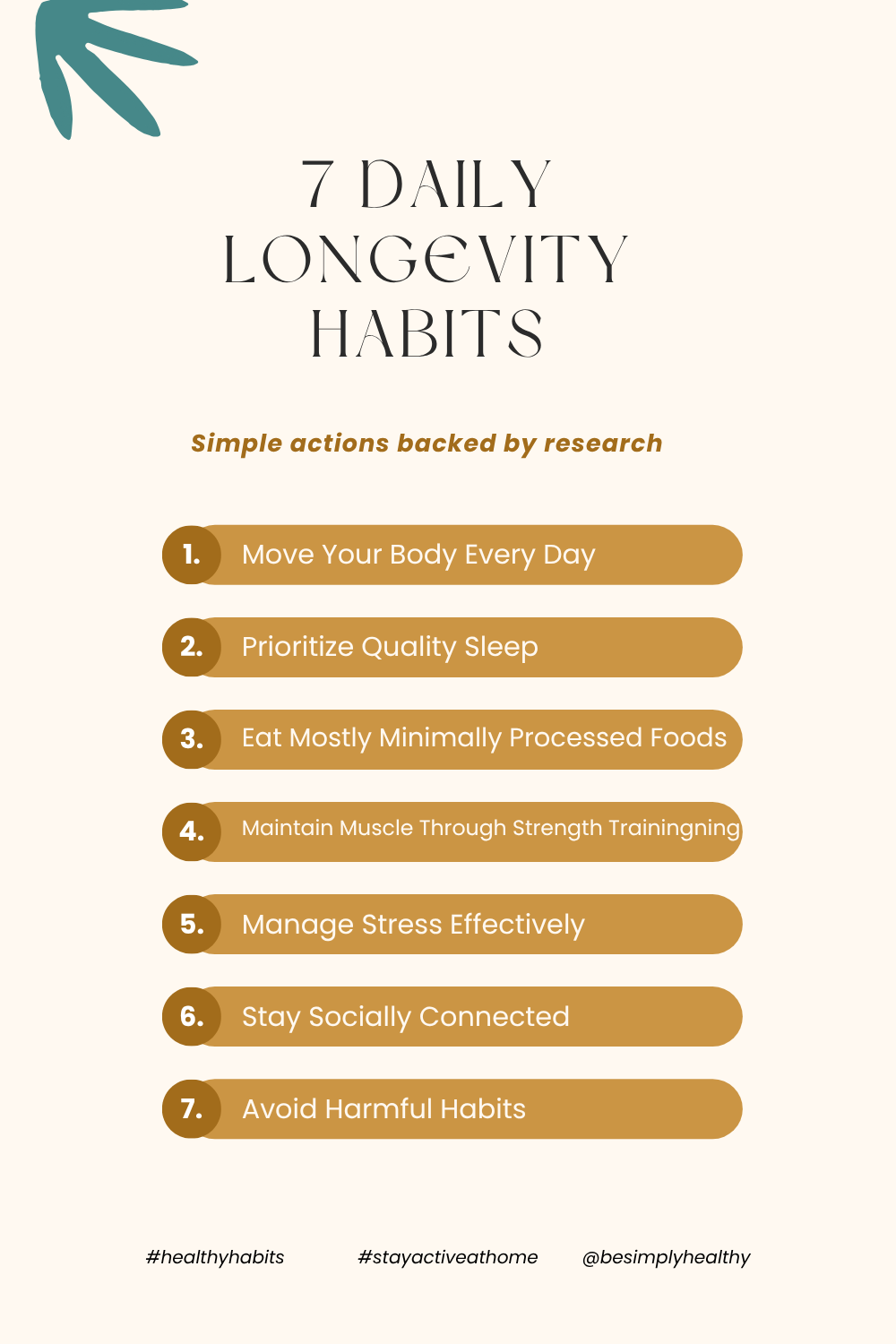
- •Regular physical activity
- •Strength training and muscle maintenance
- •Adequate sleep
- •Eating mostly minimally processed foods
- •Maintaining a healthy body composition
- •Managing chronic stress
- •Avoiding tobacco use
- •Limiting excessive alcohol consumption
- •Staying socially connected
- •Keeping up with preventive healthcare
The strongest evidence supports focusing on sustainable lifestyle patterns rather than quick fixes or extreme interventions.
Key Takeaways
- •Consistency matters more than perfection.
- •Physical activity remains one of the strongest lifestyle predictors of long-term health.
- •Sleep, nutrition, and stress management work together.
- •Muscle health becomes increasingly important with age.
- •Social relationships play a meaningful role in healthy aging.
- •No supplement can replace a healthy lifestyle foundation.
- •Small habits repeated daily often create the largest long-term benefits.
What Does “Living Longer” Really Mean?
When researchers discuss longevity, they often distinguish between lifespan and healthspan.
Lifespan
Lifespan refers to the total number of years a person lives.
Healthspan
Healthspan refers to the number of years spent in relatively good health and functional independence.
Most people are not simply interested in living longer.
They want to remain active, mobile, energetic, and independent for as many years as possible.
This is why healthy aging strategies typically focus on both lifespan and healthspan.
Why Daily Habits Matter More Than Occasional Effort
Many health decisions happen repeatedly every day.
Examples include:
- •Food choices
- •Activity levels
- •Sleep schedules
- •Stress management behaviors
- •Alcohol consumption
- •Smoking status
A single healthy meal rarely changes long-term health.
A healthy eating pattern practiced for years can.
A single workout provides benefits.
Years of consistent physical activity provide substantially greater benefits.
This is one reason behavior-based approaches tend to be more sustainable than temporary diets or short-term challenges.
Habit 1: Stay Physically Active
Among lifestyle factors, regular physical activity has some of the strongest and most consistent evidence supporting healthy aging.
Physical activity benefits nearly every major body system.
Potential benefits include:
- •Improved cardiovascular health
- •Better blood sugar regulation
- •Stronger bones
- •Better mobility
- •Improved mental well-being
- •Support for healthy body weight
- •Enhanced quality of life
Walking Counts
One common misconception is that exercise must be intense to provide benefits.
Walking remains one of the most accessible forms of physical activity.
Benefits of walking may include:
- •Improved cardiovascular fitness
- •Increased daily energy expenditure
- •Better mood
- •Support for weight management
- •Improved mobility
For beginners, walking is often one of the best places to start.
Practical Walking Goal
Consider:
- •10 to 20 minutes daily for beginners
- •Gradually increasing duration
- •Adding hills or faster walking over time
The best walking routine is the one you can maintain consistently.
Habit 2: Maintain Muscle Through Strength Training
Many adults focus heavily on body weight while overlooking muscle mass.
Muscle plays a major role in:
- •Mobility
- •Balance
- •Functional independence
- •Metabolic health
- •Daily activity performance
Muscle naturally declines with age unless steps are taken to maintain it.
Why Muscle Matters for Healthy Aging
Maintaining muscle can help support:
- •Everyday movement
- •Healthy metabolism
- •Fall prevention
- •Physical independence
Strength training is not only for athletes or bodybuilders.
It is an important component of healthy aging.
Beginner Strength Training Ideas
Examples include:
- •Bodyweight squats
- •Wall pushups
- •Resistance bands
- •Dumbbell exercises
- •Machine-based workouts
Two to three sessions per week can be a practical starting point for many adults.
Habit 3: Prioritize Sleep
Sleep is often sacrificed in modern lifestyles.
However, sleep influences many aspects of health.
These include:
- •Recovery
- •Appetite regulation
- •Energy levels
- •Cognitive function
- •Mood
- •Physical performance
Poor sleep can make healthy eating and exercise more difficult.
How Much Sleep Do Adults Need?
Most adults generally benefit from approximately seven to nine hours of sleep per night.
Individual needs vary.
Quality matters in addition to quantity.
Simple Sleep Habits
Helpful practices may include:
- •Maintaining a consistent bedtime
- •Reducing late-night screen exposure
- •Limiting caffeine late in the day
- •Keeping the bedroom cool and comfortable
- •Establishing a relaxing bedtime routine
- •### Common Sleep Mistakes
Many people focus on sleep duration while overlooking consistency.
Going to bed and waking up at similar times each day may help support better sleep quality.
Habit 4: Build Meals Around Minimally Processed Foods
Nutrition research is complex, and individual dietary needs vary.
However, many dietary patterns associated with positive health outcomes share common characteristics.
They tend to emphasize:
- •Vegetables
- •Fruits
- •Legumes
- •Whole grains
- •Nuts
- •Seeds
- •Lean protein sources
- •Healthy fats
Rather than focusing on a single “superfood,” it is often more helpful to look at overall eating patterns.
The Mediterranean-Style Pattern
One of the most studied dietary patterns is the Mediterranean-style eating pattern.
Common features include:
- •High intake of vegetables
- •Fruits and legumes
- •Whole grains
- •Olive oil
- •Fish
- •Moderate dairy intake
- •Limited highly processed foods
Current evidence generally supports this style of eating as part of a healthy lifestyle.
Nutrition and Fat Loss
For individuals focused on fat loss, food quality matters.
Helpful strategies include:
- •Eating adequate protein
- •Increasing vegetable intake
- •Choosing fiber-rich foods
- •Limiting ultra-processed snack foods
- •Planning meals ahead of time
Sustainable changes usually outperform highly restrictive diets.
Habit 5: Maintain a Healthy Body Composition
Body weight is only one health measure.
However, maintaining a healthy body composition is associated with multiple health benefits.
Excess body fat, particularly around the abdomen, is associated with increased risk for several chronic diseases.
At the same time, preserving muscle remains important.
Focus on Behaviors, Not Just the Scale
Instead of obsessing over daily scale fluctuations, focus on:
- •Physical activity
- •Protein intake
- •Sleep quality
- •Consistent meal habits
- •Stress management
These behaviors often influence body composition over time.
Habit 6: Manage Chronic Stress
Stress is a normal part of life.
Chronic unmanaged stress is different.
Long-term stress may influence:
- •Sleep quality
- •Eating habits
- •Physical activity
- •Mental well-being
- •Overall quality of life
Healthy Stress Management Strategies
Examples include:
- •Walking outdoors
- •Mindfulness practices
- •Meditation
- •Deep breathing exercises
- •Journaling
- •Social support
- •Time management strategies
Different approaches work for different people.
The goal is not eliminating stress completely.
The goal is improving resilience and recovery.
Signs Stress May Need Attention
Potential signs include:
- •Difficulty sleeping
- •Increased irritability
- •Emotional eating
- •Constant fatigue
- •Reduced motivation
- •Difficulty concentrating
If stress significantly affects daily functioning, consulting a qualified healthcare professional may be helpful.
Habit 7: Stay Socially Connected
Many people are surprised to learn that social connection is frequently discussed in healthy aging research.
Humans are social by nature.
Meaningful relationships may support:
- •Emotional well-being
- •Mental health
- •Stress management
- •Healthy lifestyle behaviors
Social Connection Does Not Require Large Groups
Examples include:
- •Spending time with family
- •Maintaining friendships
- •Community involvement
- •Volunteer activities
- •Shared hobbies
- •Support groups
Quality often matters more than quantity.
Habit 8: Avoid Tobacco Use
Among all lifestyle behaviors, avoiding tobacco remains one of the most impactful health decisions a person can make.
Major health organizations consistently identify tobacco use as a significant risk factor for numerous diseases.
Benefits of quitting can begin relatively quickly and continue over time.
If You Currently Smoke
Seeking support may improve success rates.
Options can include:
- •Healthcare professionals
- •Smoking cessation programs
- •Behavioral support
- •Evidence-based treatment approaches
Quitting is often difficult, but health benefits can be substantial.
Habit 9: Limit Excessive Alcohol Consumption
Alcohol is frequently portrayed as harmless in wellness discussions.
The reality is more nuanced.
Current evidence suggests that excessive alcohol consumption can negatively affect health.
Potential concerns include:
- •Liver health
- •Sleep quality
- •Weight management
- •Injury risk
- •Certain chronic diseases
For individuals who choose to drink alcohol, moderation is generally recommended.
Habit 10: Stay Current With Preventive Healthcare
Healthy habits matter.
Preventive healthcare matters too.
Regular health screenings may help identify potential issues earlier.
Examples may include:
- •Blood pressure monitoring
- •Cholesterol testing
- •Blood glucose screening
- •Cancer screening recommendations
- •Routine medical checkups
Recommendations vary by age, sex, medical history, and risk factors.
Consulting healthcare professionals can help determine appropriate screening schedules.
Common Longevity Myths
Myth 1: Genetics Determine Everything
Reality:
Genetics influence health, but lifestyle behaviors also play an important role.
While no one can change their genes, lifestyle factors remain modifiable.
Myth 2: You Need Expensive Supplements
Reality:
Most longevity evidence focuses on lifestyle behaviors rather than supplement use.
Supplements may have specific uses in certain situations, but they are not substitutes for healthy habits.
Myth 3: Extreme Diets Produce Better Results
Reality:
Highly restrictive diets are often difficult to sustain.
Long-term consistency tends to matter more than short-term perfection.
Myth 4: Exercise Must Be Intense
Reality:
Walking, recreational activity, and moderate exercise can provide meaningful benefits.
Some activity is generally better than none.
Myth 5: Healthy Aging Starts Later in Life
Reality:
Healthy aging begins much earlier than most people realize.
Small habits practiced today may influence future health outcomes. ## A Simple Beginner Longevity Action Plan
Trying to improve everything at once can feel overwhelming.
Instead, focus on one or two habits at a time.
Week 1
- •Walk 10 to 20 minutes daily
- •Add one serving of vegetables each day
Week 2
- •Establish a consistent bedtime
- •Continue walking routine
Week 3
- •Add two strength-training sessions
Week 4
- •Evaluate stress management habits
- •Schedule preventive healthcare appointments if needed
Small improvements accumulate over time.
Daily Longevity Checklist
Use this simple checklist:
- •Moved your body today
- •Ate vegetables or fruit
- •Included a protein source
- •Stayed hydrated
- •Prioritized sleep
- •Managed stress constructively
- •Connected with another person
- •Avoided tobacco
- •Limited excessive alcohol intake
You do not need a perfect score every day.
The goal is long-term consistency.
Evidence Summary
Current evidence is strongest for:
- •Regular physical activity
- •Smoking avoidance
- •Healthy dietary patterns
- •Adequate sleep
- •Maintaining healthy body composition
- •Social connection
- •Strength training and muscle preservation
Evidence for many popular longevity supplements remains limited or mixed.
Lifestyle habits continue to form the foundation of most evidence-based healthy aging recommendations.
Frequently Asked Questions
What is the healthiest habit for longevity?
There is no single healthiest habit.
However, regular physical activity consistently ranks among the most important lifestyle factors associated with healthy aging and long-term health.
Can healthy habits guarantee a longer life?
No.
Healthy habits cannot guarantee a specific lifespan.
They may improve the likelihood of better health outcomes and healthier aging.
Is walking enough for healthy aging?
Walking provides many benefits.
For optimal health, many adults may benefit from combining walking with strength training and other forms of physical activity.
Do I need supplements to live longer?
Current evidence does not support the idea that most people need numerous supplements for longevity.
Healthy lifestyle behaviors remain the primary focus of most evidence-based recommendations.
What should beginners focus on first?
Many beginners benefit from starting with:
- •Daily walking
- •Better sleep habits
- •Increased vegetable intake
- •Consistent meal patterns
Starting small often improves long-term adherence.
Does fat loss help healthy aging?
For individuals carrying excess body fat, improving body composition may support overall health.
The most sustainable approach usually combines nutritious eating, physical activity, adequate sleep, and consistent habits.
Common Mistakes That Slow Progress
Many people unintentionally make healthy living harder than necessary.
Examples include:
- •Trying to change everything at once
- •Following extreme diets
- •Ignoring sleep
- •Depending on motivation alone
- •Looking for shortcuts
- •Comparing progress to others
Successful behavior change is often built on realistic expectations and sustainable routines.
When to Speak With a Healthcare Professional
Consider professional guidance if you:
- •Have chronic medical conditions
- •Are beginning a new exercise program after a long period of inactivity
- •Experience persistent sleep problems
- •Need help managing stress
- •Have concerns about weight, nutrition, or overall health
Personalized recommendations are often more useful than generic advice.
Newsletter Resource
Want more evidence-based health and nutrition content?
Explore our healthy aging resources, beginner-friendly meal planning guides, weight-management articles, and science-backed wellness strategies.
Our newsletter shares practical, research-informed tips designed to help you build sustainable habits that support long-term health.
Conclusion
The healthy habits linked to longer life are not usually dramatic.
They are the daily behaviors that support overall health year after year.
Current evidence consistently points toward:
- •Regular physical activity
- •Strength training
- •Nutritious eating patterns
- •Quality sleep
- •Stress management
- •Social connection
- •Avoiding tobacco
- •Responsible alcohol habits
- •Preventive healthcare
You do not need to implement everything today.
Start with one habit.
Practice it consistently.
Then build from there.
Over time, small actions can become powerful foundations for healthier aging, improved well-being, and a better quality of life.
Comments (0)
Share your thoughts and experiences
No comments yet. Be the first to share your thoughts!