
Exercise Snacks: Can Short Workouts Improve Health? Evidence-Based Guide
Discover whether exercise snacks really work. Learn the science behind short workouts, how they improve health, support fat loss, and help busy beginners become more active with evidence-based recommendations.
Click a star to rate

Finding an uninterrupted hour to exercise can feel impossible for many adults. Busy workdays, family responsibilities, commuting, and other commitments often push workouts to the bottom of the priority list.
Fortunately, growing research suggests there may be another approach.
Instead of relying on one long workout, many health experts now recommend incorporating "exercise snacks" throughout the day.
Exercise snacks are short bursts of physical activity that typically last from 30 seconds to 10 minutes. They are designed to break up long periods of sitting while helping you accumulate meaningful physical activity over the course of the day.
Although these mini workouts may seem too short to matter, scientific research over the past several years suggests they can improve cardiovascular fitness, blood sugar regulation, muscular fitness, and overall health when performed consistently.
For beginners, exercise snacks may also remove one of the biggest barriers to exercise: believing that workouts only count if they last 30 to 60 minutes.
What Are Exercise Snacks?
Exercise snacks are brief sessions of moderate-to-vigorous physical activity performed several times throughout the day.
Unlike traditional exercise programs that require a dedicated block of time, exercise snacks fit naturally into everyday routines.
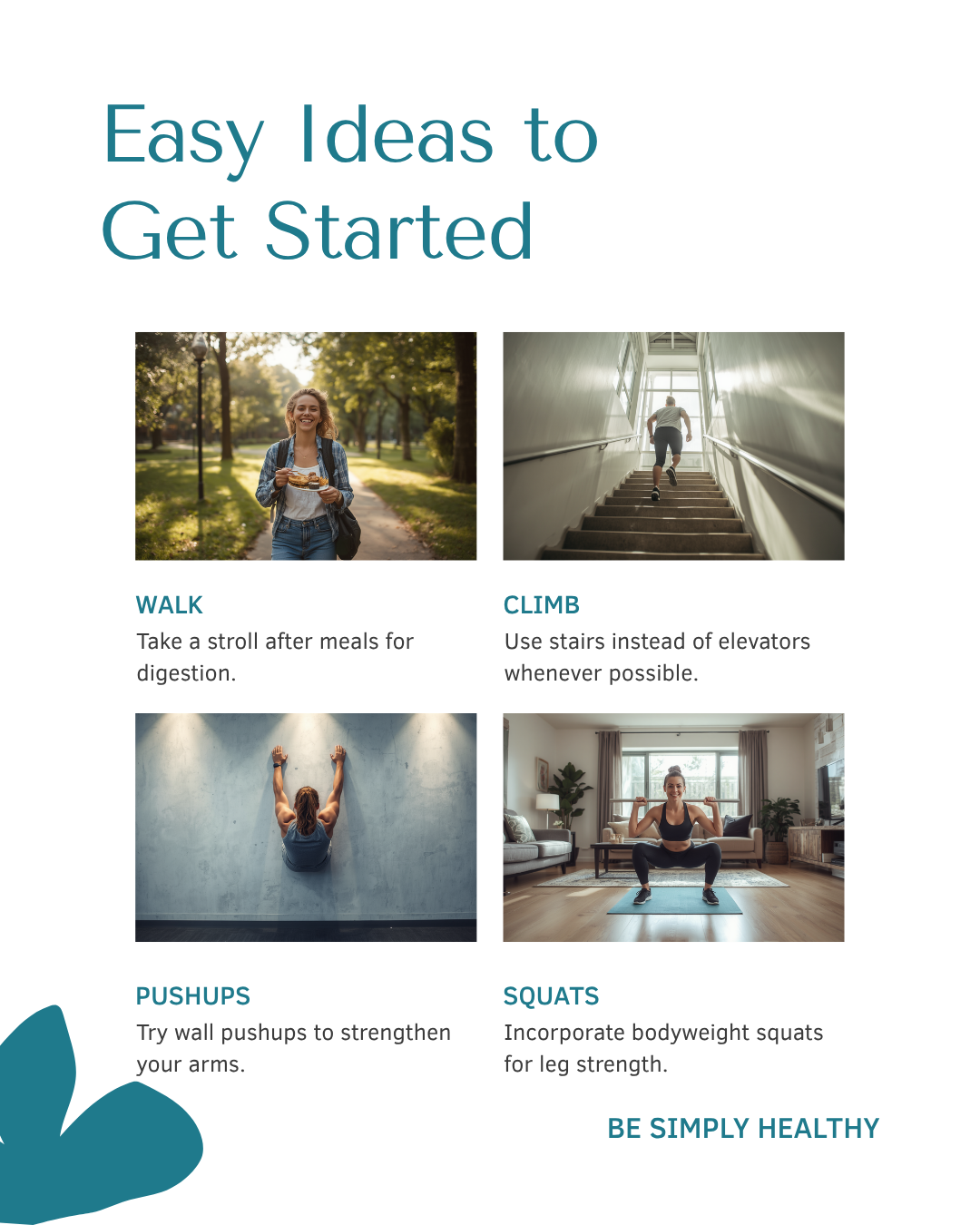
Examples include:
- •Climbing several flights of stairs
- •Brisk walking for five minutes
- •Performing bodyweight squats
- •Walking after meals
- •Push-ups against a wall
- •Marching in place
- •Lunges
- •Jumping jacks
- •Chair sit-to-stands
Each activity may only take a few minutes, but together they contribute toward your weekly physical activity goals.
One important distinction is that exercise snacks are intentional movement. Walking to refill your coffee is beneficial, but choosing to walk briskly around the building for five minutes is an exercise snack.
Why Are Exercise Snacks Becoming Popular?
Many adults remain insufficiently active despite knowing that exercise is good for their health.
One of the most common reasons people give is a lack of time.
Research consistently shows that time-efficient exercise programs improve adherence because they feel more realistic and manageable.
Instead of asking yourself whether you have time for an hour-long workout, you simply ask:
"Can I move for three minutes?"
Most people can answer yes.
That psychological shift makes consistency much easier.
Small wins repeated every day often lead to bigger lifestyle changes over time.
The Science Behind Exercise Snacks
Exercise snacks are not simply a social media trend.
Several randomized controlled trials and systematic reviews have investigated whether multiple short bouts of exercise provide measurable health benefits.
Current evidence suggests that accumulating physical activity throughout the day can improve several important health markers.
While more long-term research is still needed for certain outcomes, today's evidence is encouraging.
Benefit 1: Better Cardiovascular Fitness
Cardiorespiratory fitness is one of the strongest predictors of long-term health.
Some studies have shown that repeated short bouts of stair climbing or brisk activity performed several times daily can improve aerobic fitness, often measured as VO₂ max.
Improving cardiovascular fitness supports:
- •Heart health
- •Lung function
- •Daily energy levels
- •Exercise capacity
- •Healthy aging
Although longer structured exercise sessions remain valuable, short workouts performed consistently can still produce meaningful improvements, especially for previously inactive adults.
Benefit 2: Improved Blood Sugar Control
One of the most promising areas of research involves blood glucose regulation.
Prolonged sitting can lead to larger blood sugar spikes after meals.
Interrupting sedentary time with brief movement appears to improve post-meal glucose responses.
Examples include:
- •Walking for five minutes after eating
- •Climbing stairs
- •Bodyweight movements
- •Light cycling
This may be particularly useful for adults who spend most of their workday sitting.
Current evidence suggests these activity breaks can improve insulin sensitivity, although they should complement—not replace—medical treatment when needed.
Benefit 3: Reduced Sedentary Time
Many people spend eight to ten hours sitting every day.
Even individuals who exercise regularly may still experience health risks associated with prolonged uninterrupted sitting.
Exercise snacks encourage frequent movement throughout the day, reducing long sedentary periods.
Examples include:
- •Standing every hour
- •Walking during phone calls
- •Taking the stairs
- •Stretching between meetings
- •Performing quick mobility exercises
Reducing sedentary behavior is now recognized as an important health goal independent of structured exercise.
Benefit 4: Supports Fat Loss Habits
Exercise snacks are not a magic solution for weight loss.
Current evidence indicates that sustainable fat loss still depends primarily on maintaining an overall calorie deficit through nutrition and physical activity.
However, exercise snacks can support fat-loss efforts by:
- •Increasing daily energy expenditure
- •Encouraging consistent movement
- •Reducing prolonged inactivity
- •Reinforcing healthy habits
- •Making exercise feel less intimidating
For beginners, building consistency often matters more than chasing high-calorie workouts.
Five minutes performed every day is usually more sustainable than sixty minutes performed once every few weeks.
Benefit 5: Easier Habit Formation
Behavior change research consistently shows that small habits are easier to maintain.
Exercise snacks reduce friction.
Instead of changing clothes, driving to a gym, and committing an hour, you simply start moving.
This creates:
- •Lower mental resistance
- •Higher confidence
- •Better consistency
- •More opportunities for success
Over time, many people naturally progress from short activity breaks to longer structured workouts. ## Are Exercise Snacks Enough?
One of the biggest misconceptions is that exercise snacks completely replace traditional exercise.
The answer is nuanced.
For many beginners, exercise snacks are an excellent place to start.
They help increase daily physical activity, improve consistency, and reduce sedentary behavior.
However, most public health organizations still recommend working toward the weekly physical activity guidelines for adults.
These generally include:
- •At least 150 to 300 minutes of moderate-intensity aerobic activity each week, or 75 to 150 minutes of vigorous activity.
- •Muscle-strengthening activities involving all major muscle groups on at least two days per week.
Exercise snacks can help you build toward these recommendations.
Rather than viewing them as an alternative to regular exercise, think of them as a practical strategy that makes an active lifestyle more achievable.
Examples of Exercise Snacks You Can Do Anywhere
One of the best features of exercise snacks is that they require little or no equipment.
1. Five-Minute Brisk Walk
Walk quickly around your office, neighborhood, or home.
Benefits:
- •Raises heart rate
- •Improves circulation
- •Breaks up sitting time
- •Suitable for nearly all fitness levels
2. Stair Climbing
Walk up and down one or two flights of stairs for one to five minutes.
Benefits:
- •Challenges the cardiovascular system
- •Strengthens the legs
- •Requires no special equipment
If you have knee pain or balance concerns, choose another activity instead.
3. Bodyweight Squats
Perform 10–20 controlled repetitions.
Benefits:
- •Builds lower-body strength
- •Improves mobility
- •Helps maintain muscle mass
Beginners can use a chair for support.
4. Wall Push-Ups
Stand facing a wall and perform 10–20 repetitions.
Benefits:
- •Strengthens the chest
- •Improves upper-body endurance
- •Beginner friendly
5. Marching in Place
March briskly for two to five minutes.
Benefits:
- •Raises heart rate
- •Improves coordination
- •Easy to perform indoors
6. Chair Sit-to-Stands
Stand up and sit down repeatedly from a sturdy chair.
Benefits:
- •Improves leg strength
- •Supports functional fitness
- •Helpful for older adults
7. Walking After Meals
Take a five- to ten-minute walk after breakfast, lunch, or dinner.
Benefits:
- •Helps reduce prolonged sitting
- •Supports blood sugar regulation
- •Encourages consistent daily movement
Walking after meals is one of the easiest exercise snacks to build into an existing routine.
How Many Exercise Snacks Should You Do?
There is no universal prescription.
Current evidence suggests that regularly interrupting long periods of sitting is beneficial.
A practical beginner goal is:
- •Two to five exercise snacks each day
- •Two to ten minutes each
- •Moderate intensity whenever possible
As fitness improves, increase either:
- •Frequency
- •Duration
- •Intensity
The best exercise snack is the one you can consistently perform.
Exercise Snacks for Busy Professionals
Many office workers spend most of the day sitting.
Simple movement breaks can fit naturally into the workday.
Ideas include:
- •Walk while taking phone calls.
- •Climb stairs before lunch.
- •Perform squats between meetings.
- •Stretch every hour.
- •Walk to a coworker instead of sending a message.
- •Park farther away.
- •Walk during coffee breaks.
Small decisions repeated daily can substantially increase overall movement.
Exercise Snacks at Home
If you work remotely or stay at home, exercise snacks are just as easy.
Try:
- •Lunges while waiting for coffee
- •Counter push-ups
- •Dancing to one favorite song
- •Carrying groceries in multiple trips
- •Step-ups using sturdy stairs
- •Jump rope
- •Light resistance-band exercises
The goal is not perfection.
The goal is to move more often than you did yesterday.
Common Myths About Exercise Snacks
Myth 1: Short Workouts Don't Count
Reality:
Every minute of movement contributes toward a healthier lifestyle.
Current physical activity recommendations recognize that activity accumulated throughout the day provides meaningful health benefits.
Myth 2: You Must Sweat for Exercise to Be Effective
Reality:
Many health benefits occur even with moderate-intensity activity.
While vigorous exercise has additional advantages, brisk walking and other moderate activities still improve health.
Myth 3: Exercise Snacks Burn Enough Calories for Major Weight Loss
Reality:
Exercise snacks increase daily calorie expenditure but are unlikely to produce large weight-loss results on their own.
Long-term fat loss depends on overall nutrition, physical activity, sleep, stress management, and maintaining a calorie deficit.
Myth 4: Exercise Snacks Replace Strength Training
Reality:
Exercise snacks complement structured strength training but should not completely replace it.
Adults should still aim to perform muscle-strengthening exercises at least twice weekly.
Myth 5: You Need Special Equipment
Reality:
Most exercise snacks use body weight alone.
Walking, stair climbing, chair exercises, and mobility drills require little to no equipment. ## A Simple 7-Day Exercise Snack Challenge
If you're new to exercise, don't worry about finding the perfect workout.
Instead, focus on building the habit of moving more often.
Here's an example challenge.
Day 1
- •Take one five-minute brisk walk.
Day 2
- •Take two five-minute walks.
Day 3
- •Add one set of chair squats.
Day 4
- •Walk after one meal.
Day 5
- •Complete three exercise snacks throughout the day.
Day 6
- •Include one upper-body movement such as wall push-ups.
Day 7
- •Combine walking, bodyweight exercises, and stretching for a total of 20–30 minutes accumulated throughout the day.
This gradual approach helps improve confidence without feeling overwhelming.
How to Make Exercise Snacks a Daily Habit
Consistency is more important than perfection.
These practical strategies can make exercise snacks easier to maintain over the long term.
Pair Movement with Existing Habits
Habit stacking is one of the simplest ways to remember your activity breaks.
For example:
- •Walk immediately after eating lunch.
- •Perform squats while waiting for your coffee to brew.
- •Stretch before brushing your teeth at night.
- •March in place while watching television.
Attaching movement to routines you already perform reduces the need to rely on motivation alone.
Set Calendar or Phone Reminders
Long periods of sitting often happen without us noticing.
A reminder every 60 to 90 minutes can prompt you to stand up and move for a few minutes before returning to work.
Keep Equipment Visible
Although most exercise snacks require no equipment, keeping a resistance band, exercise mat, or comfortable walking shoes nearby makes movement even easier.
Reducing barriers increases the likelihood that you'll follow through.
Focus on Progress, Not Perfection
Missing one exercise snack isn't failure.
The goal is to build a sustainable lifestyle where movement becomes a normal part of your day.
Small improvements performed consistently often produce better long-term results than ambitious plans that are difficult to maintain.
Safety Tips Before You Start
Exercise snacks are appropriate for most healthy adults, but they should still match your current fitness level.
Keep these recommendations in mind:
- •Begin with low- to moderate-intensity activities if you're new to exercise.
- •Increase intensity gradually as your fitness improves.
- •Wear supportive footwear for walking or stair climbing.
- •Stay hydrated, especially in warm environments.
- •Stop exercising if you experience chest pain, severe dizziness, or unusual shortness of breath, and seek medical evaluation.
- •Individuals with chronic medical conditions, recent injuries, or mobility limitations should speak with a qualified healthcare professional before starting a new exercise program.
Frequently Asked Questions
Do exercise snacks really work?
Yes. Current research suggests that short bouts of physical activity performed throughout the day can improve cardiorespiratory fitness, reduce sedentary time, and support blood sugar regulation. While they may not replace every benefit of structured exercise, they are significantly better than remaining inactive.
Can exercise snacks help me lose weight?
Exercise snacks can support weight-loss efforts by increasing daily physical activity and helping establish consistent exercise habits. However, sustainable weight loss also depends on maintaining an overall calorie deficit through nutrition and lifestyle.
How long should an exercise snack be?
Most exercise snacks last anywhere from 30 seconds to 10 minutes. Even brief sessions can contribute to your total daily activity.
Can beginners start with exercise snacks?
Absolutely.
Exercise snacks are particularly helpful for beginners because they reduce the intimidation associated with long workouts and make regular movement easier to fit into busy schedules.
What is the best exercise snack?
The best exercise snack is one that fits your lifestyle and can be repeated consistently.
For many beginners, brisk walking, stair climbing, bodyweight squats, and walking after meals are excellent places to start.
Key Takeaways
Exercise doesn't have to happen in one long session to benefit your health.
Exercise snacks provide a practical, evidence-based way to increase daily movement, reduce sedentary behavior, and build a sustainable fitness habit.
Although they should not completely replace structured aerobic and strength training, they offer an effective strategy for people who struggle to find time for traditional workouts.
Whether you start with one five-minute walk or several short activity breaks each day, every movement counts.
The most effective exercise program is the one you can continue for months and years—not just a few weeks.
Related Articles
Continue building your healthy lifestyle with these evidence-based guides:
- •Walking After Meals: Benefits for Blood Sugar and Weight Management
- •How Much Exercise Do You Really Need Each Week?
- •Progressive Overload for Beginners
- •Strength Training for Fat Loss
- •Active Recovery vs Complete Rest
- •Health Risks of Sitting Too Much
- •Best Home Exercises for Beginners
Conclusion
Exercise snacks demonstrate that meaningful improvements in health don't always require long gym sessions.
Current evidence supports the idea that accumulating short bouts of physical activity throughout the day can improve cardiovascular fitness, reduce prolonged sitting, support blood sugar regulation, and help beginners develop lasting exercise habits.
If you've been waiting for the "perfect" time to start exercising, consider replacing that goal with something much smaller.
Stand up.
Move for a few minutes.
Repeat tomorrow.
Those small moments of movement can add up to significant health benefits over time.
Remember, consistency beats perfection.
Comments (0)
Share your thoughts and experiences
No comments yet. Be the first to share your thoughts!