
Do Detox Diets Work? What They Can and Can’t Do
Do detox diets remove toxins or lead to lasting fat loss? Learn what the evidence says, why cleanses can change the scale quickly, and what to do instead.
Click a star to rate

The short answer: detox diets are not proven to remove vague, unnamed “toxins” from your body or create lasting fat loss. Your liver, kidneys, lungs, digestive system, and skin already do the work of processing waste and substances your body does not need.
That does not mean every habit included in a detox plan is useless. Drinking more water, eating more fruits and vegetables, reducing alcohol, and cooking more meals can be helpful. The problem is the detox promise attached to them. A juice-only plan, laxative tea, expensive powder, or very low-calorie cleanse is not required to support normal body function.
If your real goal is fat loss, better digestion, or a reset after a stretch of unstructured eating, a short period of simpler, balanced meals is usually more useful than a cleanse.
What does “detox” actually mean?
In medicine, detoxification can refer to supervised treatment for alcohol or drug withdrawal, or to the body’s handling of substances. In diet marketing, the word is often much less precise. Products may promise to “flush toxins,” “clean the colon,” “reset metabolism,” or “melt fat” without naming the substance, explaining the mechanism, or showing that the product improves an important health outcome.
That lack of detail matters. A meaningful health claim should answer basic questions: What is being removed? From where? How is it measured? Does removing it improve health? Detox marketing often skips those questions.
Your body already has a detoxification system
Your body is not passive while you wait for the right juice or tea. Several organs work continuously:
- •The liver changes and processes many substances, including nutrients, alcohol, medicines, and metabolic by-products.
- •The kidneys filter blood and remove waste through urine while helping regulate fluid and electrolyte balance.
- •The lungs remove carbon dioxide when you breathe out.
- •The digestive system moves indigestible material and some waste out of the body in stool.
- •The skin helps regulate temperature and produces sweat, but sweating is not a major route for clearing most toxins.
These systems can be affected by disease, medication, alcohol use, dehydration, and other health conditions. A commercial detox is not a substitute for medical care when a person has symptoms or concerns about organ function.
Why can a detox make the scale drop quickly?
This is where detox diets can feel convincing. A person may lose several pounds after a few days of juice, soup, fasting, or a tightly restricted menu. But a rapid scale change is not automatically body-fat loss.
When you eat much less food or fewer carbohydrates than usual, your stored carbohydrate supplies decline. Those stores are held with water, so the scale can move quickly. Less sodium, less restaurant food, and less food physically moving through the digestive tract can also change body weight for a short time.
Actual fat loss requires a sustained energy deficit over time. Extreme restriction can create one, but it is rarely a comfortable or durable way to eat. When normal eating resumes, water weight commonly returns. That is not failure; it is normal physiology.
What does the evidence say about detox diets?
There is limited high-quality research on commercial detox diets, and the available evidence does not support broad claims that cleanses remove toxins or provide lasting weight-loss results. Short studies may report changes in body weight or certain lab measures, but that is not the same as proving a product has cleared harmful substances or improved long-term health.
It is also hard to study “detox” as one thing. A three-day juice fast, a tea that acts as a laxative, a supplement protocol, and a whole-food meal plan sold as a reset have very different risks and nutrient profiles. The label does not tell you whether an approach is sensible.
The more reliable takeaway is simpler: dietary patterns that include minimally processed foods, enough protein, fiber-rich plants, adequate fluids, and an appropriate amount of energy can support health. They do not need a detox label to work.
Common detox methods and their tradeoffs
Juice cleanses
Juices can contain vitamins and plant compounds, but juice-only plans are usually low in protein and may be low in fiber because much of the pulp is removed. They can be expensive, leave people hungry, and make it difficult to meet nutrition needs. Eating whole fruit and vegetables gives you the benefits of those foods with more chewing and fiber.
Detox teas
Some teas are simply flavored herbal drinks. Others contain stimulant laxatives or ingredients that increase bowel movements. Frequent bowel movements are not evidence that fat is being lost or that toxins are leaving the body. Laxative products can cause cramping, diarrhea, dehydration, and electrolyte problems, especially when used repeatedly.
Fasting-style cleanses
Some people find a planned overnight fasting window practical. That is different from prolonged fasting or a very-low-calorie cleanse marketed as detoxification. Longer restriction may be unsafe for people who are pregnant, breastfeeding, underweight, managing diabetes, taking certain medicines, or living with a history of an eating disorder. It can also lead to dizziness, headaches, low energy, and rebound overeating.
Supplements and “cleansing” powders
Supplements are not automatically harmless because they are sold as natural. Their ingredients, doses, interactions, and quality can vary. Be especially skeptical of products that promise rapid weight loss, colon cleansing, or dramatic toxin removal.
When a reset can be useful—without the detox claims
Sometimes “I need a detox” means something more ordinary: you have been eating irregularly, drinking more alcohol than you want, relying on takeout, or feeling uncomfortable after a holiday or stressful week. That feeling is valid. The answer is usually to return to basics, not to punish yourself with a cleanse.
Try a seven-day reset built around ordinary meals:
- Eat regular meals instead of skipping food all day and overeating at night.
- Include a protein source at meals, such as eggs, fish, chicken, beans, tofu, yogurt, or lean meat.
- Add fiber gradually with vegetables, fruit, beans, oats, whole grains, nuts, or seeds.
- Choose water as your usual drink and limit alcohol for the week.
- Keep convenient meals available for busy days.
- Walk, stretch, or do another form of movement you can repeat.
- Aim for a consistent sleep schedule rather than chasing a perfect plan.
This is less dramatic than a cleanse. It is also much closer to the habits that can support weight management over months rather than days.
A practical fat-loss example
Imagine someone who normally skips breakfast, buys a sweet coffee and pastry midmorning, eats a large lunch when very hungry, then snacks heavily at night. A detox might temporarily cut calories, but it does not solve the pattern that makes the person feel out of control around food.
A more useful experiment could be a filling breakfast, a planned lunch with protein and vegetables, fruit or yogurt for an afternoon snack, and a simple dinner. The scale may move more slowly, but the person is learning an eating pattern they can actually keep.
Red flags before buying a detox product
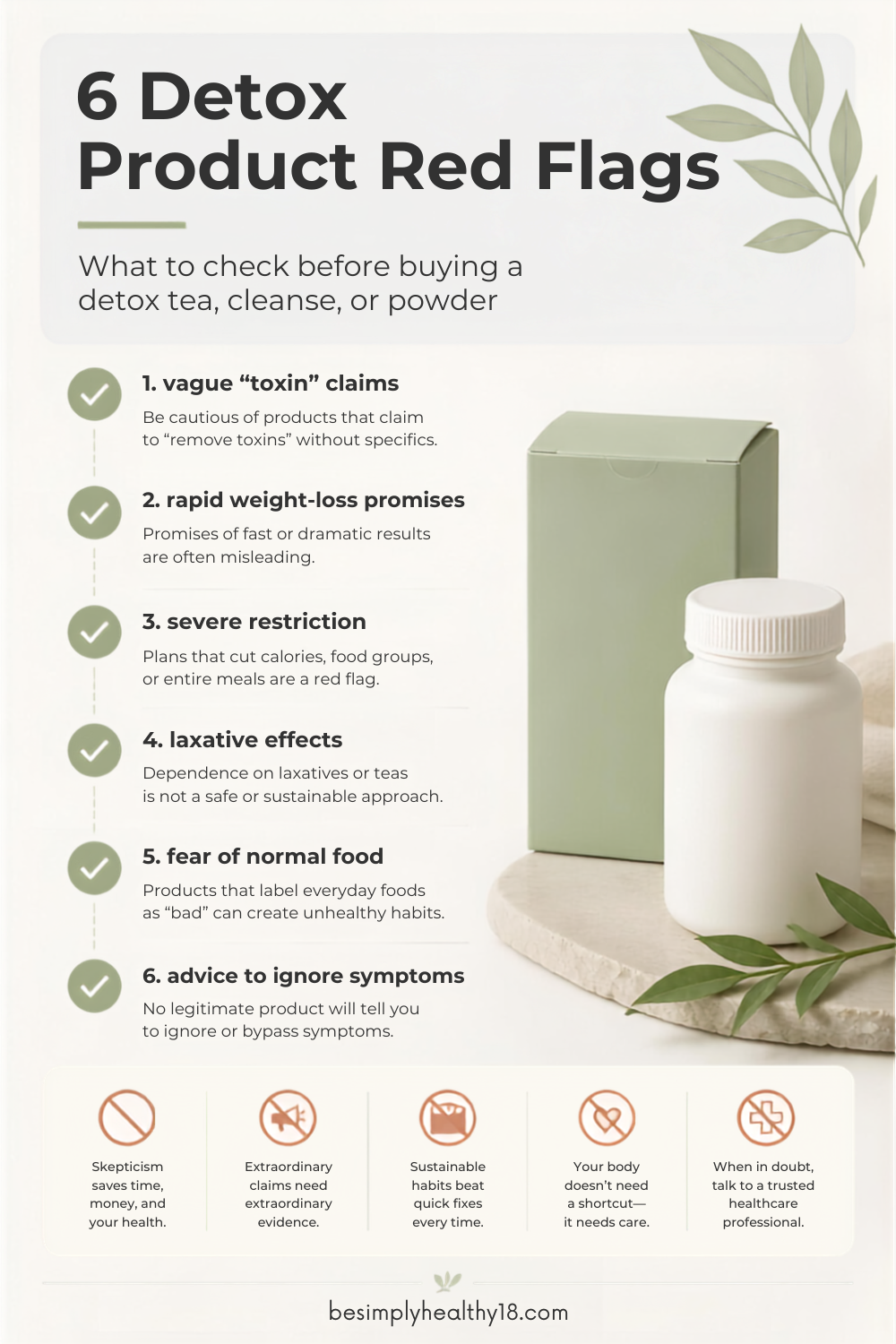
Pause before purchasing if a product:
- •Promises to remove toxins without naming or measuring them.
- •Claims rapid fat loss with little effort.
- •Suggests that normal foods are “toxic” or that your body cannot function without a cleanse.
- •Uses before-and-after photos as its main evidence.
- •Encourages frequent laxative use, severe restriction, or replacing meals for long periods.
- •Tells you to avoid medical treatment or stop prescribed medication.
Good health advice can explain its limits. It does not need fear to make its point.
When to speak with a healthcare professional
Do not try to self-treat ongoing digestive symptoms, unexplained fatigue, yellowing of the skin or eyes, persistent vomiting, blood in stool, or other concerning symptoms with a cleanse. Seek clinical advice instead. It is also wise to check before starting fasting or supplement plans if you take medication or have a medical condition.
FAQ
Can detox diets help you lose weight?
They can lower the scale quickly because of reduced food intake and water-weight changes, but they are not a proven route to lasting fat loss. A repeatable calorie deficit with satisfying meals is more useful.
Do detox teas burn fat?
No good evidence shows that detox teas selectively burn body fat. Some may act as laxatives, which can change bowel movements and fluid balance without causing meaningful fat loss.
Do you need to detox after eating unhealthy food?
No. Return to regular meals, fluids, sleep, and activity. One meal, weekend, or holiday does not require a compensatory cleanse.
Is sweating a detox?
Sweating helps regulate body temperature. It is not a reliable way to remove most substances that detox products claim to clear.
The bottom line
Detox diets sell a simple story: follow a strict plan, remove hidden toxins, and start over. The evidence is much less dramatic. Your body already has systems for processing and eliminating waste, while lasting fat loss comes from habits that are modest enough to repeat.
Keep the parts that genuinely help—more whole foods, hydration, less alcohol, regular movement, and better sleep. Skip the cleanse claims, the fear-based marketing, and anything that leaves you underfed or unwell.
Comments (0)
Share your thoughts and experiences
No comments yet. Be the first to share your thoughts!