
Can Resistance Bands Build Muscle? Evidence-Based Guide for Beginners
Can resistance bands build muscle? Learn what exercise science says about muscle growth, resistance bands vs weights, fat loss, progressive overload, and how beginners can achieve results with evidence-based training strategies.
Click a star to rate
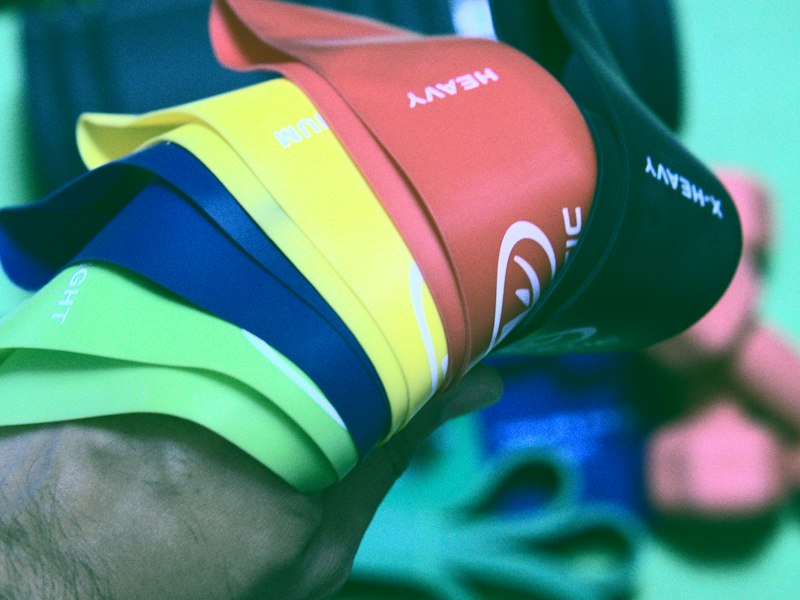
Resistance bands are often underestimated.
Many people assume that real muscle growth requires a gym membership, heavy barbells, expensive machines, or racks of dumbbells. Because of this belief, resistance bands are frequently dismissed as tools for rehabilitation, stretching, or warm-ups rather than serious strength training.
The reality is more nuanced.
Research on resistance training suggests that muscles respond to tension, effort, and progressive overload rather than a specific piece of equipment. When used properly, resistance bands can provide enough resistance to stimulate muscle growth, improve strength, and support body composition goals in many beginners and intermediate exercisers.
For adults focused on fat loss, resistance bands offer an additional advantage. They make strength training more accessible, affordable, and convenient, reducing many of the barriers that prevent people from exercising consistently.
So, can resistance bands build muscle?
The short answer is yes.
The longer answer depends on how they are used, your current fitness level, and whether your training program applies the principles that drive muscle growth.
💡 Recommended Product: These bands are perfect for home workouts or therapy! Very easy to use.
View on Amazon →The Short Answer: Can Resistance Bands Build Muscle?
Yes, resistance bands can build muscle.
Muscle growth, also known as hypertrophy, occurs when muscles are exposed to sufficient tension and challenge over time. Research suggests that muscle growth can occur across a wide range of resistance levels when exercises are performed with adequate effort and are progressed appropriately.
This means that resistance bands can stimulate muscle growth when:
- •Exercises are challenging enough
- •Workouts are performed consistently
- •Progressive overload is applied
- •Recovery and nutrition support adaptation
- •Training is continued over time
For beginners, resistance bands often provide more than enough resistance to build strength and increase muscle size.
In many cases, the limiting factor is not the equipment itself but the consistency and progression of the training program.
Why Muscles Grow
To understand whether resistance bands can build muscle, it helps to understand how muscle growth works.
Muscles adapt to stress.
When resistance is applied during exercise, tiny amounts of muscle damage and metabolic stress occur. The body responds by repairing and strengthening muscle tissue.
Over time, this adaptation can result in:
- •Increased muscle size
- •Improved strength
- •Better muscular endurance
- •Enhanced physical function
Contrary to popular belief, muscles do not recognize whether resistance comes from:
- •Barbells
- •Dumbbells
- •Machines
- •Resistance bands
- •Bodyweight exercises
Muscles respond to force and tension.
If a resistance band creates sufficient tension, it can contribute to the same basic adaptation process.
What Research Says About Resistance Bands and Muscle Growth
The idea that only heavy weights build muscle is not supported by the totality of modern evidence.
Several systematic reviews and meta-analyses examining resistance training suggest that muscle growth can occur across a variety of loading ranges when exercises are performed close to muscular fatigue.
In practical terms, this means that lighter resistance performed with high effort can stimulate muscle growth similarly to heavier resistance in many situations.
Research comparing elastic resistance training with traditional resistance training has often found comparable improvements in strength and muscle function, particularly among beginners and recreational exercisers.
This does not mean resistance bands and heavy free weights are identical.
Instead, it suggests that resistance bands can be a legitimate muscle-building tool when used appropriately.
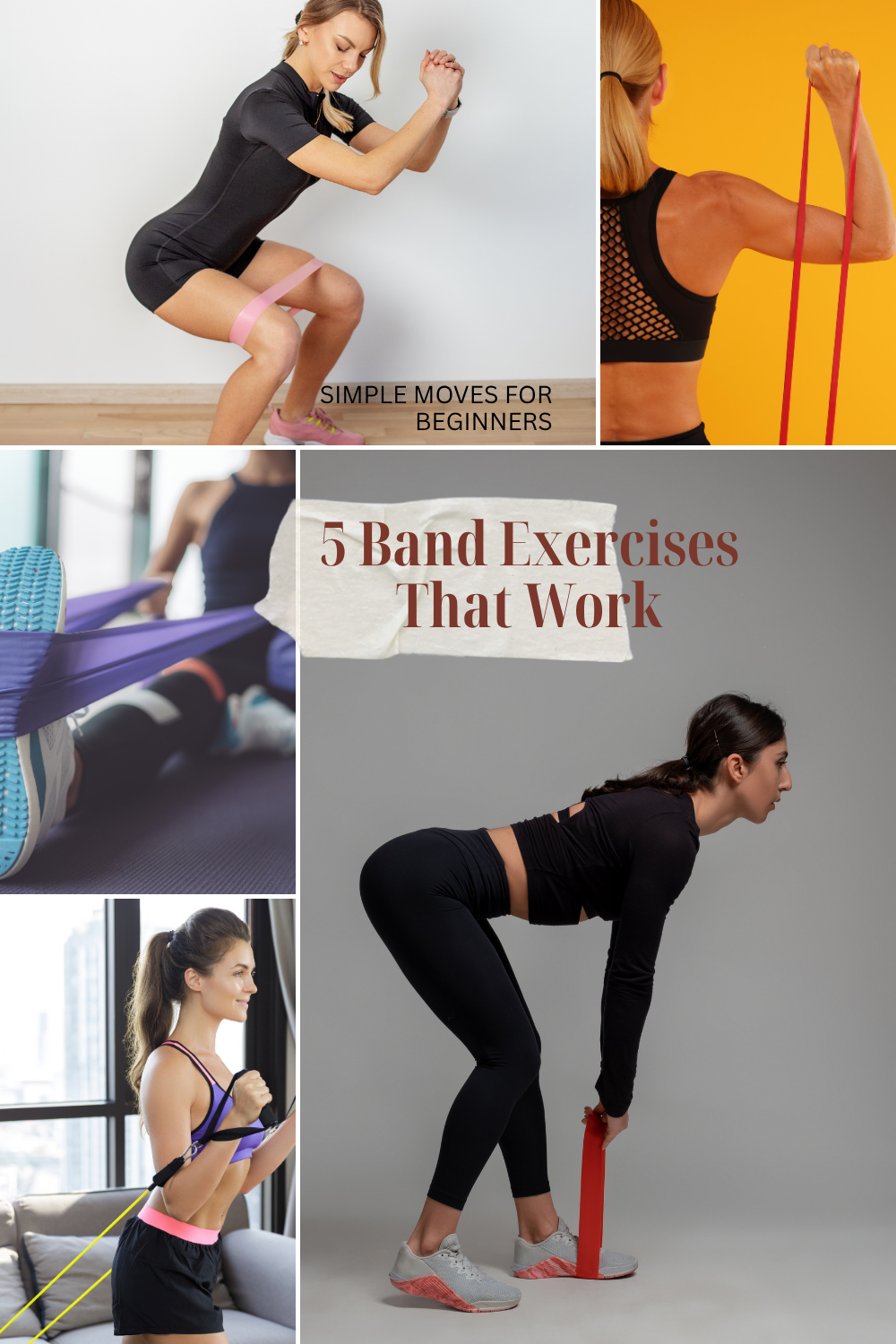
What the Evidence Supports
Current evidence generally supports the following conclusions:
- •Resistance bands can increase muscle size.
- •Resistance bands can improve strength.
- •Resistance bands can support fat-loss programs by preserving lean mass.
- •Resistance bands are effective for beginners.
- •Resistance bands can provide meaningful resistance for many muscle groups.
What the Evidence Does Not Support
Current evidence does not support the claim that resistance bands are useless for muscle growth.
It also does not support the idea that everyone can achieve unlimited strength gains using only bands.
Like every training tool, resistance bands have advantages and limitations.
Resistance Bands vs Weights
One of the most common questions is whether resistance bands are as effective as weights.
The answer depends on the goal.
For Beginners
Resistance bands can be highly effective.
Many beginners have not yet developed the strength levels that require extremely heavy external loads.
Because of this, resistance bands can provide a sufficient training stimulus while offering several benefits:
- •Lower cost
- •Portability
- •Minimal space requirements
- •Beginner-friendly learning curve
- •Easy home use
For Muscle Growth
Both weights and resistance bands can contribute to muscle growth.
The most important factor is whether the muscles are challenged enough to adapt.
A resistance band chest press performed close to muscular fatigue may stimulate growth similarly to many traditional chest exercises.
For Maximum Strength
Heavy free weights may provide an advantage.
Athletes pursuing maximal strength development often require very high levels of resistance that can be easier to achieve with barbells and specialized equipment.
This is one reason competitive powerlifters and strength athletes rely heavily on traditional resistance training.
For Convenience
Resistance bands are difficult to beat.
A complete resistance band set can fit into a backpack and be used:
- •At home
- •During travel
- •Outdoors
- •In small apartments
- •In hotel rooms
Convenience often improves consistency, and consistency is one of the strongest predictors of long-term fitness success.
The Most Important Principle: Progressive Overload
The biggest mistake people make with resistance bands is using the same resistance for months without increasing the challenge.
Muscles adapt.
When an exercise becomes easy, the body has less reason to continue adapting.
This is where progressive overload becomes essential.
Progressive overload means gradually increasing the demands placed on the body over time.
With resistance bands, progression can occur in several ways.
Use Stronger Bands
Many resistance band systems include multiple resistance levels.
Moving from a lighter band to a heavier band increases training demand.
Perform More Repetitions
If an exercise initially feels challenging for 10 repetitions and later becomes easy, increasing repetitions can create additional stimulus.
Add More Sets
Increasing training volume is another method of progression.
For example:
- •Week 1: 2 sets
- •Week 4: 3 sets
- •Week 8: 4 sets
Slow Down the Movement
Controlling the lowering phase of an exercise can increase time under tension.
This often makes exercises significantly more challenging without changing equipment.
Reduce Rest Periods
Shorter rest periods can increase overall training difficulty and work capacity.
Choose More Advanced Exercises
As strength improves, exercise selection can evolve.
Examples include progressing from:
- •Assisted squats to band squats
- •Standard rows to single-arm rows
- •Basic presses to more advanced variations
Why Resistance Bands Can Be Helpful for Fat Loss
Many people searching for information about resistance bands are primarily interested in losing weight.
While resistance training does not directly cause large amounts of fat loss on its own, it plays an important role in a comprehensive weight-management strategy.
One major benefit is preserving lean muscle mass.
During weight loss, the body may lose both fat and muscle tissue.
Resistance training helps signal the body to retain muscle while reducing body fat.
Maintaining muscle supports:
- •Strength
- •Physical function
- •Daily activity
- •Long-term metabolic health
- •Healthy body composition
For beginners who feel intimidated by traditional gyms, resistance bands provide an accessible way to begin strength training at home.
Best Resistance Band Exercises for Muscle Growth
Certain exercises provide particularly good muscle-building potential because they target large muscle groups and allow progression over time.
1. Resistance Band Squats
Primary muscles:
- •Quadriceps
- •Glutes
- •Hamstrings
Benefits:
- •Trains the lower body
- •Improves functional strength
- •Suitable for beginners
2. Resistance Band Rows
Primary muscles:
- •Upper back
- •Lats
- •Rear shoulders
Benefits:
- •Improves posture
- •Strengthens pulling muscles
- •Balances pressing exercises
3. Resistance Band Chest Press
Primary muscles:
- •Chest
- •Triceps
- •Front shoulders
Benefits:
- •Home-based alternative to bench pressing
- •Easy to progress
- •Effective for upper-body development
4. Resistance Band Shoulder Press
Primary muscles:
- •Deltoids
- •Triceps
Benefits:
- •Builds upper-body strength
- •Improves shoulder function
- •Requires minimal equipment
5. Resistance Band Glute Bridges
Primary muscles:
- •Glutes
- •Hamstrings
Benefits:
- •Targets the posterior chain
- •Beginner-friendly
- •Supports lower-body development
6. Resistance Band Romanian Deadlifts
Primary muscles:
- •Hamstrings
- •Glutes
- •Lower back
Benefits:
- •Strengthens hip hinge mechanics
- •Supports athletic movement patterns
7. Resistance Band Lat Pulldowns
Primary muscles:
- •Latissimus dorsi
- •Upper back
Benefits:
- •Helps build back width
- •Useful when pull-up equipment is unavailable
Sample Beginner Resistance Band Workout
Perform this routine two to three times per week.
Exercise 1: Band Squats 2-4 sets 8-15 repetitions
Exercise 2: Band Rows 2-4 sets 8-15 repetitions
Exercise 3: Band Chest Press 2-4 sets 8-15 repetitions
Exercise 4: Band Shoulder Press 2-4 sets 8-15 repetitions Exercise 5: Band Glute Bridges 2-4 sets 10-20 repetitions
Exercise 6: Plank 2-3 sets 20-60 seconds
As exercises become easier, increase resistance or difficulty to maintain progress.
Common Resistance Band Mistakes
Resistance bands are effective, but certain mistakes can limit results.
Mistake 1: Never Increasing Resistance
Using the same band forever limits progression.
Muscles require increasing challenges to continue adapting.
Mistake 2: Stopping Sets Too Early
Many people end sets long before the muscles are adequately challenged.
While every set does not need to reach complete failure, exercises should generally feel challenging.
Mistake 3: Ignoring Recovery
Muscles grow during recovery, not during the workout itself.
Important recovery factors include:
- •Sleep
- •Protein intake
- •Hydration
- •Stress management
- •Rest days
Mistake 4: Doing Only Easy Exercises
Progress often requires gradually advancing exercise difficulty.
A workout that felt difficult months ago may no longer provide enough stimulus today.
Mistake 5: Expecting Immediate Results
Muscle growth is typically a gradual process.
Consistent effort over weeks and months matters more than searching for a perfect exercise program.
Nutrition Still Matters
Even the best resistance band program cannot compensate for poor nutrition.
Muscle growth requires adequate energy and nutrients.
Protein Intake
Protein provides the building blocks needed to repair and build muscle tissue.
Good protein sources include:
- •Fish
- •Poultry
- •Eggs
- •Greek yogurt
- •Cottage cheese
- •Lean meats
- •Tofu
- •Tempeh
- •Beans
- •Lentils
Many active adults benefit from distributing protein intake across meals throughout the day.
Fruits and Vegetables
Fruits and vegetables provide:
- •Vitamins
- •Minerals
- •Fiber
- •Antioxidants
These nutrients support overall health and recovery.
Hydration
Adequate hydration supports exercise performance and overall health.
Sustainable Eating Habits
The best nutrition plan is one that can be maintained consistently.
Extreme approaches are often less effective than balanced, sustainable habits.
Who Should Use Resistance Bands?
Resistance bands can be useful for many populations.
Beginners
Resistance bands offer an approachable introduction to strength training.
Busy Adults
Bands make it easier to exercise at home without extensive equipment.
Travelers
Portable resistance bands allow workouts almost anywhere.
Older Adults
Resistance training supports healthy aging, muscle maintenance, and physical function.
People Building a Home Gym
Bands can be an affordable starting point before investing in larger equipment.
Who Might Eventually Need More Than Bands?
While resistance bands can be highly effective, some individuals may eventually require additional training tools.
Examples include:
- •Competitive powerlifters
- •Advanced bodybuilders
- •Elite strength athletes
- •Individuals pursuing maximal strength development
These populations often benefit from access to heavier external loads.
However, this limitation does not reduce the value of resistance bands for general health, fitness, muscle building, and fat-loss goals.
Resistance Bands vs Dumbbells
Many beginners compare resistance bands directly with dumbbells.
Both can be effective.
Advantages of Resistance Bands
- •Portable
- •Affordable
- •Space efficient
- •Travel friendly
- •Beginner friendly
Advantages of Dumbbells
- •Easy load progression
- •Familiar movement patterns
- •Excellent for strength development
- •Widely available
For many beginners, the best choice is the option that encourages consistent training.
Signs Your Resistance Band Program Is Working
Results may appear gradually.
Positive signs include:
- •Increased strength
- •More repetitions completed
- •Improved exercise control
- •Better endurance
- •Increased confidence
- •Improved body composition
- •Better daily function
The scale alone does not tell the entire story.
Many improvements occur before dramatic visual changes become apparent.
Frequently Asked Questions
Can resistance bands replace weights completely?
For many beginners and recreational exercisers, resistance bands can provide an effective alternative to traditional weights.
Advanced strength athletes may eventually benefit from heavier loading options.
How long does it take to build muscle with resistance bands?
Results vary depending on training consistency, nutrition, recovery, genetics, and starting fitness level.
Many beginners notice strength improvements within several weeks, while visible muscle changes often require several months of consistent training.
Are resistance bands effective for fat loss?
Resistance bands support fat-loss programs by helping maintain muscle mass and increasing physical activity.
Fat loss primarily depends on creating a sustainable calorie deficit while maintaining healthy habits.
How often should I use resistance bands?
Most beginners can benefit from full-body resistance training two to four times per week.
Recovery between sessions is important.
What resistance band should beginners start with?
A set containing multiple resistance levels is often the most versatile option.
Different exercises and muscle groups typically require different resistance strengths.
Are resistance bands safe?
When used properly and inspected regularly for wear and damage, resistance bands are generally considered safe for most healthy adults.
Individuals with medical concerns should consult a qualified healthcare professional before starting a new exercise program.
Practical Action Plan for Beginners
If you're new to resistance training, keep the process simple.
Step 1: Purchase a quality set of resistance bands with multiple resistance levels.
Step 2: Perform full-body workouts two to three times per week.
Step 3: Focus on major movement patterns:
- •Squat
- •Push
- •Pull
- •Hinge
- •Core
Step 4: Track your repetitions, sets, and resistance levels.
Step 5: Increase difficulty gradually over time.
Step 6: Prioritize adequate protein intake, sleep, and recovery.
Step 7: Stay consistent for at least several months before evaluating long-term results.
Conclusion
Can resistance bands build muscle?
Yes.
Current evidence suggests that resistance bands can stimulate muscle growth, improve strength, and support body composition goals when used with sufficient effort and progressive overload.
For beginners focused on fat loss, health improvement, and sustainable fitness habits, resistance bands offer a practical, affordable, and effective form of resistance training.
While advanced athletes may eventually require heavier external loads for maximal strength development, most beginners can make substantial progress using resistance bands alone.
The most important factor is not whether resistance comes from a band, dumbbell, machine, or barbell.
The most important factor is consistently challenging your muscles over time.
If you're ready to improve your strength, build muscle, and support long-term health, resistance bands can be an excellent place to start.
Read the complete guide on our website and discover more science-backed strategies for building muscle, losing fat, and creating sustainable fitness habits.
Comments (0)
Share your thoughts and experiences
No comments yet. Be the first to share your thoughts!