
Best Breakfast Foods for Stable Energy: Science-Backed Guide for Fat Loss and Appetite Control
Discover the best breakfast foods for stable energy, fewer cravings, and sustainable fat loss. Learn how protein, fiber, and healthy fats work together to support appetite control and lasting fullness.
Click a star to rate

Many people start their day with foods that leave them hungry, tired, and reaching for snacks just a few hours later.
If you regularly experience a mid-morning energy crash, intense cravings before lunch, or difficulty staying satisfied throughout the day, your breakfast may be part of the problem.
The good news is that creating a more satisfying breakfast does not require complicated meal plans, expensive supplements, or extreme dieting strategies.
Research consistently suggests that meals containing adequate protein, fiber-rich carbohydrates, and healthy fats can support fullness, improve appetite control, and help maintain more stable energy levels throughout the morning.
While no single breakfast guarantees weight loss or perfect energy, choosing nutrient-dense foods can make it easier to build healthy habits that support long-term goals.
Unlike highly restrictive diets, improving breakfast quality focuses on adding beneficial foods rather than eliminating entire food groups.
Quick Answer: What Are the Best Breakfast Foods for Stable Energy?
The best breakfast foods for stable energy typically provide a combination of protein, fiber, and healthy fats.
Top choices include:
- •Eggs
- •Greek yogurt
- •Oatmeal
- •Chia seeds
- •Flaxseeds
- •Berries
- •Cottage cheese
- •Nuts
- •Seeds
- •Avocado
- •Whole grains
- •Unsweetened protein smoothies
- •Tofu
- •Beans
- •Lentils
These foods digest more slowly than many highly processed breakfast options and can help create more satisfying meals.
A simple formula that works well for many people is:
Protein + Fiber + Healthy Fat
Examples include:
- •Greek yogurt with berries and chia seeds
- •Eggs with whole-grain toast and avocado
- •Oatmeal with walnuts and a protein source
- •Cottage cheese with fruit and almonds
Why Stable Energy Matters
Many people focus only on calories when choosing breakfast.
However, energy levels, hunger, fullness, and food choices throughout the day are also important.
A breakfast that leaves you hungry after one or two hours may increase the likelihood of:
- •Frequent snacking
- •Intense cravings
- •Overeating later in the day
- •Reduced productivity
- •Difficulty maintaining healthy eating habits
In contrast, a balanced breakfast may help support:
- •Better appetite control
- •Improved meal satisfaction
- •Reduced cravings
- •More consistent energy
- •Greater adherence to healthy eating patterns
Importantly, breakfast is only one part of overall nutrition.
Sleep quality, hydration, stress management, physical activity, and total dietary intake also influence energy levels.
Why Some Breakfasts Cause Energy Crashes
Many common breakfast foods are heavily refined and contain relatively little protein or fiber.
Examples include:
- •Sugary breakfast cereals
- •Sweet pastries
- •Doughnuts
- •Sweetened coffee drinks
- •Frosted breakfast bars
- •Highly processed baked goods
These foods often digest quickly.
Because they provide limited protein and fiber, they may not keep people satisfied for very long.
As digestion occurs, some individuals experience:
- •Increased hunger
- •Reduced fullness
- •Desire for additional snacks
- •Perceived energy fluctuations
Not everyone responds the same way to specific foods, but many adults find that replacing highly processed breakfasts with more balanced meals improves satisfaction throughout the morning.
The Science Behind Stable Energy and Appetite Control
Researchers have spent decades studying how different foods influence hunger, satiety, and eating behavior.
Current evidence suggests several factors are especially important.
Protein Supports Satiety
Protein is consistently one of the most filling nutrients.
Multiple systematic reviews and controlled feeding studies suggest that higher-protein meals often increase fullness and may help reduce subsequent calorie intake compared with lower-protein alternatives.
Protein-rich breakfast foods include:
- •Eggs
- •Greek yogurt
- •Cottage cheese
- •Milk
- •Tofu
- •Protein-rich smoothies
Fiber Slows Digestion
Fiber adds volume to meals and may help slow digestion.
Foods rich in fiber often require more chewing and can help meals feel more satisfying.
Examples include:
- •Oats
- •Berries
- •Chia seeds
- •Flaxseeds
- •Whole grains
- •Legumes
Healthy Fats Improve Meal Satisfaction
Healthy fats contribute flavor, texture, and satisfaction.
Including moderate amounts of healthy fats may help create more balanced meals.
Sources include:
- •Avocados
- •Walnuts
- •Almonds
- •Pistachios
- •Chia seeds
- •Flaxseeds
Food Quality Matters More Than Trends
Nutrition trends frequently change.
However, many evidence-based recommendations remain remarkably consistent:
- •Eat more minimally processed foods.
- •Include adequate protein.
- •Prioritize fiber-rich foods.
- •Build meals around whole-food ingredients whenever possible.
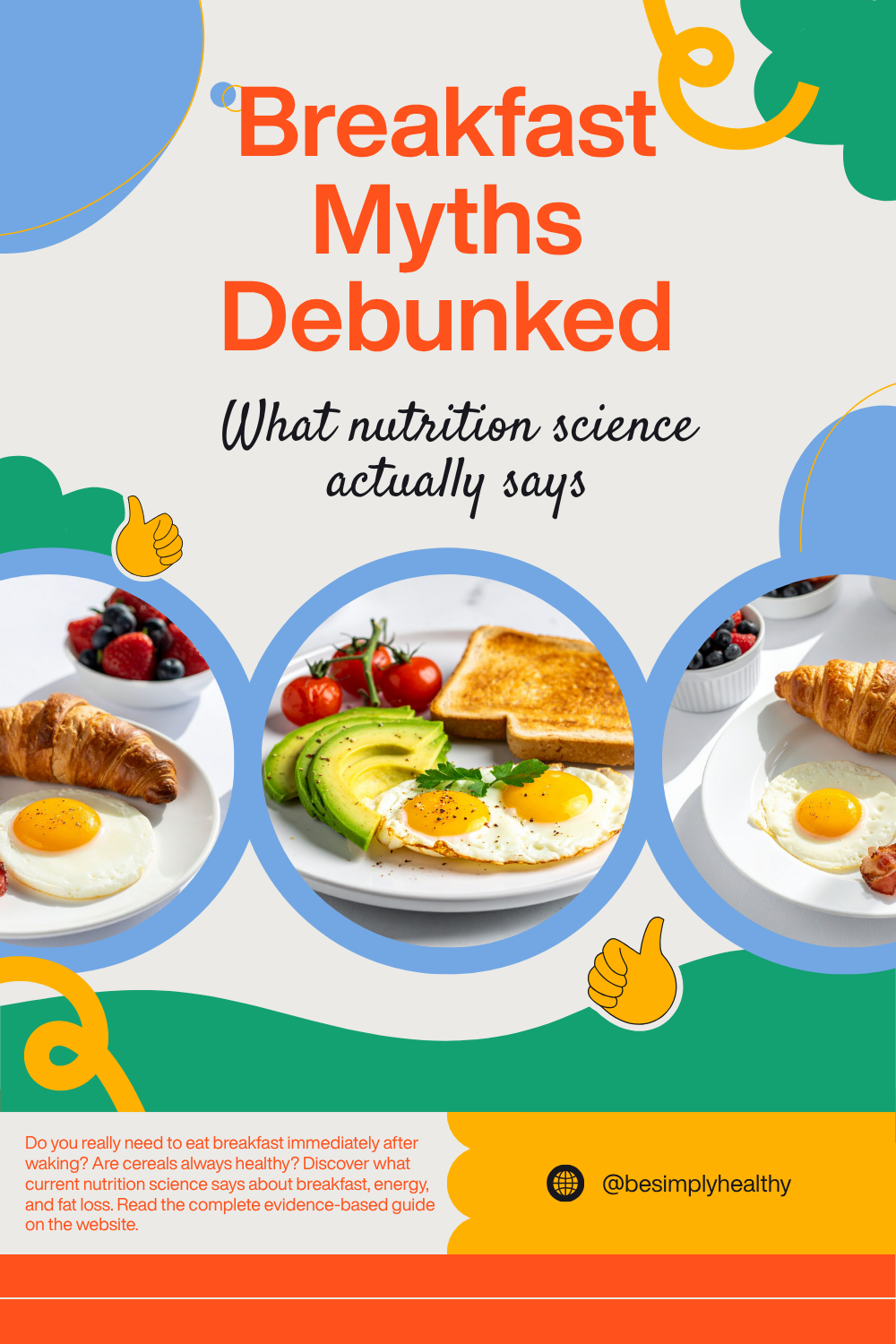
Breakfast Myths vs Facts
Myth 1: Breakfast Is Mandatory For Everyone
Reality:
Current evidence suggests that breakfast is not required for every person.
Some people prefer eating breakfast and find it supports appetite control.
Others prefer different meal schedules.
The overall quality of the diet matters more than whether breakfast is consumed at a specific time.
Myth 2: Low-Fat Breakfasts Are Always Better
Reality:
Healthy fats can be part of a nutritious breakfast.
Foods such as nuts, seeds, and avocado provide beneficial nutrients while contributing to meal satisfaction.
Myth 3: All Breakfast Cereals Are Healthy
Reality:
Some cereals provide valuable fiber and nutrients.
Others contain significant amounts of added sugar and relatively little protein.
Reading nutrition labels can help identify better options.
Myth 4: Weight Loss Depends On Breakfast Alone
Reality:
No single meal causes fat loss.
Sustainable weight management depends on overall dietary patterns, physical activity, sleep, and long-term consistency.
The 15 Best Breakfast Foods for Stable Energy
1. Eggs
Protein: Approximately 6 grams per large egg
Eggs are one of the most popular breakfast foods for a reason.
They provide high-quality protein, are versatile, affordable, and easy to prepare.
Potential benefits:
- •Supports fullness
- •Convenient meal option
- •Rich in essential nutrients
- •Pairs well with vegetables and whole grains
Ideas:
- •Vegetable omelets
- •Scrambled eggs
- •Hard-boiled eggs
- •Egg muffins
2. Greek Yogurt
Protein: Approximately 15–20 grams per serving depending on brand
Greek yogurt is one of the highest-protein breakfast options available.
Benefits:
- •High protein content
- •Convenient
- •Versatile
- •Can be combined with fruit, seeds, and nuts
Ideas:
- •Greek yogurt with berries
- •Yogurt parfaits
- •Smoothie bowls
3. Oatmeal
Oats contain soluble fiber known as beta-glucan.
Research suggests beta-glucan may help support fullness and cardiovascular health.
Benefits:
- •Fiber-rich
- •Affordable
- •Easy to customize
- •Supports meal satisfaction
Ideas:
- •Traditional oatmeal
- •Overnight oats
- •Baked oats
4. Chia Seeds
Chia seeds are exceptionally rich in fiber.
Just a small serving can significantly increase the fiber content of a meal.
Benefits:
- •High fiber content
- •Easy to add to recipes
- •Contains healthy fats
- •Supports meal volume
Ideas:
- •Chia pudding
- •Oatmeal toppings
- •Yogurt bowls
5. Berries
Berries provide fiber, vitamins, minerals, and antioxidants while remaining relatively low in calories.
Benefits:
- •Naturally sweet
- •High fiber
- •Nutrient dense
- •Easy addition to breakfast
Examples:
- •Blueberries
- •Raspberries
- •Strawberries
- •Blackberries
6. Flaxseeds
Flaxseeds are another nutrient-dense addition to breakfast.
They provide fiber, healthy fats, and plant compounds known as lignans.
Benefits:
- •Rich in fiber
- •Contains omega-3 fats
- •Easy to add to meals
- •Supports overall diet quality
Ideas:
- •Mixed into oatmeal
- •Added to smoothies
- •Sprinkled on yogurt
7. Cottage Cheese
Cottage cheese is often overlooked despite being one of the highest-protein breakfast foods.
Benefits:
- •High protein
- •Convenient
- •Versatile
- •Supports fullness
Ideas:
- •Cottage cheese with berries
- •Savory breakfast bowls
- •Whole-grain toast topping
8. Avocado
Avocados provide healthy fats and fiber.
Although they are not especially high in protein, they pair well with protein-rich foods.
Benefits:
- •Fiber
- •Healthy fats
- •Nutrient dense
- •Supports meal satisfaction
Ideas:
- •Avocado toast
- •Egg and avocado breakfast plates
- •Smoothies
9. Almonds
Almonds combine healthy fats, fiber, and protein.
Benefits:
- •Portable
- •Convenient
- •Satisfying snack or breakfast addition
- •Nutrient rich
Ideas:
- •Added to oatmeal
- •Mixed into yogurt
- •Homemade trail mix
10. Walnuts
Walnuts provide healthy fats along with small amounts of protein and fiber.
Benefits:
- •Rich in unsaturated fats
- •Convenient
- •Easy breakfast addition
Ideas:
- •Oatmeal topping
- •Smoothie ingredient
- •Yogurt topping
11. Whole-Grain Bread
Whole-grain bread can provide more fiber and nutrients than refined white bread.
Benefits:
- •Fiber source
- •Versatile
- •Pairs well with protein-rich foods
Ideas:
- •Avocado toast
- •Egg sandwiches
- •Nut butter toast
12. Protein Smoothies
Protein smoothies can be a convenient breakfast option for busy mornings.
The healthiest versions are built around whole-food ingredients.
Potential ingredients:
- •Greek yogurt
- •Milk
- •Soy milk
- •Fruit
- •Chia seeds
- •Oats
- •Nut butter
Benefits:
- •Convenient
- •Portable
- •Customizable
- •Can support protein intake
13. Tofu
Tofu is an excellent plant-based protein source.
Benefits:
- •High protein
- •Versatile
- •Suitable for vegetarian and vegan diets
Ideas:
- •Tofu scramble
- •Breakfast bowls
- •Vegetable stir-fries
14. Beans
Beans are not a traditional breakfast food in some cultures, but they can be a nutritious addition to morning meals.
Benefits:
- •Fiber
- •Protein
- •Budget friendly
- •Supports fullness
Ideas:
- •Breakfast burritos
- •Savory bowls
- •Toast toppings
15. Lentils
Lentils combine protein and fiber in a single food.
Benefits:
- •Highly filling
- •Nutrient dense
- •Affordable
Ideas:
- •Savory breakfast bowls
- •Egg and lentil combinations
- •Vegetable breakfast plates
Breakfast Foods Ranked By Satiety
While individual responses vary, foods that combine protein and fiber generally rank among the most satisfying breakfast options.
Highest Satiety Potential
- •Eggs
- •Greek yogurt
- •Cottage cheese
- •Lentils
- •Beans
High Satiety Potential
- •Oatmeal
- •Chia seeds
- •Flaxseeds
- •Avocado
- •Whole grains
Moderate Satiety Potential
- •Fruit alone
- •Toast alone
- •Breakfast cereals without added protein
The goal is not perfection.
Instead, combine foods from multiple categories to create a more balanced meal.
How To Build The Perfect Breakfast Plate
A practical framework can simplify breakfast decisions.
Step 1: Choose A Protein Source
Examples:
- •Eggs
- •Greek yogurt
- •Cottage cheese
- •Tofu
- •Protein smoothie
Aim for a meaningful source of protein at breakfast whenever possible.
Step 2: Add Fiber
Examples:
- •Oatmeal
- •Berries
- •Whole grains
- •Chia seeds
- •Flaxseeds
Fiber helps create volume and supports meal satisfaction.
Step 3: Include Healthy Fats
Examples:
- •Nuts
- •Seeds
- •Avocado
- •Nut butter
Healthy fats help make meals more enjoyable and satisfying.
Step 4: Add Color
Fruits and vegetables increase nutrient density.
Examples:
- •Berries
- •Spinach
- •Tomatoes
- •Bell peppers
- •Mushrooms
Sample Stable-Energy Breakfast Combinations
Option 1
Greek yogurt + blueberries + chia seeds
Option 2
Eggs + avocado + whole-grain toast
Option 3
Oatmeal + walnuts + berries
Option 4
Protein smoothie with oats, berries, and flaxseeds
Option 5
Cottage cheese + strawberries + almonds
Option 6
Tofu scramble with vegetables and whole-grain toast
Option 7
Breakfast burrito with beans, eggs, and vegetables
Common Breakfast Mistakes That Increase Hunger
Mistake 1: Eating Mostly Refined Carbohydrates
Examples:
- •Pastries
- •Sweet baked goods
- •Sugary cereals
These foods may not provide enough protein or fiber for lasting satisfaction.
Mistake 2: Skipping Protein
Protein is one of the most filling nutrients.
Low-protein breakfasts may leave some people hungry sooner.
Mistake 3: Ignoring Fiber
Fiber helps support fullness and digestive health.
Many adults consume less fiber than recommended.
Mistake 4: Drinking Calories Instead Of Eating Them
Sweetened coffee beverages and sugary drinks may contribute calories without providing substantial satiety.
Mistake 5: Expecting One Food To Solve Everything
No single breakfast food causes weight loss or guarantees stable energy.
Overall eating patterns matter most.
Is Breakfast Necessary For Fat Loss?
This is one of the most common nutrition questions.
Current evidence suggests that fat loss is primarily determined by long-term energy balance and dietary adherence.
Some people find that breakfast helps:
- •Reduce cravings
- •Improve appetite control
- •Support healthy habits
Others prefer different meal schedules.
The best approach is often the one that helps you consistently maintain healthy eating behaviors over time.
7-Day Stable Energy Breakfast Plan
Day 1
Greek yogurt, berries, and chia seeds
Day 2
Eggs, avocado, and whole-grain toast
Day 3
Oatmeal with walnuts and raspberries
Day 4
Protein smoothie with oats and flaxseeds
Day 5
Cottage cheese with fruit and almonds
Day 6
Tofu scramble with vegetables
Day 7
Breakfast burrito with beans and eggs ## FAQ
What are the best breakfast foods for stable energy?
The best breakfast foods for stable energy typically combine protein, fiber, and healthy fats.
Examples include:
- •Eggs
- •Greek yogurt
- •Oatmeal
- •Berries
- •Chia seeds
- •Flaxseeds
- •Cottage cheese
- •Nuts
- •Avocado
Combining foods from these categories often creates more satisfying meals.
What breakfast keeps you full the longest?
Breakfasts that combine protein and fiber generally provide the greatest satiety.
Examples:
- •Greek yogurt with berries and chia seeds
- •Eggs with avocado toast
- •Oatmeal with nuts and a protein source
Can breakfast help with weight loss?
No breakfast food directly causes weight loss.
However, balanced breakfasts may support appetite control, reduce cravings, and help people maintain healthy eating habits that contribute to long-term weight management.
Is oatmeal good for stable energy?
Oatmeal can be an excellent breakfast choice because it contains fiber and can be paired with protein-rich foods and healthy fats.
Examples:
- •Oatmeal with Greek yogurt
- •Oatmeal with nuts
- •Oatmeal with chia seeds and berries
Are eggs healthy for breakfast?
For most healthy adults, eggs can be part of a nutritious breakfast pattern.
They provide high-quality protein and several important nutrients.
Do I have to eat breakfast immediately after waking up?
Not necessarily.
Current evidence suggests meal timing can be individualized.
The quality of the foods consumed is generally more important than eating at a specific time after waking.
What should I avoid eating for breakfast?
There is no need to completely avoid specific foods.
However, some people find that breakfasts consisting mostly of:
- •Sugary cereals
- •Pastries
- •Doughnuts
- •Sweetened beverages
provide less satiety than meals that contain protein and fiber.
Are smoothies a good breakfast?
They can be.
The most satisfying smoothies usually contain:
- •Protein
- •Fiber-rich ingredients
- •Healthy fats
Examples include smoothies made with Greek yogurt, berries, oats, and chia seeds.
Key Takeaways
- •Stable energy breakfasts usually include protein, fiber, and healthy fats.
- •Protein-rich foods tend to be more filling than many refined carbohydrate foods.
- •Fiber supports fullness, digestive health, and overall diet quality.
- •Healthy fats help create satisfying meals.
- •No single food causes weight loss.
- •Consistent healthy eating patterns matter more than individual foods.
- •Breakfast quality is often more important than breakfast timing.
- •Building balanced meals can help reduce hunger and support long-term healthy habits.
Conclusion
Many people struggle with hunger, cravings, and energy crashes not because they lack willpower, but because their meals are not providing enough protein, fiber, or overall satisfaction.
Fortunately, improving breakfast quality can be simple.
Foods such as eggs, Greek yogurt, oatmeal, berries, chia seeds, flaxseeds, cottage cheese, nuts, avocado, beans, and lentils provide valuable nutrients that support fullness and overall health.
Rather than searching for a perfect breakfast, focus on building balanced meals that combine protein, fiber, and healthy fats.
Small improvements repeated consistently are often more effective than extreme dietary changes.
If your goal is sustainable fat loss, better appetite control, and more consistent energy, breakfast can be an excellent place to start building healthier habits.
For additional evidence-based nutrition strategies, meal plans, and practical food guides, explore our complete healthy eating resources and stable-energy meal planning content.
Comments (0)
Share your thoughts and experiences
No comments yet. Be the first to share your thoughts!