
6 Dumbbell Exercises for a Full-Body Workout (Science-Backed Guide 2025)
A complete, science-backed dumbbell workout routine designed to build strength, balance, and muscle tone across your entire body — no gym required.
Click a star to rate
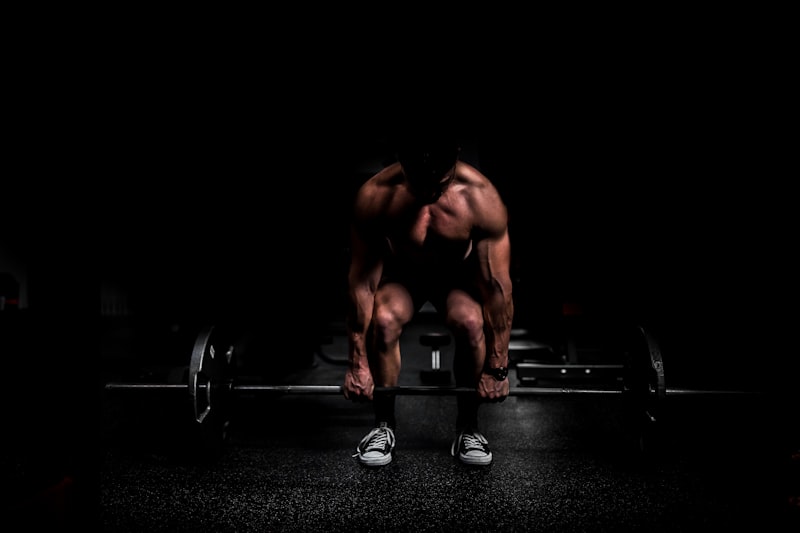
If you own a pair of dumbbells, you own one of the most versatile pieces of fitness equipment there is. This routine uses six classic exercises to train every major muscle group in one session. It works at home or in a gym, scales from beginner to advanced, and takes about 40 minutes. Below you will find exact form cues, sets and reps, how to choose your weight, substitutions, and a 4-week progression.
TL;DR - Six exercises cover the legs, chest, back, shoulders, and core. - Do 3 rounds of 8 to 12 reps, 2 to 3 times per week, with a rest day between sessions. - Choose a weight that makes the last 2 reps hard but keeps your form clean. - Progress by adding reps first, then small amounts of weight.
Why Dumbbells Work Dumbbells let each side of the body work independently, which helps expose and correct strength imbalances. Because you must control the weight in all directions, many studies show free weights engage stabilizing muscles more than guided machines, although results vary by exercise. Dumbbells are also affordable, take little space, and allow a huge variety of movements. Resistance training in general improves strength, muscle mass, bone density, and metabolic health.
Before You Start ### Choosing Your Weight Pick a weight you can lift 12 times with good form while feeling that you could do about 2 more. Beginners often start with 5 to 15 lb (2 to 7 kg) per hand for upper-body moves and 10 to 25 lb (5 to 12 kg) for squats and deadlifts. Adjustable dumbbells make it easy to progress.
Warm-Up (5 minutes) - 1 to 2 minutes of marching or light jogging in place - Arm circles and shoulder rolls - Hip circles and bodyweight squats - A few light practice reps of each exercise
The 6 Dumbbell Exercises ### 1. Goblet Squat **Muscles:** Quadriceps, glutes, hamstrings, core **How:** Hold one dumbbell vertically against your chest. Stand with feet shoulder-width apart, toes slightly out. Sit your hips back and down, keeping your chest tall and heels flat, until thighs are about parallel to the floor. Push through your whole foot to stand. **Tips:** Keep knees tracking over toes. If depth is hard, squat to a chair.
2. Dumbbell Bench Press (or Floor Press) **Muscles:** Chest, shoulders, triceps **How:** Lie on a bench or the floor with a dumbbell in each hand at chest level. Press up until your arms are straight, then lower under control until elbows are just below the bench or touch the floor. **Tips:** Keep wrists straight and shoulder blades pulled back. The floor press is a shoulder-friendly option when you have no bench.
3. Reverse Lunge **Muscles:** Glutes, quads, hamstrings, balance **How:** Hold dumbbells at your sides. Step back with one foot and lower until both knees are bent around 90 degrees. Push through the front heel to return. **Tips:** Keep your torso upright. Reverse lunges are usually easier on the knees than forward lunges.
4. One-Arm Dumbbell Row **Muscles:** Lats, upper back, biceps **How:** Place one hand and knee on a bench or sturdy chair. With the other hand, pull the dumbbell toward your hip, squeezing your shoulder blade back. Lower slowly. **Tips:** Keep your back flat and avoid twisting. Rows help balance the posture effects of desk work.
5. Dumbbell Shoulder Press **Muscles:** Shoulders, triceps, upper chest, core **How:** Stand or sit with dumbbells at shoulder height, palms facing forward or each other. Press overhead until arms are straight, then lower under control. **Tips:** Brace your core and avoid arching your lower back. Use lighter weights than you think.
6. Romanian Deadlift **Muscles:** Hamstrings, glutes, lower back, core **How:** Hold dumbbells in front of your thighs. With a soft bend in your knees, push your hips back and slide the weights down your legs until you feel a stretch in the hamstrings. Drive your hips forward to stand. **Tips:** Keep your spine neutral and the weights close to your body. This movement trains the back of the body, which is often undertrained.
The Workout | Exercise | Sets x reps | Rest | |---|---|---| | Goblet squat | 3 x 10-12 | 60 sec | | Dumbbell bench or floor press | 3 x 8-12 | 60 sec | | Reverse lunge | 3 x 8-10 per leg | 60 sec | | One-arm row | 3 x 10-12 per side | 60 sec | | Shoulder press | 3 x 8-10 | 60 sec | | Romanian deadlift | 3 x 10-12 | 60-90 sec |
Perform the moves in order, resting briefly between sets. Total time is about 35 to 45 minutes. Finish with a short walk and light stretching.
4-Week Progression - **Week 1:** 2 sets per exercise, light weights, focus on form. - **Week 2:** 3 sets of 10 to 12 reps with the same weights. - **Week 3:** Increase weights by about 5 percent or add 1 to 2 reps per set. - **Week 4:** Keep the heavier weights and shorten rest to 45 seconds, or take an easier deload week if you feel run down.
Easier and Harder Options - **Easier:** Use lighter weights, a chair for squats, an incline for presses, or do two sets. - **Harder:** Add pauses at the bottom, slow the lowering phase to 3 seconds, increase weights, or try tempo reps.
Weekly Schedule Ideas - **Beginners:** Full-body on Monday and Thursday, with walks on other days. - **Intermediate:** Full-body three days a week, such as Monday, Wednesday, and Friday. - **Busy weeks:** Two shorter sessions beat zero long ones.
Recovery and Nutrition Muscles grow when you rest. Sleep 7 to 9 hours, drink water, and eat enough protein, roughly 1.6 grams per kilogram of body weight per day for active people, from foods like eggs, fish, poultry, dairy, tofu, and beans. Some soreness 1 to 3 days after a workout is normal.
Common Mistakes - Using weights too heavy to control - Rushing through reps instead of lowering slowly - Locking out joints aggressively - Skipping the warm-up - Never increasing the load - Holding your breath. Exhale as you lift and inhale as you lower.
Safety Notes Stop if you feel sharp pain, dizziness, or numbness. If you have heart disease, high blood pressure, joint injuries, are pregnant, or are new to exercise after a long break, talk to your doctor first. Consider a session with a qualified trainer to check your form.
Bottom Line Six dumbbell exercises, three sets, and two or three sessions a week are enough to build solid full-body strength. Focus on clean form, increase the challenge gradually, and keep showing up. The best workout is the one you will actually do.
This article is for general education and is not a substitute for professional medical advice.
Comments (0)
Share your thoughts and experiences
No comments yet. Be the first to share your thoughts!